
- India
- Feb 20
SC slams freebies before polls
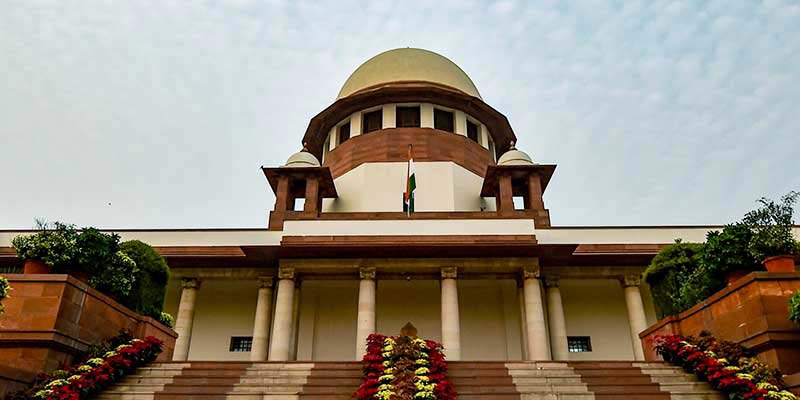
• The Supreme Court slammed the freebies and subsidies culture ahead of elections.
• A bench headed by Chief Justice Surya Kant observed that the ultimate financial burden of such populist measures falls squarely on the shoulders of taxpayers.
• It was high time to revisit such policies that hamper the country’s economic development, it noted.
• Most of the states in the country are revenue deficit states and yet they are offering such freebies overlooking development.
• The observations were made during the hearing of a petition filed by the Tamil Nadu Power Distribution Corporation Limited which proposed to give free electricity to all irrespective of consumers paying capacity.
• The state-owned firm has challenged Rule 23 of the Electricity (Amendment) Rules, 2024, which imposes strict financial discipline on power distribution companies.
• The rule requires that any gap between the approved cost of supplying electricity and the tariff actually recovered from consumers must not exceed 3 percent and that such gaps must be cleared within a fixed time.
Election freebies
• Election freebies are the offerings/distribution of irrational freebies from political parties as part of electoral promises. Free electricity, free Water, free rides, loan waivers, allowances, laptops, etc are some of the examples.
• Some of these freebies help them to meet basic needs of people and uplift their living standard. But it goes against the roots of free and fair election in a democracy and gives rise to several issues.
Negative impact of freebies
• Economic issues: Freebies are a huge drain on the state exchequer affecting the fiscal balance and macroeconomic stability of the country.
• Political issues: It goes against Article 14 by distorting the level playing field among political parties.
• Socio-psychological issues: Distorted economic decisions lack equity and fairness, leading to various socio-psychological issues such as reduced efforts or laziness, threats to social cohesion by creating artificial divides between haves and have-nots of the associated freebies.
• Environment: Freebies promote unsustainable practices by pushing governments and people away from environmentally sustainable practices. Free electricity reduces incentives for farmers and domestic households to instal solar panels or adopt more efficient public transport systems.
Way forward
• Differentiating between freebies with priority to directive principles of state policies based or merit goods such as PDS system, education, health, etc for greater prosperity.
• Need-based freebies with transparency by segregating haves and have-nots and identifying real beneficiaries. For example, ensuring that farm loan waiver reaches only actual farmers.
• Financial budgeting on freebies between subsidies and freebies with awareness programmes to educate people to promote demand-based interventions.
• Achieve a more inclusive and higher economic growth rate to meet people’s aspirations of jobs, better living standard, lesser inequalities, etc to reduce temptation towards freebies.
• Outcome-oriented government schemes can help in this through better policy reach and expenditure efficiency
• In India, conducting free and fair elections is the responsibility of ECI. To ensure electoral process integrity, in 2016 guidelines to check freebies were included under Part VIII of Model Code of Conduct (MCC).