
- India
- Sep 30
- Sreesha V.M
5 new Indian sites added to UNESCO Tentative List for World Heritage
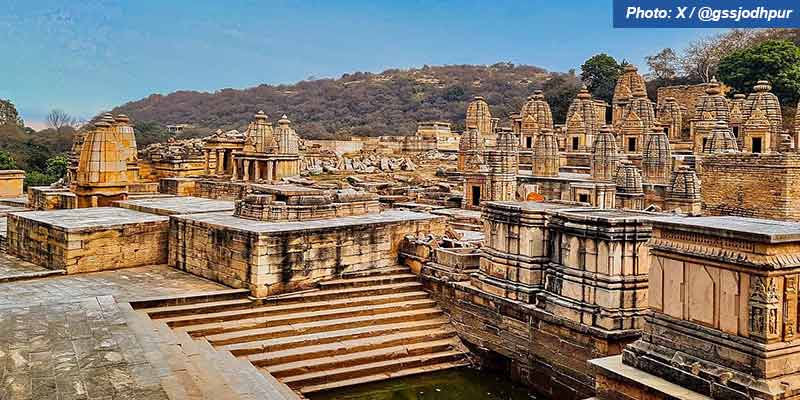
• India has expanded its UNESCO Tentative List for World Heritage with the addition of five new sites and serial and transnational proposals, taking the country’s total to 78 entries.
• As per UNESCO’s protocol, inclusion in the Tentative List is a prerequisite for any site to be nominated for the prestigious World Heritage List.
What is a World Heritage Site?
• The United Nations Educational, Scientific and Cultural Organisation (UNESCO) seeks to encourage the identification, protection and preservation of cultural and natural heritage around the world considered to be of outstanding value to humanity.
• This is embodied in an international treaty called the ‘Convention Concerning the Protection of the World Cultural and Natural Heritage’, adopted by UNESCO in 1972.
• A World Heritage Site is a place having a special cultural or physical significance and outstanding universal value to humanity. It may be a building, a city, a complex, a desert, a forest, an island, a lake, a monument or a mountain.
• Sites recognised as being of Outstanding Universal Value are inscribed each year on the World Heritage List.
• To be included on the World Heritage List, sites must be of outstanding universal value and meet at least one out of ten selection criteria. These criteria are regularly revised by the Committee to reflect the evolution of the World Heritage concept itself.
Who lists World Heritage Sites?
• The International World Heritage Programme administered by the UNESCO World Heritage Committee establishes the sites to be listed as World Heritage Sites.
• The Committee consists of representatives from 21 of the States Parties to the Convention elected by their General Assembly.
• It examines reports on the state of conservation of inscribed properties and asks States Parties to take action when properties are not being properly managed.
• It also decides on the inscription or deletion of properties on the List of World Heritage in Danger.
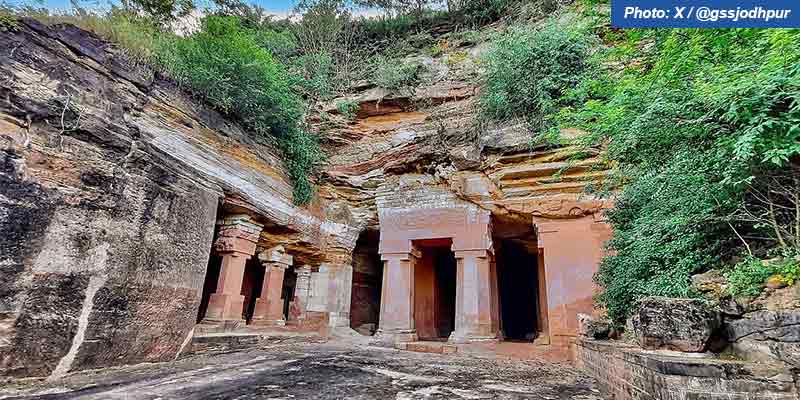
The five new sites in the Tentative List are:
1) Bagh Cave Paintings: The Bagh caves comprise a group of nine rock-cut Buddhist caves located on the southern slope of the Vindhyan range at the banks of the Baghni river in western Madhya Pradesh. These caves are the only outcrop of sandstone in an otherwise basaltic region, a significant factor which influenced their architectural forms and preservation of mural paintings. The caves were developed around the 4th and 6th century CE. The site was an important political and administrative centre during the Gupta period. The caves are associated with the Buddhist monk Dataka.
2) Ginnorgarh Fort: Ginnorgarh Fort is the principal fortified capital of the Raj Gond rulers in central India and represents an extensive tribal hill-fort and palace complex. The fort stands on a hillock located inside present-day Ratapani Wildlife Sanctuary in Madhya Pradesh. The fort functioned as a major political and administrative centre under the Gond kingdom of Gadha from the early sixteenth century until the early 18th century.
3) Group of Temples of the Chambaly Valley: The temples of Bateshwar, Padavali and Kakarmath, located in the Chambal valley region of present-day Morena district in Madhya Pradesh, represent a unique concentration of early medieval temple architecture. Built between the 8th and 11th centuries CE, these monuments illustrate the development of regional Nagara-style temple architecture under the Gurjara-Pratihara and Kachchhapaghata dynasties, which ruled the region during this period.
4) Udaigiri Caves: The Udaigiri hill in Madhya Pradesh contains a rock-cut sacred ensemble developed primarily under Gupta patronage between the late 4th and early 5th century CE. The site includes 20 excavated caves, sculptural panels, inscriptions, circulation paths, rock surfaces bearing early marks and inscriptions.
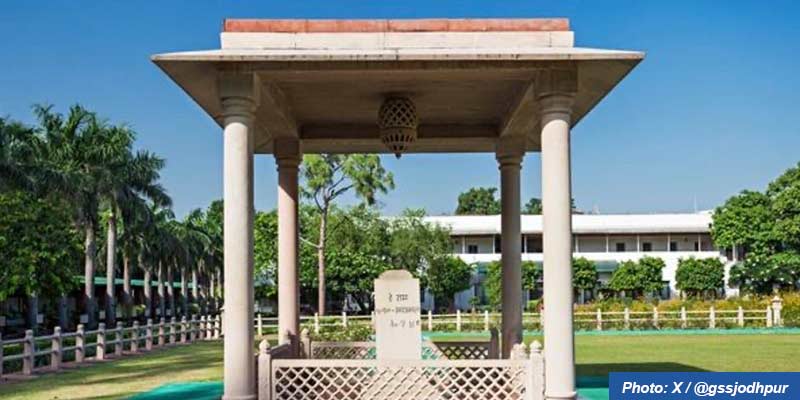
5) Sites of Satyagraha: The proposed serial transnational property portrays the evolution of the Satyagraha, starting from its conceptualisation in South Africa, and continuing with experimentation, consolidation, and institutionalisation in India. The prospective property is proposed to include a total of nine components. Out of these, two are located in South Africa, where Mahatma Gandhi spent 21 years from 1893 to 1914, and seven in India, where he spent most of his life. The proposed serial property represents the spatial network that transformed Satyagraha into a structured method of collective non-violent freedom movement. The nine components are: The Pietermaritzburg station and the Phoenix Settlement in South Africa; and the Mahatma Gandhi Satyagraha Smarak, the Sabarmati Ashram, the Mani Bhavan complex, the Harijan Sevak Sangh complex, the Sevagram Ashram, the Aga Khan Palace and the Gandhi Smriti residence in India.