
- Blogs
- Mar 23
IAS and beyond: A district collector’s new chapter in Harvard
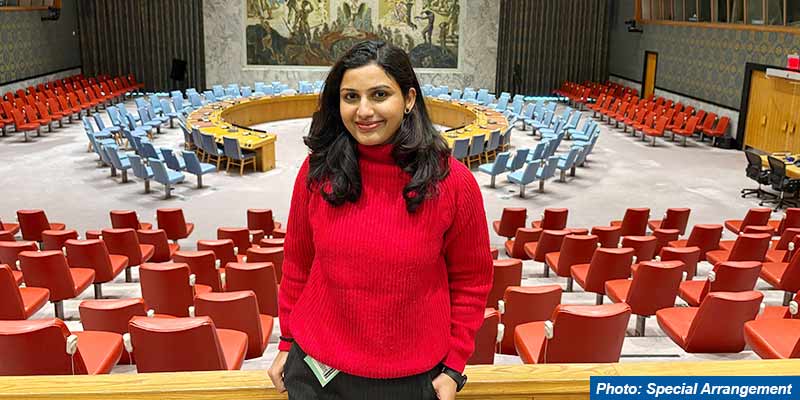
For all UPSC aspirants, the Indian Administrative Service (IAS) embodies a career of responsibility, challenge and opportunity to bring out their best. When I was preparing for the same many years ago, my understanding about the civil services was fairly simple: an opportunity to contribute meaningfully towards public problems and to serve the people of the country.
What I did not fully comprehend then was the unexpected and extraordinary range of experiences it would provide. In a way, these proficiencies — the probable and the unforeseen — are the ones that eventually took me from district administration in Kerala to a classroom at the globally acclaimed Harvard University as a Fulbright scholar.
Let me be clear. The Fulbright program is not designed as a higher education avenue for civil servants. It is an international, merit-based platform where applicants from varied disciplines apply for a master’s fellowship and it is your experiences and clarity of purpose that helps you get through.

The IAS is a ‘generalist’ service. Though that description sounds broad, it is accurate in the most fascinating way. Over the years, an officer might work on diverse issues — from healthcare, education and urban infrastructure to disaster management and elections. Isn’t it also interesting that a district collector might begin the day resolving land acquisition matters, spend the afternoon reviewing health indicators of his/her district and the night coordinating disaster relief?
Few careers offer this kind of exposure. This service also encourages officers, who are willing, to periodically step back, reflect, learn and grow. That is how I found myself applying for the Fulbright scholarship to pursue a Master’s degree at the Harvard T.H. Chan School of Public Health. When I received the news that I have been selected, it felt both exciting and slightly strange. After years of working in government offices and field postings, the idea of returning to a student’s life, that too in another country, was thrilling and daunting at the same time.
Arriving at Harvard was an incredible experience. The campus is steeped in history and filled with an unending energy that comes from students and researchers from across the globe. In my class, there are students from a dozen countries and diverse backgrounds such as doctors, policy professionals, economists, social scientists and those with NGO work experience. Conversations that begin during the class often continue over coffee, where viewpoints from Africa, Latin America, Europe and Asia come together in captivating ways.
In administration, decisions often need to be taken quickly, but in academic settings, ideas are examined, debated vigorously and you need research and data to prove your points irrespective of who you are or where you come from. This was both challenging and refreshing.
Moving to a new country also gives us a deeper understanding of how we all adapt. There are, broadly, two ways to move to a new place. One is to recreate your old world wherever you go. Maintain your old habits, food and build friendships only with your type of people so as to build a familiar bubble.
The other is to arrive with an open mind, willing to experience life as it is lived there. To eat what people eat there, walk with them and gradually feel the rhythm of that place.
I found myself choosing the second path. It demanded stepping out of my comfort zone, but I believe it has made my experience far richer. In many ways, this approach applies to life itself — the more open you are, the more you grow.
Life in America also brings its own set of surprises and adjustments. One thing I had to get used to was the absence of social support systems like family, office staff or acquaintances that we often take for granted in India. As a student here, you do everything yourself. It includes cooking, cleaning, grocery shopping among other daily chores. Soon after arriving, I went grocery shopping at a large American supermarket with full enthusiasm. Within ten minutes, my enthusiasm quietly disappeared. The sheer variety they offer — from bread to oil to breakfast cereals — was overwhelming.
Ironically, everything except the few brands I recognised back home were available. Choosing a simple loaf of bread, which I needn’t think twice earlier, suddenly felt like a life decision.

Using public transport was another interesting learning curve. In India, while in administrative roles, movement is often organised through official arrangements. Here, I take the subway, walk across the streets in the snow and occasionally struggle with directions. Converting kilometers to miles, kilograms to pounds and Celsius to Fahrenheit can drive you crazy in the beginning.
Later you start laughing at the little confusions you created for yourself. The first snowfall of the winter was magical to watch while sipping coffee until the next morning when walking to class through icy sidewalks made me recognise that snow is much easier to admire from a window than to navigate in real life. These small everyday experiences are also what make living in another country so enriching. They make you more independent and adaptable.
In a new place where very few people know your past achievements or titles, you begin to rediscover yourself. It becomes less about external validation and becomes more about quiet growth.
The most valuable aspect of living abroad is perhaps the opportunity to view India from a broader perspective. When you engage with fellow students and experienced scholars from different countries, you begin to see global challenges as questions which require collective solutions. Be it climate change or racial discrimination or urbanisation. You begin to realise how much the world can learn from India’s rich and diverse experiences, at the same time, how much we can gain by contextually adopting the best practices from the rest of the world.
For young civil service aspirants, one tip I would like to share is to see the IAS from a wider lens so as to explore it to the fullest. As a career, the IAS is not confined to government offices or public functions. It is a platform that opens doors to diverse life experiences — from grassroot level development work to avenues of international collaboration. It is an incredible opening that gives you the opportunity to understand your country deeply, while also engaging with the bigger world outside.

Looking back, I realise that the Civil Services Examination was only the start. The real journey commences once you enter the service, when each posting, each transfer and each experience becomes a new classroom — irrespective of whether you signed up for it or not. In my case, that classroom has now, for a while, shifted from Kerala to Harvard. But the core of the lessons learnt remain the same: stay curious, stay committed and never stop learning.
Perhaps, like any beautiful journey, this one too is still unfolding. With chapters to be recited, stories to be shared. For now, I have no choice but to agree — the civil servant must learn to survive a minus 18-degree Celsius Boston winter!
(Dr. Renu Raj cracked the Civil Services Exams with second rank in 2015, in her first attempt.)