
- India
- Nov 08
Demonetisation, two years on
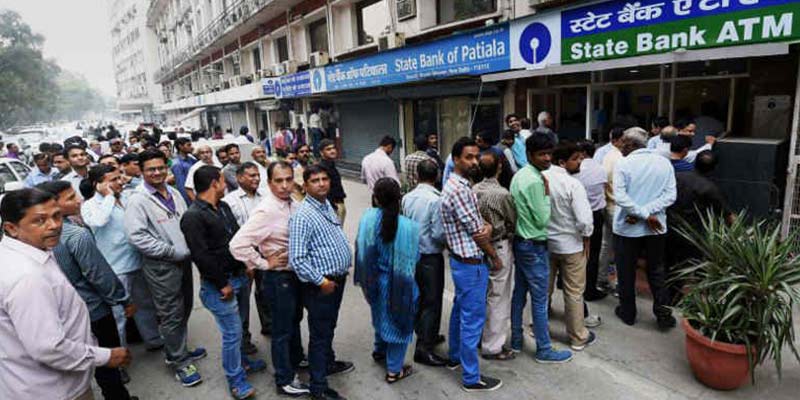
Demonetisation. It was probably Narendra Modi’s biggest gamble after coming to power. Has the gamble paid off? There are plenty of critics, including Opposition parties, who claim the exercise was an unmitigated disaster. But the NDA government begs to differ, with Finance Minister Arun Jaitley saying the real target was not the confiscation of cash but to bring it under the formal economy and make tax evaders pay.
Who said what?
Former prime minister Manmohan Singh was among those who went public with his criticism on the second anniversary of demonetisation. “It is often said that time is a great healer. But unfortunately, in the case of demonetisation, the scars and wounds of demonetisation are only getting more visible with time,” he said in a statement. “The havoc that it unleashed on the Indian economy and society is now evident to everyone. Notebandi impacted every single person, regardless of age, gender, religion, occupation or creed.”
According to critics...
Demonetisation inflicted pain on farmers and daily wage labourers who primarily dealt in cash
Liquidity crunch hit small and medium businesses hard
Note ban resulted in steep drop in GDP growth
Economy still struggles to create enough new jobs
Infrastructure lenders and non-banking financial companies still feel the pinch of liquidity crisis
What happened to the demonetised cash?
When Rs 500 and Rs 1,000 currency notes worth Rs 15.42 lakh crore - 86 per cent of the total cash in circulation - were invalidated overnight on November 8, 2016, the government expected that black money hoarders would fear depositing or exchanging these at banks, thereby bringing a windfall of Rs 4-5 lakh crore to the treasury through a reduction in the RBI’s liabilities. However, RBI data released in August 2018 showed that as much as Rs 15.31 lakh crore came back to the banking system, spoiling the government’s best-laid plans.
On November 4, 2016 - the week before demonetisation - the currency in circulation was ₹17.9 lakh crore. Fast forward to October 26, 2018, the amount has jumped by 9.5 per cent to ₹19.6 lakh crore, shows Reserve Bank of India (RBI) data.
In tandem, ATM withdrawals have also picked up. RBI data reveals that cash withdrawals from ATMs grew 8 per cent to ₹2.75 lakh crore in August 2018 from ₹2.54 lakh crore in October 2016. ATM withdrawals fell sharply during demonetisation, hitting ₹1.06 lakh crore in December 2016.
Where are the big changes happening?
Mobile banking: There’s been a marked uptick in mobile banking transactions as the volume grew by 82 per cent from ₹1.13 lakh crore in October 2016 to ₹2.06 lakh crore in August 2018.
UPI transactions: The Unified Payments Interface (UPI) was launched in 2016 facilitating real-time payments between two sets of mobile phone users. The transaction volume has jumped from Rs 50 crore in October 2016 to Rs 59,800 crore in September 2018.
RuPay transactions: Point of sale transactions via RuPay cards have increased from Rs 800 crore before demonetisation to Rs 5,700 crore in September 2018, while e-commerce transactions grew from Rs 300 crore to Rs 2,700 crore in the same period.
When will the hangover get over?
According to the World Bank, the Indian economy has already recovered from the adverse impacts of demonetisation and GST and is projected to grow by 7.3 per cent in 2018 and 7.5 per cent in 2019. The recovery of the Indian economy will lift South Asia as a region and make it the world’s fastest growing again, said the World Bank’s bi-annual South Asia Economic Focus report released in April.
Why does the government think note ban was a success?
In its defence, the Union government claims...
Demonetisation helped spur digital transactions
Note ban and GST helped broaden tax base and expand tax revenue pie
Higher deposits helped improve banks’ lending capacity
How has demonetisation helped the exchequer?
According to Finance Minister Jaitley, direct tax collections, which grew by 6.6 per cent in FY 2015 and 9 per cent in FY 2016, picked up pace after demonetisation. In the next two years, collections grew by 14.6 per cent in FY 17 and 18 per cent in FY 2018. The number of people who filed income tax returns showed marked improvement by reaching 6.86 crore in FY 2018, a growth of 25 per cent over the previous year.
Jaitley’s argument is that as the economy becomes more formalised, the government gets more revenue - which means more money to spend on welfare schemes.
Did you know?After demonetisation, the RBI spent close to Rs 13,000 crore on printing new notes to remonetise the money market