
- India
- Mar 12
New combat drugs to reduce casualties
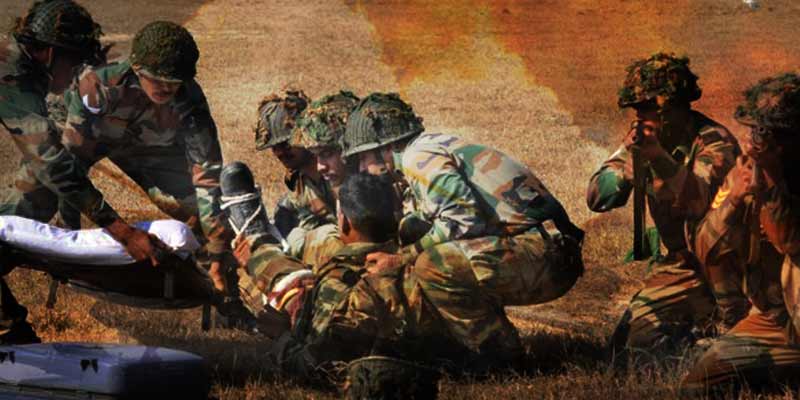
With 90 per cent of gravely wounded security personnel succumbing to injuries within a few hours, Defence Research and Development Organisation’s (DRDO) medical laboratory has come up with a range of ‘combat casualty drugs’ that can extend the golden hour till the trooper is shifted to hospital.
The spectrum includes bleeding wound sealants, super absorptive dressings and glycerated salines, all of which can save lives in the event of warfare in jungle and high-altitude areas as well as in terror attacks.
Citing the February 14 terror attack in Pulwama where 40 CRPF soldiers were killed, researchers said the new drugs could have brought down the death toll.
According to developers of the drugs at the Institute of Nuclear Medicine and Allied Sciences (INMAS), a laboratory of the DRDO, chances of survival and minimum disability are highest when effective first aid care is given within the golden hour.
Scientists at INMAS, entrusted with research and development in a number of areas concerning the defence sector, said the main battlefield emergencies are excess bleeding, sepsis, shock, hypovolemia (decreased blood volume) and pain.
DRDO’s indigenously made medicines will be a boon for paramilitary and defence personnel during warfare, said A.K. Singh, director general of life sciences at the organisation. These medicines will ensure that our soldiers do not suffer from unwanted blood loss while being taken to a better health care from war zones, he said.
A look at some of the combat drugs…
Glycerated saline: It is a battlefield intravenous fluid that does not freeze till -18 degrees Celsius. The drug can be life saving, particularly if the traumatic edema, collection of fluid in tissues and cavities of the body, is in brain or lungs.
Chitosan gel: It helps in preventing blood loss by forming a film over the wound. Coupled with platelets and red blood cells aggregation, it stops the bleeding. Its anti-bacterial and wound health properties are of added benefit.
Hypochlorous acid (HOCL): It is a disinfectant for troopers involved in jungle warfare. It is helpful in treating necrotising fasciitis, a rapidly progressing bacterial infection of soft tissues.
Dressing material: The cellulose fibre-based dressings are more effective in stopping bleeding and keeping the wound clean.
INMAS launched in 1961
The Institute of Nuclear Medicine and Allied Sciences (INMAS) is a multidisciplinary laboratory of DRDO engaged in R&D activities in the field of radiation, imaging sciences and chemical, biological, radiological and nuclear defence (CBRN) technologies. The institute was first conceived with the theme of “Atom for Peace” dedicated exclusively to peaceful application of radiation - diagnosis & treatment of patients with radio-isotopes in a variety of ailments. INMAS was established in 1961 under the initiative of Lt Col S.K. Mazumdar.