
- India
- Apr 12
Daily Briefing & Quiz / April 12, 2019
Pentagon defends India’s A-SAT test
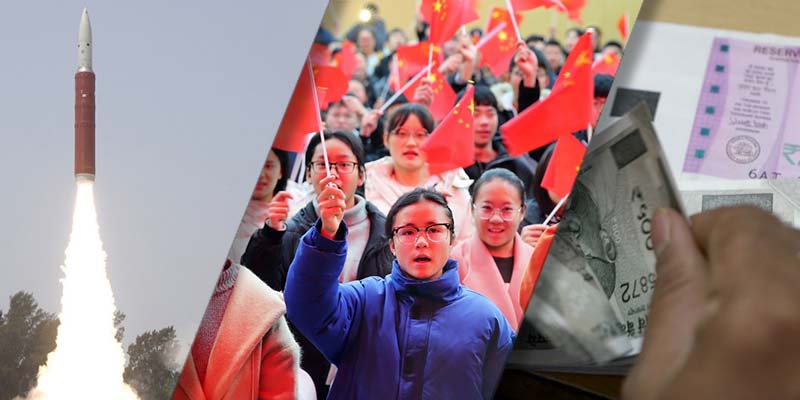
India is concerned about the “threats” it faces in space, the Pentagon has said, defending the country for acquiring anti-satellite (A-SAT) missile test capabilities. On March 27, India achieved a historic feat by shooting down its own low-orbit satellite with a ground-to-space missile, making the country a space power. “The first lesson from the Indian A-SAT is just the simple question of why did they do that. And the answer should be, I think to all the committee looking at it, is that they did that because they are concerned about threats to their nation from space,” US Strategic Command Commander General John E Hyten told members of the powerful Senate Armed Services Committee. “And therefore, they feel they have to have a capability to defend themselves in space," Hyten told the panel.
Banks close FY19 with 13.24% credit growth
Banks closed fiscal 2019 with robust disbursals that rose in double digits for the second year in row, after the sub-5 per cent in FY17, which was the lowest in five decades. According to RBI data, bank credit rose 13.24 per cent to Rs 97.67 lakh crore for the fortnight to March 29, while deposits grew by 10.03 per cent to Rs 125.72 lakh crore during the same period. This is the second consecutive double-digit credit growth after the same had declined to 4.54 per cent in FY17 at Rs 78.41 lakh crore, which was the lowest since 1963. In the year-ago fortnight, deposits were at Rs 114.26 lakh crore and advances at Rs 86.25 lakh crore. In FY17, aggregate deposits grew a mere 6.7 per cent in 2017-18, while credit grew still lower at 4.54 per cent, the lowest since fiscal 1963.
‘Give free hand to PSU on org structure’
The Banks Board Bureau (BBB), the apex body for selection of whole-time directors of state-owned lenders, has made a case for giving complete autonomy to banks to decide organisational structure for better efficiency. The BBB headed by former DoPT secretary B.P. Sharma also suggested revamping credit governance architecture in nationalised banks to reinforce efforts to minimise credit costs and enhance efficiency of credit allocation. In its activity report for October 2018 to March 2019, the board also recommended an incentivisation scheme linked to performance. In 2016, the Centre approved the constitution of the BBB as a body of eminent professionals and officials to make recommendations for appointment of whole-time directors as well as non-executive chairmen of PSBs.
US lawmakers seek better ties with India
A bipartisan group of influential US lawmakers has reintroduced an important legislation in the House of Representatives which seeks to advance the US-India strategic relationship. If enacted, the legislation would ensure that the State Department treat India as a NATO ally for the purposes of the Arms Export Control Act. It would send a powerful signal that defence sales to India should be prioritised according to US-India Strategic Partnership Forum. The Bill H R 2123 was introduced this week by Congressman Joe Wilson, a senior member of the House Foreign Affairs Committee. The National Defense Authorization Act for fiscal 2017 included special language recognising the unique US-India defence relationship that designated India as a ‘major defence partner’ of the US.
Moderate turnout in Phase 1 of LS polls
The world’s largest polling exercise began on April 11 with an estimated 9 crore Indians coming out to vote for electing 91 MPs in the first phase of the Lok Sabha polls, even as poll-related violence saw at least two deaths. West Bengal, where voting took place for two Lok Sabha seats, saw the maximum 81 per cent voting, while election officials put the voting percentage at 73 per cent in Andhra Pradesh, where clashes left at least two dead. The 91 Lok Sabha constituencies, spread across 18 states and two Union territories, have more than 14 crore voters - about one-sixth of the nearly 90 crore total electorate in India. A total of 1,279 candidates are in the fray for these seats. Voting also took place in 175 Assembly seats in Andhra Pradesh, 32 in Sikkim, 57 in Arunachal Pradesh and 28 seats in Odisha.
SC forces parties’ hand on poll bonds
The Supreme Court has directed all political parties to furnish receipts of funding received through electoral bonds and details of identity of donors in a sealed cover to the Election Commission. In an interim order on April 12, the apex court also directed all political parties to provide details of the amount of the bond and bank account of donors by May 30 to the poll panel. The apex court said it would examine in detail changes made in the income tax law, electoral law and banking laws to make them in consonance with the electoral bond scheme and ensure the balance does not tilt in favour of any political party. It also directed the finance ministry to reduce the window of purchasing electoral bonds from 10 days to five days in April-May and said it would fix a date later for final disposal of the petition filed by an NGO.
Vehicle fumes take a heavy toll on kids
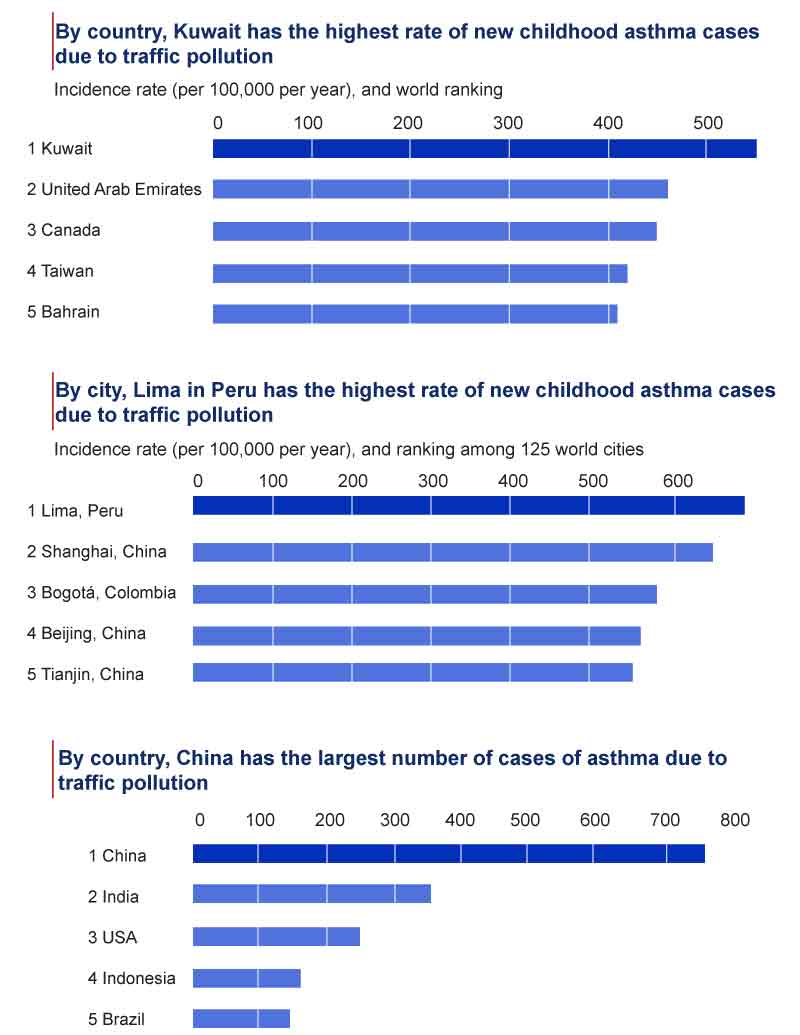
Traffic-related pollution caused asthma among 350,000 children in India in 2015, second only to China, according to a Lancet study that analysed 194 countries and 125 major cities. The first global estimates of their kind published in The Lancet Planetary Health journal suggest that more than one in 10 childhood asthma cases could be linked to traffic-related air pollution every year. Four million children develop asthma every year as a result of air pollution from cars and trucks. Globally, the estimates suggest that there are 170 new cases of traffic pollution-related asthma per 100,000 children every year, and 13 per cent of childhood asthma cases diagnosed each year are linked to traffic pollution. The country with the highest rate of traffic pollution-related childhood asthma was Kuwait (550 cases per 100,000 children each year), followed by the UAE (460 per 100,000) and Canada (450 per 100,000).
Falcon Heavy delivers maiden payload
SpaceX’s Falcon Heavy - the world’s most powerful operational rocket - launched its first commercial mission on April 11 from Florida in a key demonstration for entrepreneur Elon Musk’s space company in the race to grasp lucrative US military launch contracts. The 23-storey-tall Heavy - which previously launched Musk’s Tesla roadster to space in a 2018 debut test flight - blasted off from Florida’s Kennedy Space Center carrying its first customer payload. Three minutes after clearing the pad, Heavy’s two side boosters separated from the core rocket for a synchronised landing at the Cape Canaveral Air Force Station. “The Falcons have landed”, Musk tweeted, inaugurating the first successful recovery of all three rocket boosters, which will be refurbished and re-fly in another Falcon Heavy mission this summer to carry military and science satellites for the US Air Force.
Beresheet crashes in bid to reach moon
An Israeli spacecraft has lost contact with Earth and crashed just moments before it was to land on the moon, failing in an ambitious attempt to make history as the first privately funded lunar mission. Beresheet lost communication with ground control late on April 11 as it was making its final descent to the moon. Moments later, the mission was declared a failure. The mishap occurred in front of a packed audience that included Prime Minister Benjamin Netanyahu and was broadcast live on national television. The small robotic spacecraft, built by the non-profit SpaceIL and state-owned Israel Aerospace Industries, had hoped to match a feat that has only been achieved by the national space agencies of three countries: US, Russia and China.
Monkeys created with human brain genes
Chinese scientists have implanted human brain genes into monkeys, in a study intended to provide insights into the unique evolution of human intelligence. Researchers inserted human versions of MCPH1, a gene that scientists believe plays a role in the development of the human brain, into 11 rhesus monkeys. They found the monkeys' brains - like those of humans - took longer to develop, and the animals performed better in tests of short-term memory as well as reaction time compared to wild monkeys. The test is the latest in a series of biomedical experiments in China to have fuelled medical ethics debates. It was conducted by researchers at the Kunming Institute of Zoology and the Chinese Academy of Sciences, working with fellow scientists at the University of North Carolina.
Young Chinese to be sent back to villages
China is planning to send millions of youth “volunteers” back to the villages, raising fears of a return to the methods of Chairman Mao’s brutal Cultural Revolution of 50 years ago. The Communist Youth League (CYL) has promised to despatch more than 10 million students to rural zones by 2022 in order to “increase their skills, spread civilisation and promote science and technology”. The aim is to bring to the rural areas the talents of those who would otherwise be attracted to life in the big cities, according to a CYL document quoted in the official Global Times daily. Users on Twitter-like Weibo social platform reacted warily. Many evoked the chaos of the 1966-76 Cultural Revolution, when Mao sent millions of “young intellectuals” into often primitive conditions in the countryside, while universities were closed for a decade.
China eyes nuke fusion power generation
China aims to complete and start generating power from an experimental nuclear fusion reactor by around 2040, a scientist involved in the project said, as it works to develop and commercialise a game-changing source of clean energy. China is preparing to restart its stalled domestic nuclear reactor programme after a three-year moratorium on new approvals, but at a state laboratory in the city of Hefei, scientists are looking beyond crude atom-splitting in order to pursue nuclear fusion, where power is generated by combining nuclei together. While nuclear fusion could revolutionise energy production, with pilot projects targeting energy output at 10 times the input, no fusion project has up to now created a net energy increase. Critics say commercially viable fusion remains 50 years in the future.
Newsmakers
Prime Minister Narendra Modi has been awarded the Order of St Andrew the Apostle by Russia for exceptional services in promoting bilateral ties between the two countries. The Order of St Andrew the Apostle is the highest state decoration of Russia.
Alice G. Vaidyan, the chairman and managing director of General Insurance Corporation of India, has been awarded the Freedom of the City of London in recognition of her work to promote insurance ties between India and the UK.
Najma Akhtar was on April 11 appointed as the vice-chancellor of Jamia Millia Islamia, making her the first woman to hold the charge. Jamia had been functioning without a VC after Talat Ahmad resigned from the post last year to join as the head of Kashmir University.
Omar Barghouti, a co-founder of Palestine-led Boycott, Divestment and Sanctions (BDS) movement against Israel has been blocked from entering the US. BDS advocates boycotts and sanctions against Israeli businesses, universities and cultural institutions.
