
- India
- Jul 08
Explainer / One Nation, One Grid
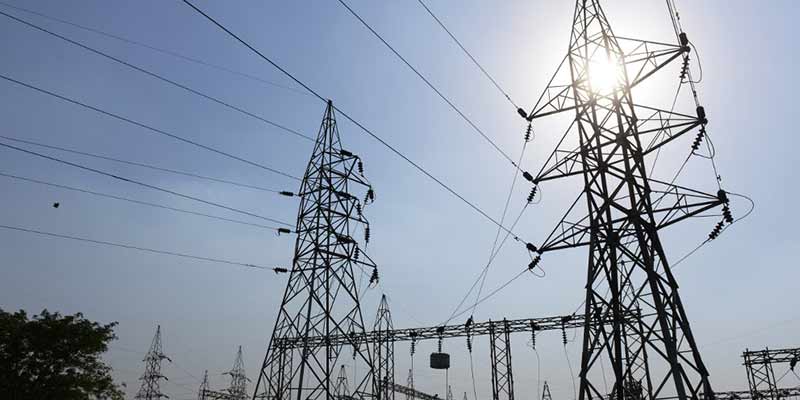
Finance Minister Nirmala Sitharaman in her Budget speech said that a blueprint for a national gas grid, water grid, information-ways and airports will be unveiled. She also said a package for power sector and structural reforms will be unveiled soon.
“To take connectivity infrastructure to the next level, government will build on the successful model in ensuring power connectivity - One Nation, One Grid - that has ensured power availability to states at affordable rates. I propose to make available a blueprint this year for developing gas grids, water grids, information ways (i-ways), and regional airports,” she said.
National Power Grid
The National Grid is the high-voltage electric power transmission network in mainland India, connecting power stations and major sub-stations and ensuring that electricity generated anywhere in mainland India can be used to satisfy demand elsewhere.
The National Grid is owned, operated, and maintained by state-owned Power Grid Corporation of India. It is one of the largest operational synchronous grids in the world with 307.8 GW of installed power generation capacity.
The Indian power system for planning and operational purposes is divided into five regional grids. The integration of regional grids, and thereby establishment of National Grid, was conceptualised in the early 1990s.
Synchronisation of all regional grids will help in optimal utilisation of scarce natural resources by transfer of power from resource-centric regions to load-centric regions.
Further, this shall pave the way for the establishment of vibrant electricity market facilitating trading of power across regions.
One Nation One Grid shall synchronously connect all the regional grids and there will be one national frequency.
National Water Grid
Ensuring India’s water security and providing access to safe and adequate drinking water to all Indians is a priority of the government. A major step in this direction has been the constitution of the Jal Shakti Mantralaya, integrating the Ministry of Water Resources, River Development and Ganga Rejuvenation and Ministry of Drinking Water and Sanitation.
This new ministry will look at the management of water resources and supply in an integrated and holistic manner, and will work with states to ensure Har Ghar Jal (piped water supply) to all rural households by 2024 under the Jal Jeevan Mission.
This mission, under the department of drinking water and sanitation, will focus on integrated demand and supply side management of water at the local level, including the creation of local infrastructure for source sustainability like rainwater harvesting, groundwater recharge and management of household wastewater for reuse in agriculture.
The Jal Jeevan Mission will converge with other central and state government schemes to achieve its objectives of sustainable water supply management across the country.
National Gas Grid
The government has envisaged the development of a National Gas Grid. At present about 16,788 km natural gas pipeline is operational and about 14,239 km gas pipelines are being developed to increase the availability of natural gas across the country.
These pipelines have been authorised by Petroleum and Natural Gas Regulatory Board (PNGRB) and are at various stages of execution.
PNGRB is the authority to grant authorisation to the entities for the development of city gas distribution (CGD) network in geographical areas (GAs) as per PNGRB Act, 2006.
PNGRB identifies GAs for authorising the development of CGD network in synchronisation with the development of natural gas pipeline connectivity / natural gas availability.
With the completion of 9th CGD Bidding Round, CGD would be accessible in 178 GAs covering approximately 280 districts spread over 26 states and Union Territories.
PNGRB has authorised GAIL to develop the Jagdishpur-Haldia-Bokaro-Dhamra Pipeline (JHBDPL) project and approximately 750 km long Barauni-Guwahati pipeline as its integral part which will connect Northeast region with the National Gas Grid.
Further, PNGRB has also authorised Indradhanush Gas Grid Limited (IGGL), a joint venture company of five central public sector enterprises - IOCL, ONGC, GAIL, OIL and NRL - for the development of North East Gas Grid to connect eight states of the region.