
- India
- Oct 10
RCEP negotiations set to enter last lap
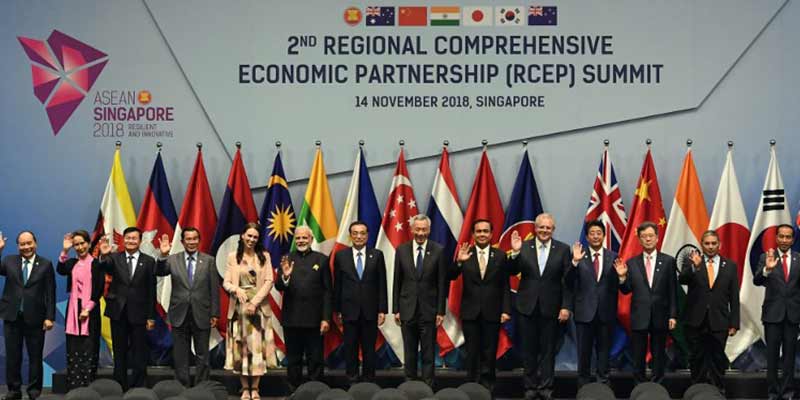
India is pressing ahead with talks to join a China-led free trade pact, officials said on October 10, despite the fears of some domestic producers that the country would be flooded with cheaper Chinese imports.
Negotiators for the 16-nation Regional Comprehensive Economic Partnership (RCEP) are in Bangkok this week for talks aimed at finalising the giant free trade zone by the end of the year.
Commerce Minister Piyush Goyal will join Indian delegates on the weekend for direct talks with his counterparts from China, Japan, Australia, New Zealand and Singapore.
Indian producers fear cutting tariffs on dairy and other produce would open the door to cheap Chinese imports and threaten an agriculture sector that supports most of India’s 1.3 billion people.
The RSS has called for a nationwide campaign against the deal, saying any change in tariffs would cripple factories and farms at a time of slowing economic growth.
“RCEP shackles the hands of the government to take the required policy measures to strengthen manufacturing and agriculture,” said RSS economic leader Ashwani Mahajan.
Proponents of the deal say it’s better for Indian agriculture to be in the trade zone than out.
“It would be better for India to have an open approach where agriculture can compete globally rather than adopt a conservative approach," said A.K. Gupta, director of the
Agricultural and Processed Food Products Export Development Authority, which falls under the commerce ministry.
India has reached an agreement in principle with other countries to include a safeguard mechanism that would trigger duties if goods are dumped from a partner country, a source with knowledge of the negotiations said.
The RCEP includes the 10 members of the ASEAN grouping of Southeast Asian nations and six Asia-Pacific countries - China, India, Japan, South Korea, Australia and New Zealand.
Aside from agricultural products, critics say cheaper Chinese mobile phones, steel, engineering goods and toys could also flood the Indian market.
Government officials say the treaty would enable Indian industry to join global supply chains for high-end goods such as electronics and engineering. Greater access to overseas markets would help offset an economic slowdown at home, they say.
India’s position poses a challenge
India’s negotiating position has emerged as a challenge to concluding the RCEP, particularly due to its stance that it has witnessed limited benefits from the earlier trade agreements, as per a report.
According to DBS Bank’s report, India’s reticence to participate in trade agreements has been on various grounds. For RCEP, it already runs a trade deficit with all the member countries. Besides, previous FTAs have not materially improved India’s trade math, and certain unfavourable provisions have turned to be sticking points.
While being a part of RCEP carries challenges, it will also open India and rest of the proposed members to numerous opportunities, the report noted.
The early phase of adjustment will be an uphill task as few import tariffs will have to be dismantled, leading to higher competition from imports and in turn hurting export competitiveness, it said.
Opportunity cost of non-participation is significant as multilateral trade agreements will help improve India’s integration to the global supply chains and market access opportunities, said DBS.
Since the US withdrew from the Trans-Pacific Partnership (TPP) agreement in 2017, the Asia Pacific bloc has been keen to expedite the RCEP as a viable alternative for global trade with lower trade barriers.
With trade conflicts and protectionist policies dominating the narrative, multilateral free trade agreements reinforce benefits from a wider market access and enjoy preferential or lower trade barriers.