
- India
- Nov 22
Iron Age settlement found in Gujarat
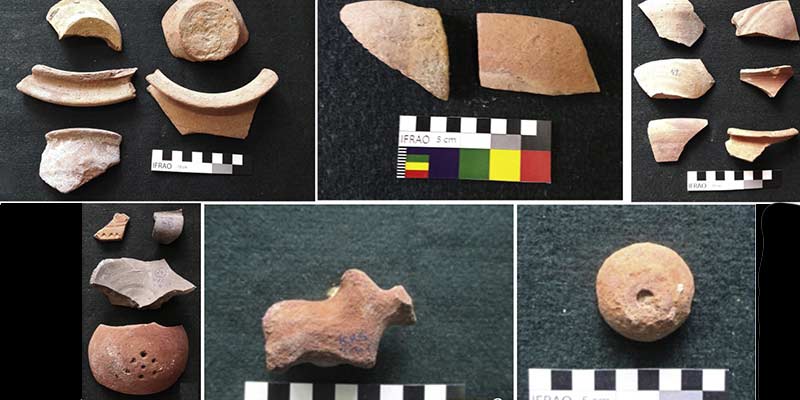
Researchers from IIT Kharagpur have found archaeological evidence of a 3,000-year-old Iron Age settlement at Karim Shahi in Rann of Kutch and a Historic to Medieval settlement at Vigakot in Thar Desert in Gujarat.
While the archaeological remains found at Karim Shahi region suggest the existence of human habitation from Early Iron Age to Early Historic Age (3100-2300), evidence of Historic to Medieval times (1500-900) settlement was unearthed at Vigakot, an IIT Kharagpur statement said on November 21.
The findings have been published online in the Elsevier journal Archaeological Research in Asia.
Soon after the fall of the 5200-3300-year-old Indus Valley civilisation, which is mainly attributed to declining monsoon and major droughts, the Iron Age civilisation came into being sometime around 2,500-3,000 years ago.
What were the findings?
The most interesting finding by the researchers, led by Anindya Sarkar from the department of geology and geophysics at IIT Kharagpur, is how human habitation thrived in such water-deprived inhospitable terrain and survived from Iron Age to Medieval period although major Harappan cities were abandoned by that time.
“What seems to be an arid landscape today have indications of an active river system and some amount of rainfall during that period as evidenced from the analysis of sediments, botanical remains like pollens and isotopes of oxygen in fossil molluscan shells,” said Navin Juyal from Physical Research Laboratory, Ahmedabad.
The researchers also referred to the historical travelogue of Al Beruni of 1030 AD, which mentioned the presence of rivers in Kutch.
Apart from the climatic conditions and sustenance of the settlements, the researchers have been successful in stitching a critical section of India’s Iron Age history which lay buried under the deep stretches of the Rann.
The recovery of artefacts like pitcher, jars and bull figurines and also numerous animal remains like bones, teeth etc have helped in reconstructing the social subsistence pattern of the region during the study period.
The earliest evidence of Iron Age found in Gujarat till now was 2,500 years old, which has now been pushed back by several centuries in antiquity. At Motichher, a place close to Karim Shahi, iron objects, nuggets and slags have been found and which would need further investigation.
The researchers also found traces of climate-induced migration from the west to the east. “Analysis of sediments and oxygen isotopes in fossil shells found in the areas indicated the presence of active river system and some rainfall that probably sustained human habitation from the Early Iron Age to medieval times though major Harappan cities were abandoned by that time due to water deprivation,” Sarkar said.
“At one place in Vigakot, we found a 1,100-year-old Chinese Qingbai porcelain, probably manufactured in Guangdong province of South China, and Sgraffiato potteries of 10th century Persia suggesting that the place was a trade centre on the long-distance trade route between West Asia and China,” Sarkar said.
Manorama Yearbook app is now available on Google Play Store and iOS App Store