
- India
- Dec 10
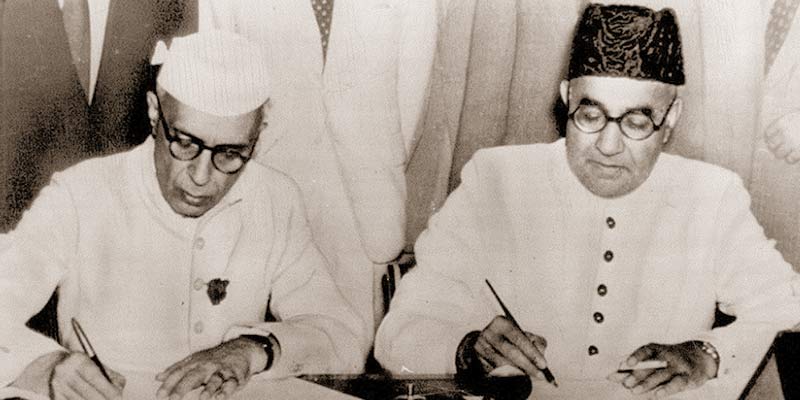
Short Takes / 1950 Nehru-Liaquat pact
The Lok Sabha has passed the Citizenship (Amendment) Bill, which seeks to provide Indian citizenship to non-Muslim refugees coming from Pakistan, Bangladesh and Afghanistan after facing religious persecution.
The Bill, which was passed in the Lok Sabha with 311 members favouring it and 80 voting against it, will now be tabled in the Rajya Sabha for its nod.
According to the proposed legislation, members of Hindu, Sikh, Buddhist, Jain, Parsi and Christian communities, who have come from Pakistan, Bangladesh and Afghanistan, till December 31, 2014 facing religious persecution there, will not be treated as illegal immigrants but given Indian citizenship.
During a debate in the Lok Sabha, Home Minister Amit Shah said the failure of the Nehru-Liaquat pact of 1950 is also one of the reasons for bringing about this Bill.
What is the Nehru-Liaquat pact?
Prime Minister Jawaharlal Nehru and his Pakistan counterpart Liaquat Ali Khan signed an agreement on April 8, 1950, in New Delhi regarding the security and rights of minorities.
It also has provisions for refugees to return to dispose of their property, looted property were to be returned and not to recognise forced conversions.
It also set up minority commissions to implement the agreement and also monitor its developments.
What were the main clauses?
The governments of India and Pakistan agreed that each shall ensure to the minorities throughout its territory complete equality of citizenship, irrespective of religion, a full sense of security in respect of life, culture, property and personal honour, freedom of movement within each country and freedom of occupation, speech and worship, subject to law and morality.
Members of minorities shall have equal opportunity with members of the majority community to participate in the public life of their country, to hold political or other office, and to serve in their country’s civil and armed forces.
Both governments declared these rights to be fundamental and undertook to enforce them effectively. Nehru drew attention to the fact that these rights are guaranteed to all minorities in India by its Constitution. Khan also pointed out that similar provision exists in the Objective Resolution adopted by the Constituent Assembly of Pakistan. It was the policy of both governments that the enjoyment of these democratic rights to be assured to all their nationals without distinction.
Both governments emphasised that the allegiance and loyalty of the minorities is to the state of which they are citizens, and that, it is to the government of their own state that they should look for the redress of their grievances.
Any conversion effected during a period of communal disturbance shall be deemed to be a forced conversion. Those found guilty of converting people forcibly shall be punished.
Manorama Yearbook app is now available on Google Play Store and iOS App Store