
- India
- Jan 08
Explainer / Madrasa postings in Bengal
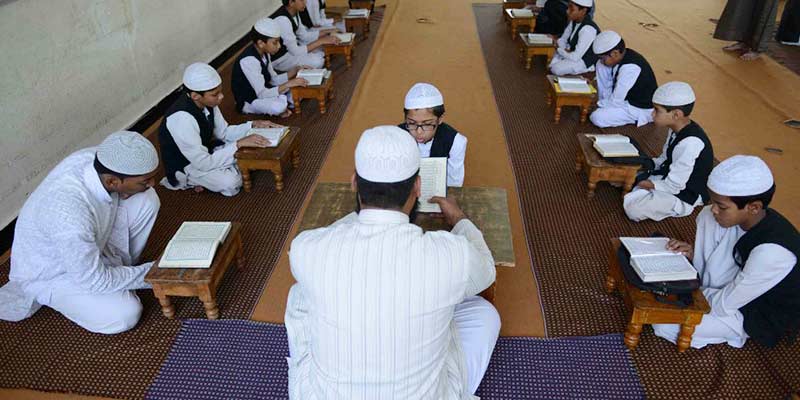
The Madrassa Managing Committee of West Bengal moved the Supreme Court challenging its recent judgment by a two-judge bench allowing the state to appoint teachers through a commission for minority institutions.
The apex court on January 6 upheld the West Bengal Madrasah Service Commission Act, 2008, which paved the way for appointment of teachers in the madrasas of the state.
A bench headed by Chief Justice S.A. Bobde and comprising Justices B.R. Gavai and Surya Kant said that the court will hear the plea of the Madrassa Managing Committee next week.
Senior advocate Salman Khurshid, appearing for the committee, said this case needs to be heard by a larger bench as the recent verdict is in conflict with the earlier SC judgment.
What is the role of Madrasah Service Commission?
The West Bengal Madrasah Service Commission Act came into force on October 22, 2008.
Its purpose is recruitment of teachers, including headmasters / headmistresses of recognised non-government aided junior high / high / higher secondary and senior madrasas in West Bengal. The recruitment of non-teaching staff, including librarians, has also been entrusted with the commission by amendment of the Act.
Under the Act, a teacher is defined as assistant teacher or any other person holding a teaching post in a madrasa recognised as such by the board of the council, as the case may be, and includes the headmaster / headmistress / superintendent.
Several petitions were filed in the Calcutta High Court challenging the validity of the law, contending that the government, which funds or provides aid to minority institutions, can formulate guidelines for appointments of teachers, but cannot itself appoint them.
The high court had declared the Act unconstitutional, saying it was violative of Article 30, which stated that all minorities shall have the right to establish and administer educational institutions of their choice.
The high court verdict was challenged in the apex court by teachers who were appointed under the new law.
Why did the SC back the Commission?
The SC upheld the law framed by the West Bengal government to constitute the Madrasah Service Commission for appointment of teachers in madrasas, saying the selection of teachers and their nomination by the panel was not violative of the rights of minority educational institutions.
The apex court held that the West Bengal Madrasah Service Commission Act ensured that the panel, comprising experts, screened talent across the state, adopted a fair selection procedure and selected the best available candidates purely on the basis of merit.
It said the commission also ensured that even while nominating, the interests of the minority institutions were taken care of.
The apex court said selection of meritorious students was accepted to be in national interest and a minority institution could not, in the name of right under Article 30(1) of the Constitution, disregard merit or merit-based selection of students.
The verdict could have an impact on the running of all government-aided minority educational institutions. The SC has said that if merit is not the sole and governing criteria, the minority institutions may lag behind non-minority institutions rather than keep in step with them.
Experts say the ruling says that institutions cannot claim to have absolute right in deciding appointment of teachers and it can be regulated by a government to ensure excellence in imparting education.
What is Article 30 in the Constitution?
Article 30 deals with the right of minorities to establish and administer educational institutions. It says...
1. All minorities, whether based on religion or language, shall have the right to establish and administer educational institutions of their choice.
1A. In making any law providing for the compulsory acquisition of any property of an educational institution established and administered by a minority, referred to in clause 1, the State shall ensure that the amount fixed by or determined under such law for the acquisition of such property is such as would not restrict or abrogate the right guaranteed under that clause.
2. The state shall not, in granting aid to educational institutions, discriminate against any educational institution on the ground that it is under the management of a minority, whether based on religion or language.
Manorama Yearbook app is now available on Google Play Store and iOS App Store