
- India
- Feb 19
79% of Indian bird species on a decline
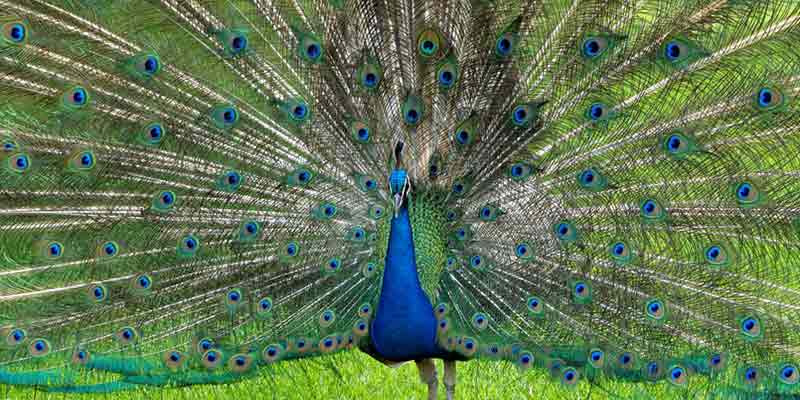
There has been a decline in the population of 79 per cent of Indian species of birds as per the assessment of current trends, but there is also some good news as the number of Indian peafowls (national bird peacock) has shown a dramatic rise, says a report.
Besides, the number of house sparrows has remained “roughly stable” across the country. Its population has gone up in rural areas, although declining in metropolitan cities, according to the State of India’s Birds Report 2020.
The report was released on the sidelines of the 13th Conference of Parties to the Convention on Conservation of Migratory Species of Wild Animals (CMS COP 13) in Gandhinagar.
How was the report prepared?
The State of India’s Birds report is the first comprehensive assessment of the distribution range, trends in abundance and conservation status for most of the bird species that regularly occur in India. This national-level assessment of birds is a significant step forward in the monitoring and conservation of India’s rich and varied biodiversity.
This report assesses the long-term trend, current trend, distribution range size and the overall conservation status of 867 Indian bird species based on observations contributed by birdwatchers to the eBird platform.
This report presents three indices of status for each species for which there is sufficient data.
1. Long-term trend: The proportional change in frequency of reporting in 2018 when compared with the frequency before 2000.
2. Current annual trend: The average annual change in frequency of reporting during the past five years (2014 to 2018).
3. Range size: The area covered by all those 25 x 25 km cells that are occupied by a species within the country during the past five years.
A year is considered to be a ‘migratory year’ from June 1 to May 31 the next year, because this spans a single migratory season for many bird species in India.
The report is a result of collaboration between 10 research and conservation organisations, including the Ashoka Trust for Research in Ecology and Environment, Bombay Natural History Society and Wildlife Institute of India, among others.
Highlights of the report
This assessment of nearly 867 Indian species makes it very clear that our birds are in overall decline, in some cases catastrophically so. Many more species show a downward trend.
When combined with information on range size and supplemented by the IUCN Red List categories, a total of 101 species are classified to be of ‘High Conservation Concern’ for India. Conservation action must be taken immediately to identify causes of decline and implement measures to halt and reverse the trend for these species.
A further 319 species are of ‘Moderate Conservation Concern’. These species must be carefully monitored to rapidly detect and act upon signs of continuing decline.
Of the 146 species for which current annual trends could be estimated, 79 per cent cent are declining, with almost 50 per cent declining strongly. The groups that show the greatest decline are raptors, migratory shorebirds and habitat specialists, among others.
Alongside these worrisome figures, there is also some heartening news. A total of 126 species (out of the 867 assessed) appear to be stable or increasing in the long term. These include the popular house sparrow, as well as other familiar species like Indian peafowl, Asian koel, rose-ringed parakeet and common tailorbird.
Many of these are species that have adapted well to human-dominated habitats even though they are not obligate human commensals.
Indian peafowl
The Indian peafowl appears so frequently in religion, folklore, art and craft that it is possibly the most recognised bird across India. Internationally as well, the peafowl (perhaps alongside the tiger) is immediately associated with India.
Having been declared the national bird in 1963, the species also finds itself under the highest level of legal protection in the country, being placed in Schedule I of the Wildlife (Protection) Act, 1972 and further amendments.
Peafowl are spread across the plains and hills of India, except in extremely dry or wet regions. The abundance trend is that of a general increase, both in the long term and currently.
The protection (and associated penalties for poaching and poisoning) afforded by being in Schedule I may also have contributed to increase. Some parts of the country report greater levels of crop damage by peafowl, a trend that calls for careful conflict assessment and management.
Manorama Yearbook app is now available on Google Play Store and iOS App Store