
- India
- Aug 07
Start-up funding under Rashtriya Krishi Vikas Yojana
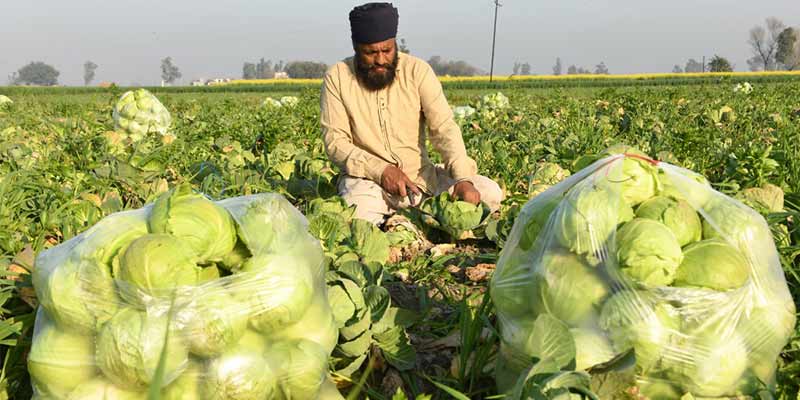
The Union Government accords very high priority to the agriculture sector. In order to contribute directly and indirectly to enhancing the income of farmers by providing opportunities to them and to provide employment to youth, start-ups are being encouraged.
A component, Innovation and Agri-entrepreneurship Development programme has been launched under Rashtriya Krishi Vikas Yojana in order to promote innovation and agripreneurship by providing financial support and nurturing the incubation ecosystem.
These start-ups are in various categories such as agro-processing, artificial intelligence, digital agriculture, farm mechanization, waste to wealth, dairy, fisheries etc. DAC&FW has selected 5 Knowledge Partners (KPs) as Centers of Excellence. These are -
• National Institute of Agricultural Extension Management (MANAGE), Hyderabad
• National Institute of Agricultural Marketing(NIAM) Jaipur
• Indian Agricultural Research Institute (IARI) Pusa, New Delhi
• University of Agriculture Science , Dharwad, Karnataka
• Assam Agriculture University, Jorhat, Assam
Following are the components of this scheme
• Agripreneurship Orientation - 2 months’ duration with a monthly stipend of Rs. 10,000/- per month. Mentorship is provided on financial, technical, IP issues etc.
• Seed Stage Funding of R-ABI Incubatees – Funding up to Rs. 25 lakhs (85% grant & 15% contribution from the incubatee).
• Idea/Pre-Seed Stage Funding of Agripreneurs – Funding up to Rs. 5 lakhs (90% grant and 10% contribution from the incubatee).
• Training on technical, finance, intellectual property, statutory compliance issues etc. is provided.
• Mentoring of start-ups through monitoring of milestones and timelines is part of the programme.
Some start-ups that are being incubated offer the following solutions
• Activx Animal Health Technologies branded as Vetzz, is a network of Veterinary Doctors which provides immediate connect with customers i.e animal owners via real time tele consultation and doorstep visits.
• SNL Innovations - InnoFarms provides fruit and vegetable pulp processed directly at the farm using an in-house developed monoblock fruit processing platform (on-wheels) to convert fruits to pulp with shelf life of up to 1 year with complete traceability from farm to customer.
• EF Polymer developed an Eco-Friendly Water Retention Polymer with an aim to solve the water scarcity crisis for farmers. This startup made a super absorbent polymer designed to absorb water in the soil, retain it for a long time, and supply to the crops as required.
• Among the start-ups that have been selected are several start-ups led by women such as A2P Energy Solution that uses AI to track waste bio-mass and then works with farmers to collect it. On one side it generates additional income for farmers and on the other side A2P converts the collected biomass into Next Gen biofuels like energy pellets, green coal and bio oil.
• Kyari Innovations is working on mitigating human wildlife conflict pan India and internationally. They have created an innovative product called ANIDERS- Animal Intrusion Detection and Repellent System. This device works like a mechanized scarecrow that can protect farmlands from animal intrusions.
• Agsmartic Technologies, has a vision to improve crop yield by precise irrigation and disease management though a data driven approach by using AI, IoT and computer vision. Their product Croplytics® is a combination of hardware and software solution that integrates ground sensor data and satellite imagery to translate data into actionable information for creating a precise model for irrigation.
In all, a total of 346 startups in the agriculture and allied sectors are being funded for a sum of Rs. 3671.75 lakhs in this phase. This fund will be released in instalments. These start-ups were trained for two months at 29 agribusiness incubation centres (KPs & RABIs) spread across India. These start-ups will lead to employment to youth. Besides, they, directly and indirectly, will contribute to enhancing the income of farmers by providing opportunities to them.
About Rashtriya Krishi Vikas Yojana
The National Development Council (NDC), in its meeting held on 29th May, 2007 resolved that a special Additional Central Assistance Scheme (RKVY) should be launched to meet the needs of farmers and called upon the Central and State governments to evolve a strategy to rejuvenate agriculture. Thus in consultation with the Planning Commission, Department of Agriculture & Cooperation, Ministry of Agriculture, Govt of India launched Rashtriya Krishi Vikas Yojana from 2007-2008.
Main objectives
1. To incentivize the states so as to increase public investment in Agriculture and allied sectors.
2. To provide flexibility and autonomy to states in the process of planning and executing Agriculture and allied sector schemes
3. To ensure the preparation of agriculture plans for the districts and states based on agro-climatic conditions, availability of technology and natural resources
4. To ensure that the local needs/crops/priorities are better reflected in the agricultural plans of the states.
5. To achieve the goal of reducing the yield gaps in important crops, through focused interventions.
6. To maximize returns to the farmers in Agriculture and allied sectors
7. To bring about quantifiable changes in the production and productivity of various components of Agriculture and allied sectors by addressing them in a holistic manner.
List of allied sectors under the scheme
• Crop Husbandry (including Horticulture)
• Animal Husbandry, Dairy Development and Fisheries
• Agricultural Research and Education
• Agricultural Marketing
• Food storage and Warehousing
• Soil and Water Conservation
• Agricultural Financial Institutions
• Other Agriculture Programmes and Cooperation
During XI Plan, Rs. 22408.76 crore was released to states out of which Rs. 21586.6 crore was utilized in implementing 5768 projects in certain broad categories namely; crop development, horticulture, agricultural mechanization, natural resource management, marketing & post-harvest management, animal husbandry, dairy development, fisheries, extension etc.