
- India
- Aug 19
Explainer / Pradhan Mantri Gram Sadak Yojana
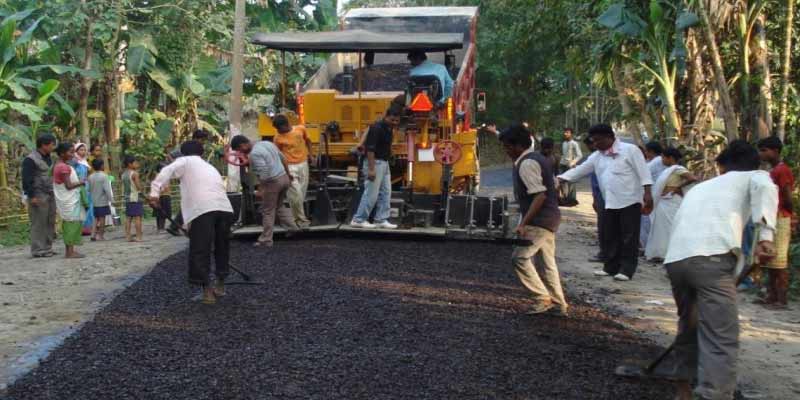
Jammu & Kashmir Lieutenant Governor Manoj Sinha held a meeting to review the progress achieved under the Pradhan Mantri Gram Sadak Yojana (PMGSY).
The J&K administration is working with an agenda of equitable development to ensure the welfare of every section of society and called for laying special focus on upgrading and improving road connectivity, especially in rural and remote areas as it is a prerequisite for the socio-economic development of any region.
In J&K and Ladakh, all unconnected habitations of population above 250, are eligible under the programme.
In J&K, 3,261 roads with a length of 19,277 km and 243 bridges have been sanctioned, out of which 1,858 roads of length 11,517 km and 84 bridges have been completed. Works for connecting 2,149 eligible unconnected habitations were sanctioned, out of which 1,858 habitations have been connected.
Similarly, in Ladakh, 142 roads of length of 1,207 km and three bridges have been sanctioned, out of which 96 roads of length 699 km and two bridges have been completed till July 2020. Works for 65 eligible habitations were sanctioned and 64 habitations have been already connected.
Pradhan Mantri Gram Sadak Yojana
PMGSY was launched in December 2000 with an objective to provide all-weather road connectivity to unconnected habitation of designated population size (500+ in plain areas and 250+ in Northeast, Hill states, tribal and desert areas) for overall socio-economic development of the areas.
Road connectivity is a key component of rural development by promoting access to economic and social services and thereby generating employment opportunities and increased agricultural income.
It is also a key ingredient in ensuring sustainable poverty reduction.
The unit for this programme is habitation and not revenue village or panchayat. A habitation is a cluster of population living in an area and the location of which does not change over time. Desam, dhanis, tolas, majras, hamlets, etc are commonly used terminology to describe habitation.
The phase I was a 100 per cent centrally sponsored scheme.
The phase II was approved in 2013. The roads already built for village connectivity was upgraded to enhance rural infrastructure under phase II. The total length of upgradation planned was 50,000 km.
The government launched Road Connectivity Project for Left Wing Extremism affected areas in 2016 as a separate vertical under PMGSY to provide all-weather road connectivity with necessary culverts and cross-drainage structures in 44 districts (35 are worst LWE affected districts and 9 are adjoining districts), which are critical from security and communication point of view. Under the scheme, roads of length 5,066 km has been sanctioned.
The phase III of the scheme was launched in 2019. It involves consolidation of through routes and major rural links connecting habitations to Gramin Agricultural Markets (GrAMs), higher secondary schools and hospitals. It also includes maintenance of the roads constructed under the scheme.
It will entail an estimated cost of Rs 80,250 crore for the period 2019-20 to 2024-25. The funds would be shared in the ratio of 60:40 between the Centre and states. For eight northeast states and Himalayan states the ratio is 90:10.
A total of 599,090 km roads have been constructed under the scheme since inception till April, 2019 (inclusive of PMGSY-I, PMGSY-II and RCPLWEA Scheme).
Nearly 97 per cent of the eligible and feasible habitations have already been connected by all-weather roads.