
- India
- Aug 25
- Mathew Gregory
National Council for Transgender Persons constituted
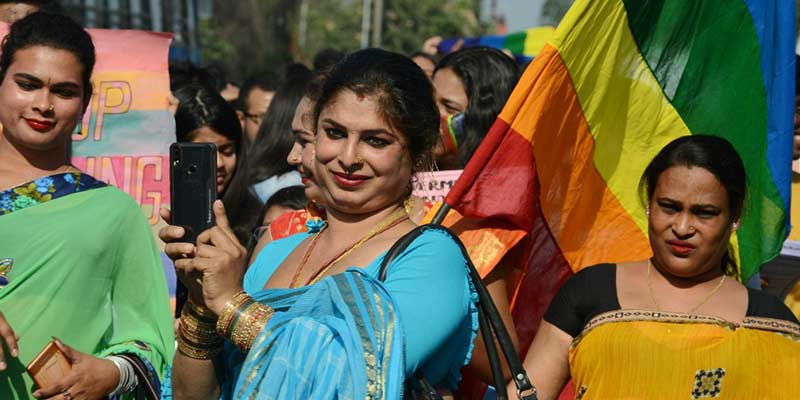
In exercise of the powers conferred by section 16 of the Transgender Persons (Protection of Rights) Act, 2019 (40 of 2019), the Central Government has constituted a National Council for Transgender Persons vide notification dated 21st August, 2020.
Composition
• The Union Minister of Social Justice & Empowerment will be Chairperson (ex-officio)
• Union Minister of State for Social Justice & Empowerment will be Vice-Chairperson (ex-officio)
• Representatives of various Ministries/Departments like joint secretary-level members from the Ministries of Health, Home, Minority Affairs, Education, Rural Development, Labour and Law a member from the Department of Pensions (Ministry of Personnel, Public Grievances & Pensions), NITI Aayog, National Human Rights Commission and National Commission for Women.
• Five representatives of transgender community one each from the north, south, east, west and northeast regions
• Representatives of State Governments and UTs one each from the north, south, east, west and northeast regions, on a rotational basis.
• Representatives of NHRC and NCW, representatives of State Governments and UTs and experts representing NGOs.
• A Member of National Council, other than ex officio member, shall hold office for a term of three years from the date of his nomination.
Functions
• to advise the Central Government on the formulation of policies, programmes, legislation and projects with respect to transgender persons;
• to monitor and evaluate the impact of policies and programmes designed for achieving equality and full participation of transgender persons;
• to review and coordinate the activities of all the departments of Government and other Governmental and non-Governmental Organisations which are dealing with matters relating to transgender persons;
• to redress the grievances of transgender persons; and
• to perform such other functions as may be prescribed by the Central Government.
About Transgender Persons (Protection of Rights) Act, 2019
• It is an act of the Parliament of India with the objective to provide for protection of rights of transgender people, their welfare, and other related matters.
• It defines a transgender person as one whose gender does not match the gender assigned at birth. It includes trans-men and trans-women, persons with intersex variations, gender-queers, and persons with socio-cultural identities, such as kinnar and hijra. Intersex variations is defined to mean a person who at birth shows variation in his or her primary sexual characteristics, external genitalia, chromosomes, or hormones from the normative standard of male or female body.
• The Bill prohibits the discrimination against a transgender person, including denial of service or unfair treatment in relation to: (i) education; (ii) employment; (iii) healthcare; (iv) access to, or enjoyment of goods, facilities, opportunities available to the public; (v) right to movement; (vi) right to reside, rent, or otherwise occupy property; (vii) opportunity to hold public or private office; and (viii) access to a government or private establishment in whose care or custody a transgender person is.
• Every transgender person shall have a right to reside and be included in his household. If the immediate family is unable to care for the transgender person, the person may be placed in a rehabilitation centre, on the orders of a competent court.
• No government or private entity can discriminate against a transgender person in employment matters, including recruitment, and promotion. Every establishment is required to designate a person to be a complaint officer to deal with complaints in relation to the Act.
• Educational institutions funded or recognised by the relevant government shall provide inclusive education, sports and recreational facilities for transgender persons, without discrimination.
• The government must take steps to provide health facilities to transgender persons including separate HIV surveillance centres, and sex reassignment surgeries. The government shall review medical curriculum to address health issues of transgender persons, and provide comprehensive medical insurance schemes for them.
• A transgender person may make an application to the District Magistrate for a certificate of identity, indicating the gender as ‘transgender’. A revised certificate may be obtained only if the individual undergoes surgery to change their gender either as a male or a female.
• The Bill states that the relevant government will take measures to ensure the full inclusion and participation of transgender persons in society. It must also take steps for their rescue and rehabilitation, vocational training and self-employment, create schemes that are transgender sensitive, and promote their participation in cultural activities.
• The Bill recognizes the following offences against transgender persons: (i) forced or bonded labour (excluding compulsory government service for public purposes), (ii) denial of use of public places, (iii) removal from household, and village, (iv) physical, sexual, verbal, emotional or economic abuse. Penalties for these offences vary between six months and two years, and a fine.
(The author is a trainer for Civil Services aspirants. The views expressed here are personal.)