
- India
- Oct 30
Next phase of Dam Rehabilitation and Improvement Project gets Cabinet nod
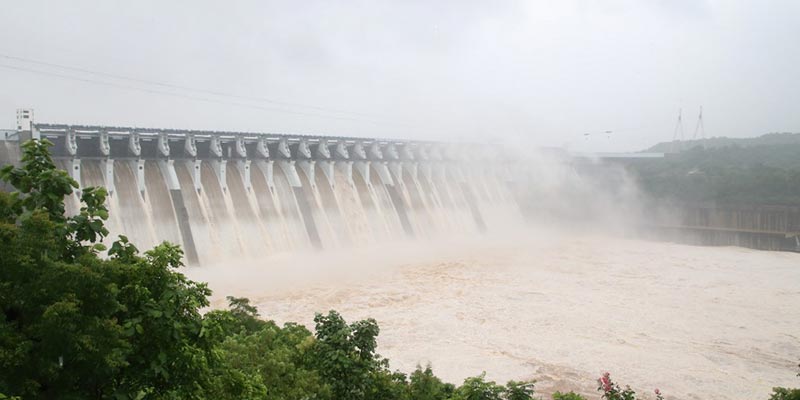
The Union Cabinet has approved a project to ensure maintenance and improvement of 736 dams in 19 states in the next 10 years.
Jal Shakti Minister Gajendra Singh Shekhawat said that phases two and three of the Dam Rehabilitation and Improvement Project (DRIP) will be completed under a 10-year plan at a total cost of Rs 10,211 crore, with the financial assistance of World Bank, and Asian Infrastructure Investment Bank (AIIB).
During the Cabinet meeting, the prime minister also approved a proposal for spending 4 per cent of the total amount of the project for building tourism-based activities, including water tourism at the existing dams.
Dam Rehabilitation and Improvement Project
• India is third in the world after China and the US to have large dams. The country has a total of 5,334 large dams and 411 dams are under construction. There are also several thousand smaller dams.
• Around 80 per cent of the existing dams are more than 25 years old with some 100-year-old dams also functional, which require serious maintenance, reinforcement and capacity building as they were built using older technology.
• These dams are vital for ensuring the water security in the country. Indian dams and reservoirs play an important role in the economic and agricultural growth of the country by storing approximately 300 billion cubic meter of water annually.
• These dams present a major responsibility in terms of asset management and safety. Due to deferred maintenance and other issues, these dams have associated risks in case of failure.
• The first phase of the programme was launched in 2012. It ended in 2020 under which 223 dams in seven states were included.
• It improved the safety and operational performance of selected dams, along with institutional strengthening through a system wide management approach. This project strengthened the overall culture of dam safety in the country.
• It complements the provisions in the Dam Safety Bill 2019, by ensuring capacity building of the dam owners as well as the proposed regulators, as well as creating necessary protocols for dam safety.
• Apart from structural measures to improve hydrologic safety, hydro-mechanical measures, seepage reduction, structural stability, non-structural measures such as dam break analysis. Emergency action plans were put in place for the selected dams. In addition, DHARMA (Dam Health and Rehabilitation Monitoring), a system to monitor the health of dams, has been developed. At present, it is being used by 18 states. A seismic hazard analysis information system (SHAISYS) has also been developed.
• The second and third phase of the project envisages to improve the safety and performance of selected existing dams and associated appurtenances in a sustainable manner, and strengthen the dam safety institutional setup in participating states as well as at the central level.
• The share of external funding is Rs 7,000 crore of the total project cost, and balance Rs 3,211 crore is to be borne by the concerned Implementing Agencies (IAs).
• It envisages to explore the alternative incidental means at a few of selected dams to generate the incidental revenue for sustainable operation and maintenance of dams.
• The plan also involves reinforcement, reconstruction and capacity building of the existing dams. A separate programme for the training of officers in this regard is already on.
• It is likely to generate employment opportunities equivalent to approximately 10 lakh man-days for unskilled workers, and 2.5 lakh man-days for working professionals. This programme will enhance water security in the country, and support sustainable development.
Manorama Yearbook app is now available on Google Play Store and iOS App Store