
- India
- Feb 05
- Mathew Gregory
KAPILA campaign for IP literacy
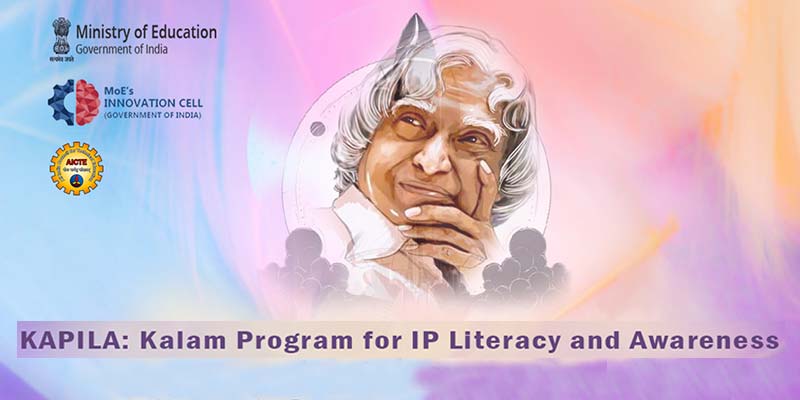
• The Government has launched a campaign namely Kalam Program for Intellectual Property Literacy and Awareness Campaign (KAPILA) for Intellectual Property Literacy and creating patent awareness on 15th October, 2020.
• The objectives of the scheme include creating awareness regarding Intellectual Property Rights (IPR) in Higher Education Institutions(HEIs), enabling of IP protection of inventions originating from faculty and students of HEIs, development of Credit Course on IPR, training program on IPR for faculty and students of HEIs and sensitization and development of vibrant IP filing system.
• So far, total 46,556 users have been registered for KAPILA.
• KAPILA was virtually launched by the Union Education Minister Ramesh Pokhriyal 'Nishank' on the 89th birth anniversary of former President and Scientist Late Dr APJ Abdul Kalam last year.
• The Government of India will spread awareness about the importance of patenting and invention under this campaign. This initiative will help India in becoming self-Reliant.
• This campaign will work in two ways:
a. By conducting awareness programs that will be conducted by the Ministry. These awareness programs will include basically two things:
▪ Systems used while applying for a patent.
▪ The whole process of applying for a patent.
b. By providing information in institutions where students are pursuing higher education in the country.
National Intellectual Property Rights policy 2016
The Policy was adopted in 2016 with a vision to self-reliant India in the field of Intellectual Property Rights where even common people will also be aware of the country’s IPR status.
Major objectives are:
• To bring all the Intellectual Property Rights under a single platform.
• To set an institutional mechanism to implement, monitor, and review the Intellectual Property Rights in the country.
The ranking of India improved in the Global Innovation Index within 1 year of adopting the National IPR policy in 2016. Earlier, in 2015 the rank of India used to be 81 which got improved to 52 in the year 2019.
(The author is a trainer for Civil Services aspirants. The views expressed here are personal.)