
- India
- May 28
Explainer / Non-Aligned Movement (NAM)
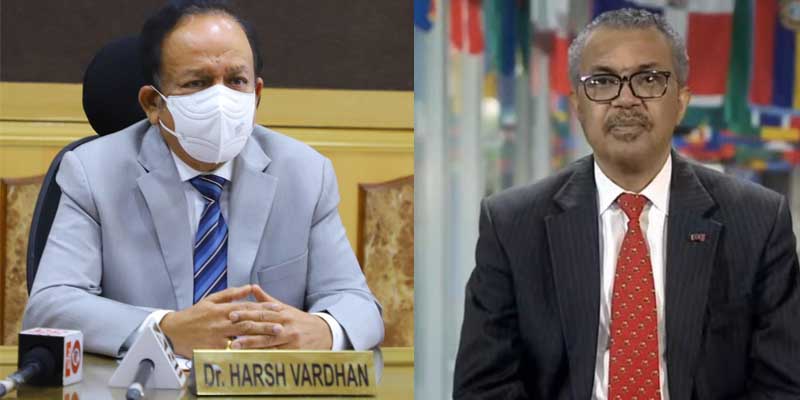
Union Health Minister Harsh Vardhan participated in a virtual meeting with ministers of health of the Non-Aligned Movement (NAM) countries on May 27.
World Health Organisation chief WHO chief Tedros Adhanom Ghebreyesus was also present in the meeting.
The minister said that India ensured supply of medicines to 123 partner countries despite its own needs amid the COVID-19 pandemic, and has also been active in global efforts to develop diagnostics, therapeutics and vaccines to tackle the infection.
Harsh Vardhan also said the country has adopted transformative strategies and fast-tracked many initiatives aimed at all the core tenets of Universal Health Coverage like strengthening health systems, including primary health care, improving access to free drugs and diagnostics, and reducing catastrophic health care spending.
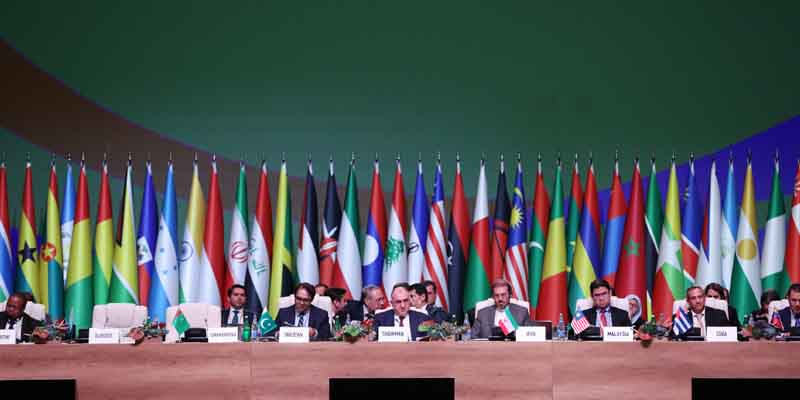
Non-Aligned Movement
• The Non-Aligned Movement (NAM) is the biggest forum for political coordination and consultation after and within the UN, composed of 120 Member States from the developing world. There are also 17 countries and 10 international organisations that hold an observer status.
• The Movement is led by a Chair that rotates every three years, currently Azerbaijan, who is assisted and/or advised by the former and upcoming Chair of the Movement. The troika represents the past, present and future of the Movement.
Establishment of NAM
• NAM was established and founded during the collapse of the colonial system and the independence struggles of the people of Africa, Asia, Latin America and other regions of the world, and at the height of the Cold War.
• The African-Asian Conference held in Bandung, Indonesia, from April 18 to 24, 1955, is considered the most immediate antecedent to the establishment of NAM.
• The following persons are considered to be the founding fathers and historic leaders of the Movement: Joseph Broz Tito (President of Yugoslavia), Gamal Abdel Nasser (President of Egypt), Jawaharlal Nehru (Prime Minister of India), Sukarno (President of Indonesia), and Kwame Nkrumah (President of Ghana).
• During the early days of the Movement, its actions were a key factor in the decolonisation process, which led later to the attainment of freedom and independence by many countries and people and to the founding of tens of new sovereign states.
• NAM was officially established in 1961, at the Belgrade Summit, hosted by President Josip Broz Tito, following the discussions that were triggered during the Afro-Asian Conference of 1955, hosted by President Sukarno, and which resulted in the adoption of the Bandung Principles that up to date still serve as the purposes and objectives of the policy of non-alignment, and which have governed relations between big and small nations.
• The founders of NAM have preferred to declare it as a movement but not an organisation in order to avoid bureaucratic implications of the latter.
• Since its inception, the NAM has waged a ceaseless battle to ensure that peoples being oppressed by foreign occupation and domination can exercise their inalienable right to self-determination and independence.
• During the 1970s and 1980s, the movement played a key role in the struggle for the establishment of a new international economic order that allowed all the people to make use of their wealth and natural resources and provided a wide platform for a fundamental change in international economic relations and the economic emancipation of the countries of the South.
• Over the years, the NAM has gathered a growing number of States and liberation movements which, in spite of their ideological, political, economic, social and cultural diversity, have accepted its founding principles and primary objectives and shown their readiness to realize them.
• Historically, the non-aligned countries have shown their ability to overcome their differences and found a common ground for action that leads to mutual cooperation and the upholding of their shared values.
The Ten Principles of NAM
The Ten Principles of Bandung were adopted as the main goals and objectives of the non-alignment policy and the essential criteria to the membership of this Movement. They remain in full validity today and are at the backbone of the Movement.
These principles are:
1. Respect of fundamental human rights and of the objectives and principles of the Charter of the United Nations.
2. Respect for the sovereignty and territorial integrity of all nations.
3. Recognition of the equality among all races and of the equality among all nations, both large and small.
4. Non-intervention or non-interference into the internal affairs of another country.
5. Respect of the right of every nation to defend itself, either individually or collectively, in conformity with the Charter of the United Nations.
6. Non-use of collective defence pacts to benefit the specific interests of any of the great powers.
7. Refraining from acts or threats of aggression and use of force against the territorial integrity or political independence of any country. Non-use of pressures by any country against other countries.
8. Settlement of all international disputes by peaceful means, such as negotiation, conciliation, arbitration or judicial settlement as well as other peaceful means of the parties’ own choice, in conformity with the Charter of the United Nations.
9. Promotion of mutual interest and cooperation.
10. Respect for justice and international obligations.
Manorama Yearbook app is now available on Google Play Store and iOS App Store