
- India
- Jul 29
Union Cabinet clears amendment to DICGC Act

• In a bid to ensure timely support to depositors of stressed banks, the Union Cabinet has approved Deposit Insurance and Credit Guarantee Corporation Bill, 2021 to provide account holders access to up to Rs 5 lakh funds within 90 days of a bank coming under moratorium.
• Union Finance Minister Nirmala Sitharaman in her Budget Speech had announced that changes will be made to the Deposit Insurance and Credit Guarantee Corporation (DICGC) Act, 1961.
• Last year, the government raised insurance cover on deposit five-fold to Rs 5 lakh to provide support to depositors of ailing lenders like Punjab and Maharashtra Co-operative (PMC) Bank.
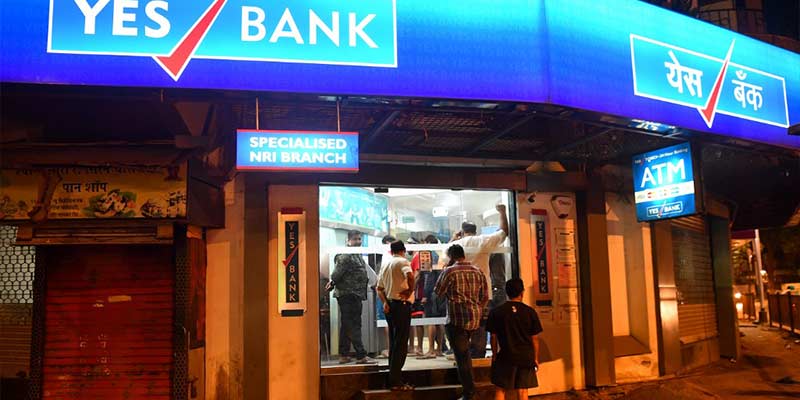
• Following the collapse of PMC Bank, Yes Bank and Lakshmi Vilas Bank too came under stress, leading to restructuring by the RBI.
• The Bill is expected to be introduced in the Monsoon Session.
What is deposit insurance?
• The Deposit Insurance and Credit Guarantee Corporation (DICGC), a wholly-owned subsidiary of the Reserve Bank of India, provides insurance cover on bank deposits.
• The DICGC insures each bank depositor up to a maximum of Rs 5 lakh for both principal and interest as on the date of liquidation or cancellation of a bank’s licence.
• DICGC insures all bank deposits, such as savings of fixed or current deposits or recurring deposits, and it covers all commercial banks, including foreign bank branches in India.
• The enhanced deposit insurance cover of Rs 5 lakh is effective from February 4, 2020. The increase was done after a gap of 27 years as it has been static since 1993.
• Every bank used to pay 10 paise as an insurance premium per Rs 100 of deposit. This was raised to 12 paise.
• All funds held in the same type of ownership at the same bank are added together before deposit insurance is determined. If the funds are in different types of ownership, or are deposited into separate banks they would then be separately insured.

Banks covered by Deposit Insurance Scheme
• All commercial banks, including the branches of foreign banks functioning in India, Local Area Banks and Regional Rural Banks.
• All eligible co-operative banks as defined in Section 2(gg) of the DICGC Act are covered by the Deposit Insurance Scheme.
When was this concept introduced?
• The concept of insuring deposits kept with banks received attention for the first time in 1948 after the banking crisis in Bengal. The question came up for reconsideration in 1949, but it was decided to hold it in abeyance till the RBI ensured adequate arrangements for inspection of banks.
• Subsequently, in 1950, the Rural Banking Enquiry Committee also supported the concept. Serious thought to the concept was, however, given by the RBI and the central government after the crash of the Palai Central Bank Ltd, and the Laxmi Bank Ltd in 1960.
• The Deposit Insurance Corporation (DIC) Bill was introduced in Parliament on August 21, 1961. After it was passed by Parliament, the Bill got the assent of the President on December 7, 1961 and the Deposit Insurance Act, 1961 came into force on January 1, 1962.
• The Deposit Insurance Scheme was initially extended to functioning commercial banks only. This included the State Bank of India and its subsidiaries, other commercial banks and the branches of the foreign banks operating in India.
• Since 1968, with the enactment of the Deposit Insurance Corporation (Amendment) Act, 1968, the Corporation was required to register “eligible co-operative banks” as insured banks under the provisions of Section 13 A of the Act.
• The government, in consultation with the RBI, introduced a Credit Guarantee Scheme in July 1960. The RBI was entrusted with the administration of the scheme and was designated as the Credit Guarantee Organisation (CGO) for guaranteeing the advances granted by banks and other Credit Institutions to small scale industries. The RBI operated the scheme up to March 31, 1981.
• The RBI also promoted a public limited company on January 14, 1971, named the Credit Guarantee Corporation of India Ltd. (CGCI).
• With a view to integrating the functions of deposit insurance and credit guarantee, the above two organisations (DIC & CGCI) were merged and the present Deposit Insurance and Credit Guarantee Corporation (DICGC) came into existence on July 15, 1978.
Increase in insurance cover
Initially, the insurance cover was limited to Rs 1,500 only per depositor(s) for deposits held by him (them) in the “same right and in the same capacity” in all the branches of the bank taken together. However, the Act also empowers the Corporation to raise this limit with the prior approval of the central government.
Accordingly, the insurance limit was enhanced from time to time as follows:
• Rs 5,000 with effect from January 1, 1968.
• Rs 10,000 with effect from April 1, 1970.
• Rs 20,000 with effect from January 1, 1976.
• Rs 30,000 with effect from July 1, 1980.
• Rs 1 lakh with effect from May 1, 1993.
• Rs 5 lakh with effect from February 4, 2020.
What changes will the amended Act bring in?
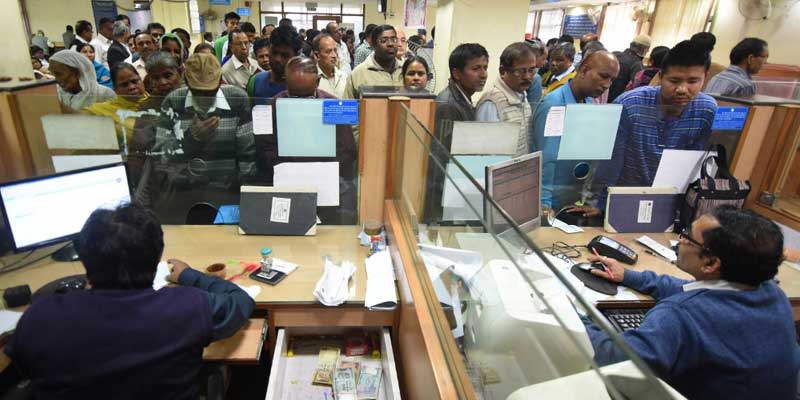
• Once the Bill becomes law, it will provide immediate relief to thousands of depositors, who had their money parked in stressed lenders such as PMC Bank and other small cooperative banks.
• As per the current provisions, the deposit insurance of up to Rs 5 lakh comes into play when the licence of a bank is cancelled and the liquidation process starts.
• At present, it takes 8-10 years for depositors of a stressed bank to get their insured money and other claims.
• With the amended law, even if there is a moratorium on a bank, which means everything is frozen and depositors are not able to take their money out of their accounts, even at that time this measure will set in.
• The first 45 days will go for the bank, which has come under stress, to collect all the accounts where the claims will have to be made, and then it will be given to this insurance company, which in real-time will check it all up, and nearer the 90th day, depositors will get the money.
Manorama Yearbook app is now available on Google Play Store and iOS App Store