
- India
- Aug 13
Explainer / Growth of renewable energy sector in India
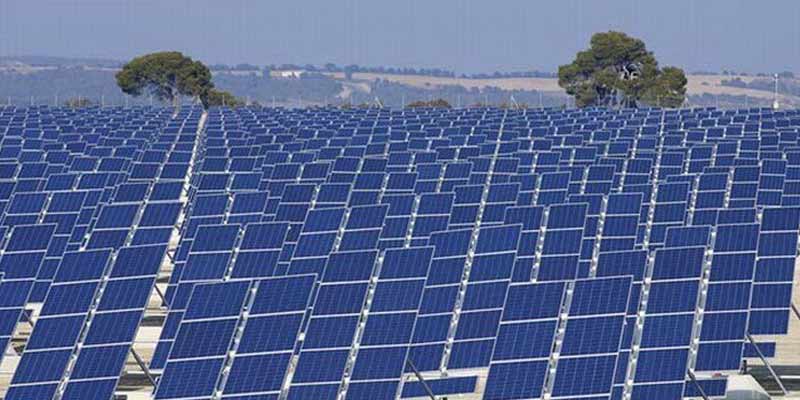
India’s total installed renewable energy generation capacity crossed 100 GW mark on August 12. The country is now fourth in the world in terms of installed renewable energy capacity.
India has set an ambitious target to have 175 GW of renewable energy capacity by 2022. This includes 100 GW from solar, 60 GW from wind, 10 GW from biomass and 5 GW from small hydro power.
Also, the country aims to have 450 GW of renewable energy capacity by 2030.
While 100 GW has been installed, 50 GW is under installation and 27 GW is under tendering. If large hydro is included the installed renewable energy capacity increases to 146 GW.
Scope of renewable energy in India
• India has large renewable energy potential from sources such as wind, solar, biomass, small hydro among others.
• As per estimates, India has a wind potential of more than 300 GW at a hub height of 100 metre, solar potential of 750 GW, assuming 3 per cent wasteland is made available, small hydro potential of 20 GW, and bio-energy potential of 25 GW.
Further, there exists significant potential from decentralised distributed applications for meeting the hot water requirement for residential, commercial and industrial sector through solar energy and also meeting cooking energy needs in the rural areas through biogas.
• Renewable energy also has the potential to usher in universal ‘energy access’. In a decentralised or standalone way renewable energy is appropriate, scalable and a viable solution for providing power to unelectrified or power-deficient villages and hamlets.
Solar Power
National Solar Mission
• Harnessing solar energy is one the major components of India’s renewable energy strategy. The country has an estimated solar energy potential of about 750 GW solar power.
• The National Solar Mission (NSM), launched on January 11, 2010, with the objective of establishing India as a global leader in solar energy, by creating the policy conditions for solar technology diffusion across the country as quickly as possible.
• It had set a target for development and deployment of 20 GW Solar Power by the year 2022.
• The Cabinet in its meeting held on June 17, 2015 had approved revision of the target from 20 GW to 100 GW.
PM-KUSUM
• The Cabinet Committee on Economic Affairs approved Pradhan Mantri Kisan Urja Suraksha Evam Utthan Mahabhiyan (PM-KUSUM) scheme in its meeting held on February 19, 2019. Subsequently, expansion of the scheme was announced in the Budget for 2020-21, which was later approved by the ministry of finance.
The Scheme consists of three components:
• Component-A: Install grid connected ground mounted solar power plants (up to 2 MW) aggregating to a total capacity of 10 GW.
• Component-B: Installation of 20 lakh standalone solar powered agriculture pumps.
• Component-C: Solarisation of 15 lakh existing grid-connected agriculture pumps.
• All components combined would support installation of additional solar capacity of 30.80 GW.
Roof Top Solar (RTS) Programme
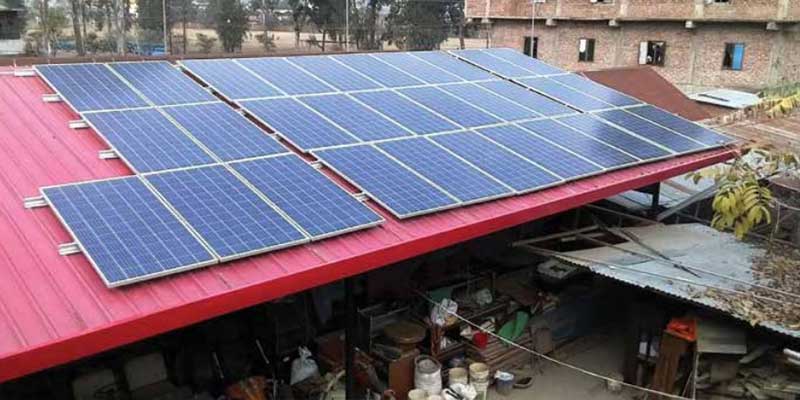
• Rooftop Phase-I of this programme was launched on December 30, 2015 in which incentives and subsidies were provided for residential, institutional and social sectors.
• Rooftop Phase-II was launched in February 2019 with a target of achieving cumulative capacity of 40 GW by the year 2022.
• Under the Roof Top Solar scheme, Central Financial Assistance (CFA) of 40 per cent for RTS systems up to 3 kW capacity and 20 per cent for capacity beyond 3 kW and up to 10 kW is provided.
• For Group Housing Societies (GHS) and Residents Welfare Associations (RWA), CFA is limited to 20 per cent for RTS plants for supply of power to common facilities.
• So far, over 4.4 GW capacity of RTS capacity has been estimated to have been installed in the country.
Solar Parks
• The Scheme for Development of Solar Parks and Ultra Mega Solar Power Projects was rolled out on December 12, 2014 with aggregate capacity 20 GW. Further, the capacity of the Solar Park Scheme was enhanced 40 GW on March 21, 2017 to set up at least 50 Solar Parks by 2021-22.
• The ministry introduced the Solar Parks programme with the objective of facilitating solar project developers to set up projects in a plug-and-play model.
• All states and Union Territories are eligible for getting benefit under the scheme. Solar parks are being developed by agencies of central/state governments, joint ventures between agencies of central and state governments and also by private entrepreneurs.
Wind Energy
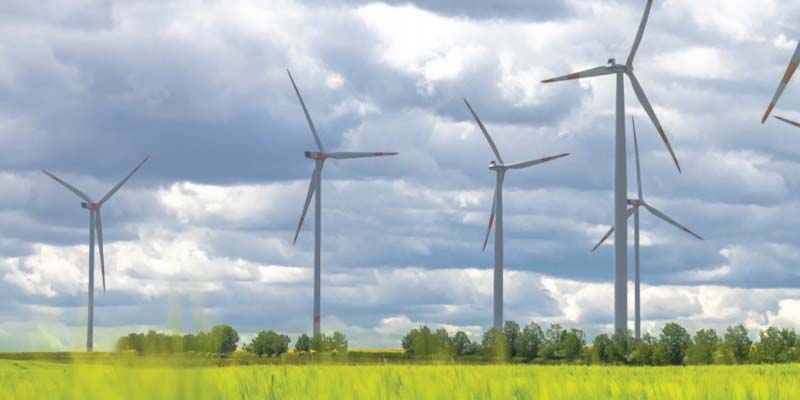
• India’s wind energy sector is led by indigenous wind power industry and has shown consistent progress. The expansion of the wind industry has resulted in a strong ecosystem, project operation capabilities and manufacturing base of about 10,000 MW per annum.
• The country currently has the fourth highest wind installed capacity in the world with total installed capacity of 38.62 GW (as on December 31, 2020) and 64.64 billion units were generated from wind power during 2019-20.
• Over a period of time, the ministry, through National Institute of Wind Energy (NIWE), has installed 890 wind-monitoring stations all over the country and issued wind potential maps at 50 m, 80 m, 100 m and 120 m above ground level.
Offshore Wind development
• India is blessed with a coastline of about 7,600 km surrounded by sea water on three sides and has tremendous power generation potential from offshore wind energy. Considering this, the government had notified the National Offshore Wind Energy Policy in October 2015.
• National Institute of Wind Energy (NIWE), Chennai has been designated as the nodal agency to execute various pre-feasibility activities relating to resource assessment, surveys and studies within EEZ (Exclusive Economic Zone), demarcation of offshore potential blocks and facilitating offshore wind energy project developers for setting up offshore wind energy farms.
• Based on the preliminary assessment, eight zones each in Gujarat and Tamil Nadu have been identified and the energy potential within these zones has been estimated to be about 70 GW.
• The government has announced its intention of developing 5 GW of offshore wind energy projects by 2022 and 30 GW by 2030.
Small Hydro Power
• The ministry is vested with the responsibility of developing hydro power projects of capacity up to 25 MW, categorised as Small Hydro Power (SHP) Projects. These projects have potential to meet power requirements of remote and isolated areas in a decentralized manner besides providing employment opportunities to local people.
• Small Hydro Power projects are further categorized into small, mini and micro hydel projects based on their capacity as follows:
• Micro hydel ≤ 0.10 MW
• Mini hydel ≤ 2 MW
• Small Hydel ≤ 25 MW.
• The estimated potential of small, mini and micro hydel projects in the country is 21,133.65 MW from 7,133 sites.
• The national target for SHP is to achieve a cumulative capacity of 5 GW by 2022, under overall targets of achieving a cumulative grid connected Renewable Energy Power Projects of 175 GW.
• Against this target of achieving an aggregate capacity of 5 GW by the year 2022, an aggregate capacity of 4,750.46 MW has been achieved by December 31, 2020 through 1,134 small hydro power projects.
Biomass Power
• The ministry has been promoting biomass power and bagasse cogeneration Programme with the aim to recover energy from biomass including bagasse, agricultural residues such as shells, husks, de-oiled cakes and wood from dedicated energy plantations for power generation.
• A scheme to support promotion of biomass-based cogeneration in sugar mills and other industries was notified on May 11, 2018. The potential for power generation from agricultural and agro-industrial residues is estimated at about 18,000 MW.
• With progressive higher steam temperature and pressure and efficient project configuration in new sugar mills and modernisation of existing ones, the potential of surplus power generation through bagasse cogeneration in sugar mills is estimated at around 8 GW. Thus, the total estimated potential for biomass power is about 26 GW.
Green Energy Corridors
• To facilitate evacuation of electricity from RE projects, Green Energy Corridor scheme was launched in 2015 for setting up of transmission and evacuation infrastructure.
• The Inter-State Transmission System (ISTS) component consisting of 3200 circuit kilometer (ckm) transmission lines and 17,000 Mega Volt Ampere (MVA) substations has been completed in March 2020.
• The Intra-State Transmission System (InSTS) component has been sanctioned to eight RE rich states of Tamil Nadu, Rajasthan, Karnataka, Andhra Pradesh, Maharashtra, Gujarat, Himachal Pradesh and Madhya Pradesh for evacuation of over 20,000 MW of renewable power.
• The InSTS component is under implementation and is anticipated to be completed by year 2021.
• Out of the target of approximately 9700 ckm transmission lines and approximately 22,600 MVA capacity substations under the InSTS component, approximately 7362 ckm lines have been constructed and 9656 MVA substations have been charged.
Greening of Islands
• The government intends to fully convert Andaman & Nicobar, Lakshadweep islands to Green Energy where energy needs will be met using RE sources.
• The Greening of Islands programme aims to deploy 52 MW of distributed grid-connected solar PV power projects.
• The ministry provides a 40 per cent capital subsidy for projects under the scheme.
Renewable Energy Hybrid Projects
• Solar and wind power being variable in nature pose challenges to provide a stable supply. However, in India solar and wind resources are complementary to each other as wind is stronger during evening and night, when there is limited input from solar power. Hybridisation of these two technologies reduces the variability and optimises the utilisation of land and transmission systems.
• In order to implement the National Wind-Solar Hybrid Policy, a scheme for setting up of 2500 MW Inter State Transmission System (ISTS) connected wind-solar hybrid projects was sanctioned on May 25, 2018.
• The Solar Energy Corporation of India (SECI) was the nodal agency for implementation of the scheme through tariff based transparent competitive bidding process.
• Capacities of 1,440 MW of wind-solar hybrid projects are under implementation in the states of Rajasthan and Tamil Nadu.
What are the main challenges for the RE sector?
India is confronted with major challenges in moving towards higher deployment levels for renewables.
Some are:
Mobilisation of the necessary finance and investment on competitive terms: Gearing up the banking sector for arranging finances for larger deployment goals, exploring low-interest rate, long-term international funding, and developing a suitable mechanism for risk mitigation or sharing by addressing both technical and financial bottlenecks are major challenges. The ongoing efforts for mitigating investment risks, and easing approval processes would also need to be strengthened.
Land acquisition: It is one of the major challenges in renewable power development. Identification of land with RE potential, its conversion (if needed), clearance from land ceiling Act, decision on land lease rent, clearance from revenue department, and other such clearances take time. State governments have to play a major role in acquisition of land for RE projects.
Creating an innovation and manufacturing eco-system in the country.
Economically integrating a larger share of renewables with the grid.
Enabling supply of firm and dispatchable power from renewables.
Enabling penetration of renewables in the so called hard to decarbonize sectors.
Manorama Yearbook app is now available on Google Play Store and iOS App Store