
- India
- Feb 09
Infant mortality rate improves in India
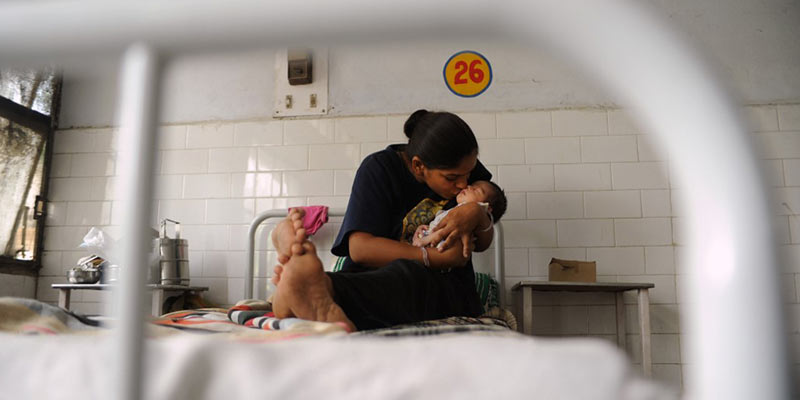
As per the Sample Registration System (SRS) bulletin of Registrar General of India (RGI), the Infant Mortality Rate (IMR) has reduced from 37 per 1,000 live births in 2015 to 30 per 1,000 live births in 2019 at national level. This was informed by Union Minister of State for Health and Family Welfare Bharati Pravin Pawar in a written reply in the Rajya Sabha.
The Infant Mortality Rate (IMR), which is widely accepted as a crude indicator of the overall health scenario of a country or a region, is defined as the infant deaths (less than one year) per thousand live births in a given time period and for a given region.
The minister also informed that the Maternal Mortality Rate (MMR) has reduced from 8.1 in 2015-17 to 7.3 in 2016-18 at national level.
In order to bring down Infant Mortality Rate (IMR) and Maternal Mortality Rate (MMR), the ministry of health and family welfare (MoHFW) is supporting all states/UTs in implementation of Reproductive, Maternal, New-born, Child, Adolescent health and Nutrition (RMNCAH+N) strategy under National Health Mission (NHM) based on the Annual Programme Implementation Plan (APIP) submitted by states/UTs.
What is SRS?
• The Sample Registration System (SRS) is a large-scale demographic survey for providing reliable annual estimates of infant mortality rate, birth rate, death rate and other fertility and mortality indicators at the national and subnational levels.
• Initiated on a pilot basis by the Office of the Registrar General in a few selected states in 1964-65, it became fully operational during 1969-70 with about 3,700 sample units.
• The field investigation consists of continuous enumeration of births and deaths in selected sample units by resident part-time enumerators, generally anganwadi workers and teachers, and an independent survey every six months by SRS supervisors.
• The data obtained by these two independent functionaries are matched. The unmatched and partially matched events are re-verified in the field and thereafter an unduplicated count of births and deaths is obtained.
• The sample unit in rural areas is a village or a segment of it (if the village population is 2,000 or more).
• In urban areas, the sampling unit is a census enumeration block with a population ranging from 750 to 1,000. The SRS sample is replaced every 10 years based on the latest census frame. The current sample is based on the 2011 Census frame.
• At present, SRS is operational in 8,847 sample units (4,961 rural and 3,886 urban) covering about 8.1 million population, spread across all states and Union Territories.
Interventions for improving Infant Mortality Rate (IMR):
• Facility based new-born care: Sick New-born Care Units (SNCUs) are established at district hospital and medical college level, new-born Stabilization Units (NBSUs) are established at First Referral Units (FRUs)/Community Health Centres (CHCs) for care of sick and small babies.
• Community based care of new-born and young children: Under Home Based New-born Care (HBNC) and Home-Based Care of Young Children (HBYC) programme, home visits are performed by ASHAs to improve child rearing practices and to identify sick new-born and young children in the community.
• Mothers’ Absolute Affection (MAA): Early initiation and exclusive breastfeeding for first six months and appropriate Infant and Young Child Feeding (IYCF) practices are promoted under Mothers’ Absolute Affection (MAA).
• Social Awareness and Actions to Neutralize Pneumonia Successfully (SAANS) initiative implemented since 2019 for reduction of childhood morbidity and mortality due to Pneumonia.
• Universal Immunization Programme (UIP) is implemented to provide vaccination to children against life threatening diseases such as Tuberculosis, Diphtheria, Pertussis, Polio, Tetanus, Hepatitis B, Measles, Rubella, Pneumonia and Meningitis caused by Haemophilus Influenzae B. The Rotavirus vaccination has also been rolled out in the country for prevention of Rota-viral diarrhoea. Pneumococcal Conjugate Vaccine (PCV) has been introduced in all the States and UTs.
• Rashtriya Bal Swasthya Karyakram (RBSK): Children from 0 to 18 years of age are screened for 30 health conditions (i.e. diseases, deficiencies, defects and developmental delay) under Rashtriya Bal Swasthya Karyakram (RBSK) to improve child survival.
• District Early Intervention Centres (DEICs) at district health facility level are established for confirmation and management of children screened under RBSK.
• Nutrition Rehabilitation Centres (NRCs) are set up at public health facilities to treat and manage the children with Severe Acute Malnutrition (SAM) admitted with medical complications.
• Intensified Diarrhoea Control Fortnight / Defeat Diarrhoea (D2) initiative implemented for promoting ORS and Zinc use and for reducing diarrhoeal deaths.
• Anaemia Mukt Bharat (AMB) strategy as a part of POSHAN Abhiyan aims to strengthen the existing mechanisms and foster newer strategies to tackle anaemia which include testing & treatment of anaemia in school going adolescents & pregnant women, addressing non nutritional causes of anaemia and a comprehensive communication strategy.
• Capacity Building: Several capacity building programs of health care providers are taken up for improving maternal and child survival and health outcomes.
Interventions for improving Maternal Mortality Rate (MMR):
• Janani Suraksha Yojana (JSY), a demand promotion and conditional cash transfer scheme was launched in April 2005 with the objective of reducing Maternal and Infant Mortality by promoting institutional delivery among pregnant women.
• Janani Shishu Suraksha Karyakram (JSSK) aims to eliminate out-of-pocket expenses for pregnant women and sick infants by entitling them to free delivery including caesarean section, free transport, diagnostics, medicines, other consumables, diet and blood in public health institutions.
• Surakshit Matritva Aashwasan (SUMAN) aims to provide assured, dignified, respectful and quality healthcare at no cost and zero tolerance for denial of services for every woman and newborn visiting the public health facility to end all preventable maternal and newborn deaths.
• Pradhan Mantri Surakshit Matritva Abhiyan (PMSMA) provides pregnant women fixed day, free of cost assured and quality antenatal care on the ninth day of every month.
• LaQshya aims to improve the quality of care in labour room and maternity operation theatres to ensure that pregnant women receive respectful and quality care during delivery and immediate post-partum period.
• Comprehensive Abortion Care services are strengthened through trainings of health care providers, supply of drugs, equipment, Information Education and Communication (IEC) etc.
• Midwifery programme is launched to create a cadre for nurse practitioners in midwifery who are skilled in accordance to International Confederation of Midwives (ICM) competencies and capable of providing compassionate women-centred, reproductive, maternal and new-born health care services.
• Over 25,000 ‘Delivery Points’ across the country are strengthened in terms of infrastructure, equipment, and trained manpower for provision of comprehensive RMNCAH+N services.
• Functionalisation of First Referral Units (FRUs) by ensuring manpower, blood storage units, referral linkages etc.
• Setting up of Maternal and Child Health (MCH) Wings at high caseload facilities to improve the quality of care provided to mothers and children.
• Operationalisation of Obstetric ICU/HDU at high case load tertiary care facilities across the country to handle complicated pregnancies.
• Capacity building is undertaken for MBBS doctors in Anesthesia (LSAS) and Obstetric Care including C-section (EmOC) skills to overcome the shortage of specialists in these disciplines, particularly in rural areas.
• Maternal Death Surveillance Review (MDSR) is implemented both at facilities and at the community level. The purpose is to take corrective action at appropriate levels and improve the quality of obstetric care.
• Monthly Village Health, Sanitation and Nutrition Day (VHSND) is an outreach activity for provision of maternal and child care including nutrition.
• Regular IEC/BCC activities are conducted for early registration of antenatal care (ANC), regular ANC, institutional delivery, nutrition, and care during pregnancy etc.
• Mother Child Protection (MCP) CardS and Safe Motherhood Booklets are distributed to pregnant women for educating them on diet, rest, danger signs of pregnancy, benefit schemes and institutional deliveries.
Manorama Yearbook app is now available on Google Play Store and iOS App Store