
- India
- Feb 11
India, Australia set to finalise early harvest agreement in 30 days
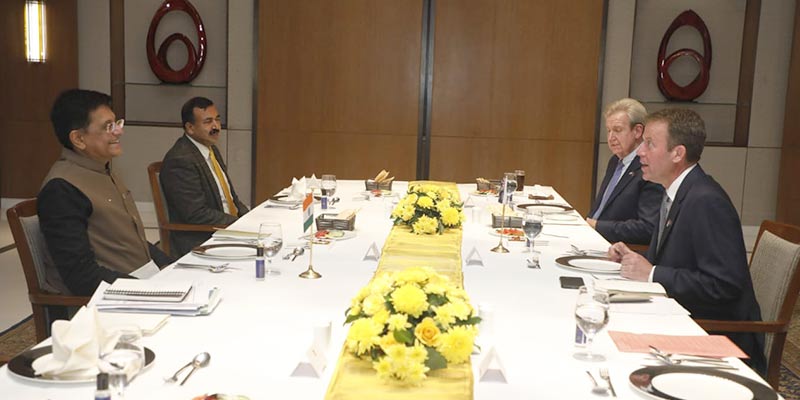
• India and Australia are looking to finalise an early harvest agreement in the next 30 days and this pact is likely to cover most areas of interest that both the countries have.
• Australian Trade Minister Dan Tehan is in New Delhi on an official visit to advance talks for the proposed free trade agreement, officially dubbed as the Comprehensive Economic Cooperation Agreement (CECA).
• The two sides have agreed to conclude the long-pending CECA by the end of 2022.
• Under an early harvest agreement, two trading partners significantly reduce or eliminate customs duties on a limited number of goods and relax norms for promoting trade in services. CECA includes expanding the scope of the early harvest pact.
• India signed CECA with Singapore in June 2005. Negotiations are also going on with Thailand, Malaysia, Indonesia and BIMSTEC countries.
India, Australia CECA negotiations
• India and Australia launched negotiations for a Comprehensive Economic Cooperation Agreement in May 2011. There were many rounds of negotiations before both countries decided to suspend negotiations in September 2015, pending the outcome of other multilateral regional negotiations.
• In June 2020, as part of the Joint Statement on a Comprehensive Strategic Partnership between India and Australia, Prime Ministers Narendra Modi and Scott Morrison decided to re-engage on a bilateral CECA while suitably considering earlier bilateral discussions, where a mutually agreed way forward can be found.
• This year, at the 17th India-Australia Joint Ministerial Commission meeting on September 30, ministers Piyush Goyal and Dan Tehan formally re-launched CECA negotiations and reaffirmed their commitment to liberalise and deepen bilateral trade in goods and services, and to conclude the negotiations on a full CECA by the end of 2022.
• Recent years have seen remarkable growth in the trading relationship between India and Australia, fuelled by the many complementarities between the two economies.
• In 2020-21, India’s exports to Australia were $4.04 billion, while imports were $8.24 billion.
• India mainly exports refined petroleum, medicaments, railway vehicles including hovertrains, pearls and gems, jewellery, and made-up textile articles. While imports include coal, copper ores and concentrates, gold, vegetables, wool, fruits and nuts, lentils, and education-related services.
Manorama Yearbook app is now available on Google Play Store and iOS App Store