
- India
- Mar 05
Explainer / Coal gasification
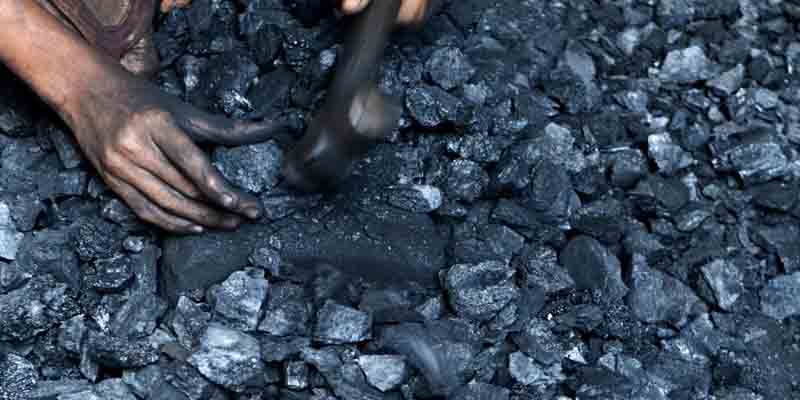
Four gasification projects will help in framing up technical and financial viability of coal gasification, Prime Minister Narendra Modi said while inaugurating the webinar on ‘Energy for Sustainable Growth’.
A suitable business model will ensure both public and private sectors’ participation in setting up of coal gasification plants in the country.
Coal resources in India
• With 344 BT of coal resources including 163 BT of proved reserves, India has the fourth largest reserves of coal in the world. The total world proved reserves of coal are 1,074 BT and India accounts for around 10 per cent of the global reserves. The US has the largest coal reserves followed by Australia and China.
• Nearly 90 per cent of the coal reserves in India constitute non-coking coal or thermal coal which is primarily used for power generation and in
industries such as cement and brick-kilns. Whereas approximately 10 per cent of the reserves are coking coal reserves which are majorly used in the steel production process. India imports a quarter of its coal requirements.
• In India, About 80 per cent of coal is used in thermal power plants.
• With environmental concerns and development of renewable energy, diversification of coal for its sustainable use is inevitable.
Need for coal gasification
The world moves towards cleaner forms of energy, India, being a signatory to the Paris Agreement, 2016 has declared three quantitative climate change goals as its Nationally Determined Contribution (NDC):
a) Reduction in emissions intensity of Gross Domestic Product (GDP) by 33 to 35 per cent by 2030 from 2005 level.
b) Achieving about 40 per cent cumulative electric power installed capacity from non-fossil fuel-based energy resources by 2030.
c) Creating an additional carbon sink of 2.5 to 3 billion tonnes of carbon dioxide equivalent through additional tree and forest cover by 2030.
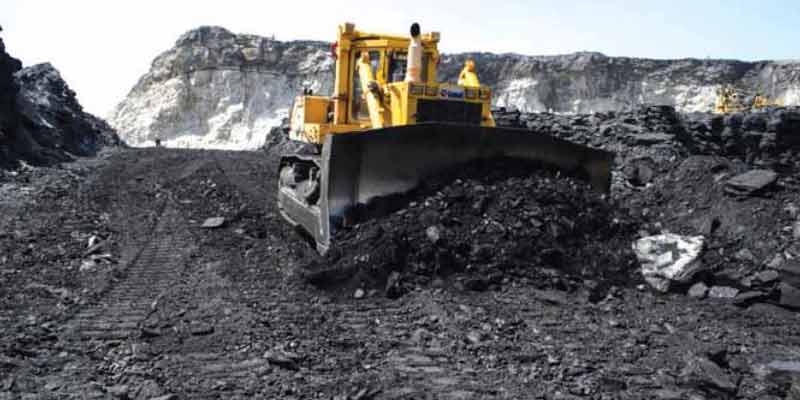
What is coal gasification?
• Coal gasification is considered a cleaner option as compared to burning of coal and has diversified use of coal in other forms of energy.
• Gasification facilitates utilization of chemical properties of coal.
• In the gasification process, sulphur present in the coal is converted to hydrogen sulphide (H2S) and minor amounts of carbonyl sulphide (COS).
• These sulphur compounds can be easily and economically removed from gas streams by a wide variety of commercially available processes (acid gas removal systems).
• The separated acid gas is further processed to recover elemental sulphur.
• After the acid gas removal treatment, only few parts per million (ppm) of sulphur remains in the coal gas.
• Nitrogen oxides (NOx) are not formed to any appreciable extent in the reducing atmosphere of coal gasification. The particulate content in the
fuel gas after gasification is negligible since the gas cleaning steps (hot cyclones, water scrubbing or hot gas cleaning) capture almost all the particulate.
• Except for hot gas clean up, other two systems are commercially established and practiced.
• Most part of the wash water is recycled and the residual waste waters from gasification plants can be effectively treated. The coal gasification plants do not produce any scrubber sludge which needs careful and costly disposal.
• The fine ash generated in the processes using pulverized coal feed may be used for value added products like manufacturing of fly ash bricks.
Advantages of coal gasification
• The major advantage of gasification is that coal is converted into a gaseous fuel which is easy to handle and is a clean form of energy. In the gaseous form, it enables the substitution of petroleum products and natural gas. The synthesis gas has a wide range of applications.
• Syngas can be used to produce gaseous fuels such as Hydrogen, Substitute Natural Gas (SNG or Methane), Di-Methyl Ether (DME), liquid fuels such as methanol, ethanol, synthetic diesel and chemical and petrochemicals like methanol derivatives, olefins, propylene, Mono-Ethylene Glycol (MEG), nitrogenous fertilizers including ammonia, DRI, industrial chemicals along with power generation.
• These products will help move towards self-sufficiency.
• The ministry of coal has taken initiatives for coal gasification and it has prepared a National Mission document to achieve 100 MT coal gasification by the year 2030.
• Policy incentivizing coal gasification provides for rebate in revenue share in coal block auction and also linkage for the same.
Manorama Yearbook app is now available on Google Play Store and iOS App Store