
- India
- May 27
Sikkim bans sale of pigs after African swine fever cases detected in state
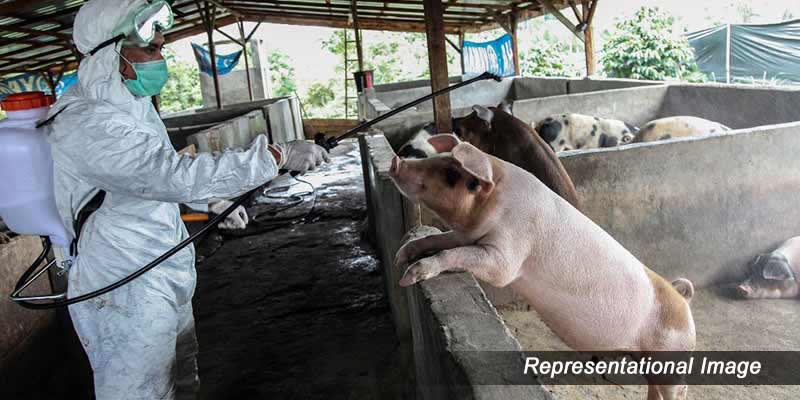
The Sikkim government has temporarily banned the sale of pigs in the state after cases of African swine fever (ASF) were reported in North Sikkim district.
A total of 117 pigs have died in various parts of the state in the past two months.
Animal husbandry department officials have cautioned the public to refrain from eating pork and has also stated that the first tests of the samples which were taken from the pigs in North Sikkim district had come out positive for Porcine Reproductive and Respiratory Syndrome (PRRS) on February 23 this year. On February 29 the first case of African Swine Fever was detected.
African swine fever
• African swine fever (ASF) is a contagious viral disease that affects pigs of all ages, inducing a haemorrhagic fever. It can appear in a variety of forms ranging from peracute, acute, subacute, to chronic and unapparent.
• It is most often recognised in the acute form with an associated lethality of up to 100 per cent.
• ASF is considered endemic in most countries in sub-Saharan Africa but is also very dynamic, with new areas often being affected. The upsurge is largely driven by the pig sector’s tremendous growth in Africa.
• It is caused by a large DNA virus of the Asfarviridae family, which also infects ticks of the genus Ornithodoros.
• Although signs of ASF and classical swine fever (CSF) may be similar, the ASF virus is unrelated to the CSF virus.
Routes of transmission can include:
1) Direct contact with infected domestic or wild pigs.
2) Indirect contact, through ingestion of contaminated material (eg: food waste, feed or garbage).
3) Contaminated fomites or biological vectors.
• Currently, there is no approved vaccine for ASF.
• ASF is a severe threat to pig production systems. It not only threatens food security and challenges the livelihoods of pig producers and other actors in the supply chain, but may also have major consequences on international trade as a result of trade restrictions.
Manorama Yearbook app is now available on Google Play Store and iOS App Store