
- India
- Sep 01
Cabinet approves signing of MoU with Nepal on biodiversity conservation
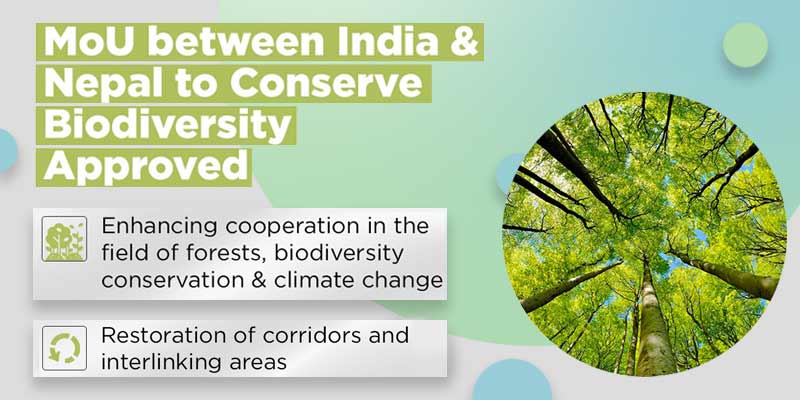
• The Union Cabinet, chaired by Prime Minister Narendra Modi, has approved an environment ministry proposal for signing a Memorandum of Understanding with Nepal on biodiversity conservation.
• The MoU would help in promoting cooperation between India and Nepal in the field of forests, wildlife, environment, biodiversity conservation and climate change, including restoration of corridors and interlinking areas, and sharing knowledge and best practices.
• The region along the Indo-Nepal border hosts some of the best wildlife habitats remaining in the Indian subcontinent.
• India is one of the 17 mega-diverse countries in the world and it is taking several steps to conserve the wildlife population and biodiversity.
• The Indian government has adopted many laws, policy initiatives, and acts to conserve the vast flora and fauna in the country and across the borders adjoining neighbouring countries.
Significance of biodiversity conservation
• Biodiversity is the living fabric of our planet. It underpins human wellbeing in the present and in the future, and its rapid decline threatens nature and people alike.
• Biological diversity is often understood in terms of the wide variety of plants, animals and microorganisms, but it also includes genetic differences within each species — for example, between varieties of crops and breeds of livestock — and the variety of ecosystems (lakes, forest, deserts, agricultural landscapes) that host multiple kind of interactions among their members (humans, plants, animals).
• Biological diversity resources are the pillars upon which we build civilizations. Fish provide 20 per cent of animal protein to about 3 billion people. Over 80 per cent of the human diet is provided by plants. As many as 80 per cent of people living in rural areas in developing countries rely on traditional plant‐based medicines for basic health care.
• But loss of biodiversity threatens all, including our health. The main global drivers of biodiversity loss are climate change, invasive species, over-exploitation of natural resources, pollution and urbanisation.
• It has been proven that biodiversity loss could expand zoonoses — diseases transmitted from animals to humans — while, on the other hand, if we keep biodiversity intact, it offers excellent tools to fight against pandemics.
Manorama Yearbook app is now available on Google Play Store and iOS App Store