
- India
- Sep 28
ICAO signs pact with International Solar Alliance
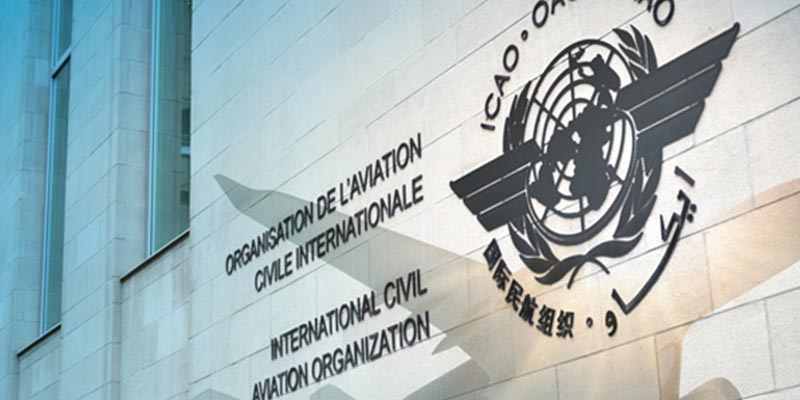
The International Civil Aviation Organisation (ICAO) signed a Memorandum of Understanding (MoU) with the International Solar Alliance (ISA).
The ceremony was held on the sidelines of the 42th Session of International Civil Aviation Organisation (ICAO) Assembly in Montreal in the presence of Union Minister of Civil Aviation Jyotiraditya Scindia.
Earlier in May, Scindia had mooted the idea of ICAO becoming a partner organisation of ISA during his meeting with Secretary General Juan Carlos Salazar.
ICAO is committed towards reducing carbon emissions in the aviation sector through its numerous initiatives and goals. Partnership between ISA and ICAO through this MoU will lead to a range of interventions towards developing the capacity of States to use solar energy. It will work towards providing information, providing advocacy, capacity building and demonstration projects. It will enable the solarisation of aviation sector across all Member States.
International Civil Aviation Organisation (ICAO)
• A specialised agency of the United Nations, the International Civil Aviation Organisation (ICAO) was created to promote the safe and orderly development of international civil aviation throughout the world. It sets standards and regulations necessary for aviation safety, security and facilitation, efficiency , economic development of air transport as well as to improve the environmental performance of aviation.
• The Convention on International Civil Aviation, drafted in 1944 by 54 nations, was established to promote cooperation and “create and preserve friendship and understanding among the nations and peoples of the world.”
• Known more commonly today as the ‘Chicago Convention’, this landmark agreement established the core principles permitting international transport by air, and led to the creation of the specialised agency which has overseen it ever since.
• On April 4, 1947, upon sufficient ratifications to the Chicago Convention, the International Civil Aviation Organisation (ICAO) was established. The first official ICAO Assembly was held in Montreal in May of that year.
• ICAO is funded and directed by 193 national governments to support their diplomacy and cooperation in air transport as signatory states to the Chicago Convention.
• The headquarters of ICAO is situated in Montreal.
• Its core function is to maintain an administrative and expert bureaucracy (the ICAO Secretariat) supporting these diplomatic interactions, and to research new air transport policy and standardisation innovations as directed and endorsed by governments through the ICAO Assembly, or by the ICAO Council which the assembly elects.
• ICAO is not an international aviation regulator. The stipulations ICAO standards contain never supersede the primacy of national regulatory requirements. It is always the local, national regulations which are enforced in, and by, sovereign states, and which must be legally adhered to by air operators making use of applicable airspace and airports.
• The Secretariat of the International Civil Aviation Organization (ICAO) is headed by the Secretary General.
International Solar Alliance
• International Solar Alliance (ISA) is an inter-governmental treaty-based organisation with a global mandate to catalyse solar growth by helping to reduce the cost of financing and technology.
• The ISA was jointly launched by Prime Minister Narendra Modi and French President Francois Hollande on November 30, 2015, in Paris on the sidelines of the 21st Conference of Parties (COP21) to the UNFCCC.
• The ISA Framework Agreement was opened for signature on November 15, 2016, in Marrakech, Morocco, on the sidelines of COP22.
• On March 11, 2018, Modi and French President Emmanuel Macron co-hosted the founding conference of the International Solar Alliance (ISA).
• Membership is open to those solar resource-rich states that lie fully or partially between the Tropic of Cancer and the Tropic of Capricorn, and are members of the UN.
• ISA was conceived as a coalition of solar-resource-rich countries (which lie either completely or partly between the Tropic of Cancer and the Tropic of Capricorn) to address their special energy needs.
• The vision and mission of the ISA is to provide a dedicated platform for cooperation among solar-resource-rich countries, through which the global community, including governments, bilateral and multilateral organisations, corporates, industry, and other stakeholders, can contribute to help achieve the common goal of increasing the use and quality of solar energy in meeting energy needs of prospective ISA member countries in a safe, convenient, affordable, equitable and sustainable manner.
• It is an alliance of 121 signatory countries and 32 partner organisations including many UN organisations.
• ISA has been positioned to help create the conditions that would make funding, developing and deploying solar applications on a large scale a reality.
• ISA is now perceived as key to achieving the 2030 Sustainable Development Goals and objectives of the Paris Agreement on Climate Change.
Objectives of ISA:
• To address obstacles that stand in the way of rapid and massive scale-up of solar energy.
• To undertake innovative and concerted efforts for reducing the cost of finance and cost of technology for immediate deployment of competitive solar generation.
• To mobilise more than $1,000 billion of investments by 2030.
• Reduce the cost of finance to increase investments in solar energy in member countries by promoting innovative financial mechanisms and mobilising finance from institutions.
• Scale up applications of solar technologies in member countries.
• Facilitate collaborative research and development (R&D) activities in solar energy technologies among member countries.
• Promote a common cyber platform for networking, cooperation and exchange of ideas among member countries.
Manorama Yearbook app is now available on Google Play Store and iOS App Store