
- India
- Oct 08
Chandrayaan-2 spectrometer maps abundance of sodium on Moon
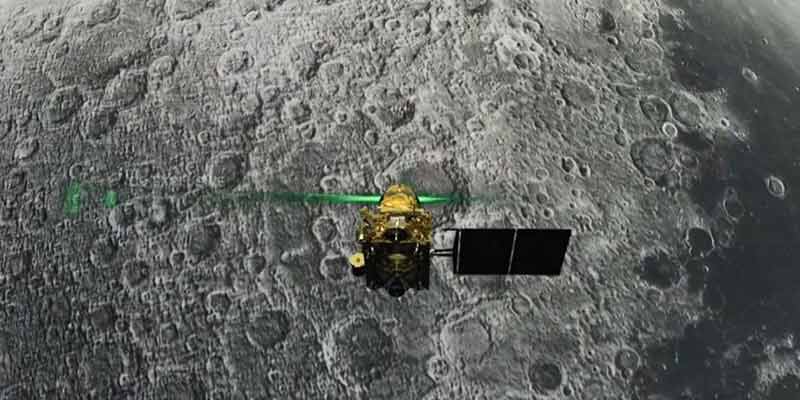
The X-ray spectrometer ‘CLASS’ on the Chandrayaan-2 orbiter has mapped an abundance of sodium on the moon for the first time.
Key points:
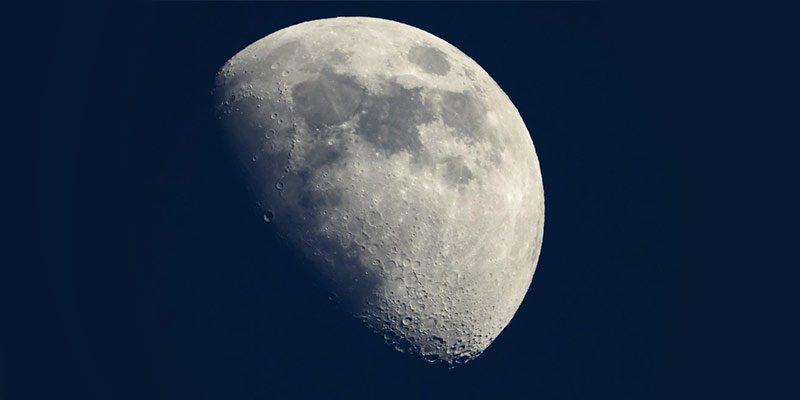
• The serene radiance that fills the vast expanse of a night sky is the reflection of sunlight from the Moon's surface, a major part of which is from the bright lunar highlands. The rock and soil samples that the Apollo 11 astronauts brought to Earth showed that these regions, which are remnants of an ancient lunar crust, are mainly composed of silicate minerals in the group plagioclase feldspar series.
• While these are common minerals found on Earth, lunar samples have a variety of the mineral that contain more of the element calcium than sodium following the general trend in compositional differences between Earth and Moon.
• A loss of volatile elements including alkalis like sodium and potassium on the Moon could be traced back to the time when Earth and Moon formed together in a Solar system that was young and fiery.
• Successive laboratory investigations of the returned samples (Apollo, Luna and Chang’e) widened the range of compositions but the fundamental conclusions have remained. However, the returned samples are from a few specific regions of the Moon which do not necessarily represent the global lunar composition.
• Sodium is one of those elements that do not have a telltale signature in the visible or near-infrared wavelengths and has thus not been targeted via remote sensing observations. Chandrayaan-1 X-ray Fluorescence Spectrometer (C1XS) detected sodium from its characteristic line in X-rays which opened up the possibility of mapping the amount of sodium on the Moon.
• In a recent work published in ‘The Astrophysical Journal Letters’, Chandrayaan-2 mapped the abundance of sodium on the Moon for the very first time using Chandrayaan-2 Large Area Soft X-ray Spectrometer (CLASS).
• Built in the U.R. Rao Satellite Centre of ISRO in Bengaluru, CLASS provides clean signatures of the sodium line thanks to its high sensitivity and performance.
• The study finds that a part of the signal could be arising from a thin veneer of sodium atoms weakly bound to the lunar grains.
• These sodium atoms can be nudged out of the surface by solar wind or ultraviolet radiation more easily than if they were part of the lunar minerals. Also shown is a diurnal variation of the surface sodium that would explain the continuous supply of atoms to the exosphere, sustaining it.
• An interesting aspect that widens the interest in this alkali element is its presence in the wispy atmosphere of the Moon, a region so thin that the atoms there rarely meet.
• This region, termed an ‘exosphere’, begins at the surface of the Moon and extends several thousand kilometres merging into the interplanetary space.
• The new findings from Chandrayaan-2 provide an avenue to study surface-exosphere interaction on the moon which would aid development of similar models for mercury and other airless bodies in our solar system and beyond.
The Chandrayaan-2 mission was India’s first attempt to land on the lunar surface. Chandrayaan-2, aimed at landing a rover on Lunar South Pole, was launched on July 22, 2019 on board the country’s most powerful geosynchronous launch vehicle, GSLV MkIII M1. On September 7, 2019, Chandrayaan-2’s Vikram lander lost its contact with ISRO as it was only 2.1 km away from its designated landing spot on the Moon’s South Pole region.
Manorama Yearbook app is now available on Google Play Store and iOS App Store