
- India
- Jan 14
Supreme Court calls hate speech ‘complete menace’
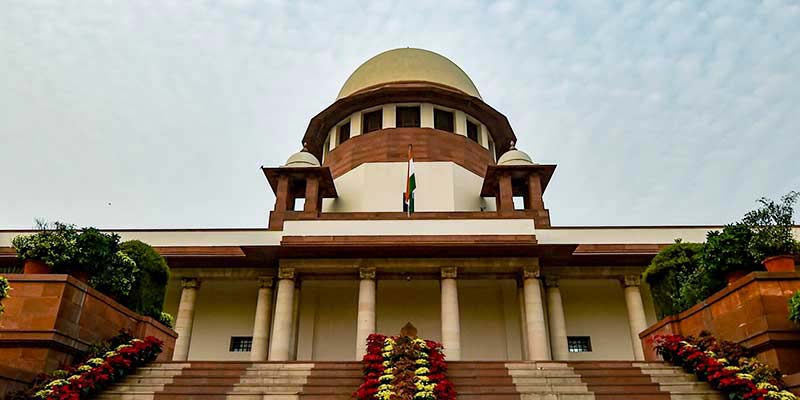
• Hate speeches are a “complete menace”, the Supreme Court observed on January 13 and rued the lack of regulatory control on TV news content, saying it wants “free and balanced press in India”.
• The Supreme Court said the buck ultimately stops with the government to clamp down on hate speech and hate crimes.
• The top court said nowadays everything is driven by TRP (television rating point) and channels are competing with each other and creating a division in society. It wondered why can’t a TV news anchor, if they become a part of the problem of propagating hate speech, be taken off air.
• It said unlike for print media, there is no Press Council of India for news channels, and observed “we want free speech, but at what cost”.
• A bench of Justices K.M. Joseph and B.V. Nagarathna were hearing a batch of petitions seeking a curb on hate speech incidents across the country and action against the culprits.
• The court told Additional Solicitor General K.M. Nataraj, appearing for the Centre, that freedom of speech and expression is a very important and delicate thing and the government has to take some action without actually interfering with it.
• Nataraj said the Centre is aware of the problem and is contemplating bringing amendments in the Code of Criminal Procedure (CrPC) to deal with the problem of hate speeches.
What is hate speech?
• In common language, “hate speech” loosely refers to offensive discourse targeting a group or an individual based on inherent characteristics — such as race, religion or gender — and that may threaten social peace.
• Hate speech generally is an incitement to hatred primarily against a group of persons defined in terms of race, ethnicity, gender, sexual orientation, religious belief and the like.
• Hate speech not only affects the specific individuals and groups targeted, but societies at large.
• The escalation from hate speech to violence has played a significant role in the most horrific and tragic crimes of the modern age, from the antisemitism driving the Holocaust, to the 1994 genocide against the Tutsi in Rwanda.
• The Internet and social media have turbocharged hate speech, enabling it to spread like wildfire across borders. The spread of hate speech against minorities during the COVID-19 pandemic provides further evidence that many societies are highly vulnerable to the stigma, discrimination and conspiracies it promotes.
• If left unchecked, hate speech can even harm peace and development, as it lays the ground for conflicts and tensions and wide scale human rights violations.
Impact of hate speech on freedom of expression
• Hate speech has always been a live debate in India. Hate speech has not been defined in any law in India. However, legal provisions in certain legislations prohibit select forms of speech as an exception to freedom of speech. Hate speech poses complex challenges to freedom of speech and expression.
• The world must not trample on freedom of speech and expression, but when that speech is weaponised to violate the rights of others — including inciting atrocity crimes and acts of terrorism, it must not be met with deafening silence that implies apathy or acceptance.
• The greater value accorded to the expression, in the scheme of rights, explains the reluctance of the law makers and judiciary in creating exceptions that may curtail the spirit of this freedom. Perhaps, this is the reason behind the reluctance in defining hate speech.
• Right to freedom of speech and expression is one of the most essential liberties recognised by the democratic States. The objective of free speech in a democracy is to promote plurality of opinions.
• Hate speech is an expression which is likely to cause distress or offend other individuals on the basis of their association with a particular group or incite hostility towards them.
• The issue of hate speech has assumed greater significance in the era of the Internet, since the accessibility of the internet allows offensive speeches to affect a larger audience in a short span of time.
• The Supreme Court of India had differentiated between three forms of speech, discussion, advocacy and incitement. It was held by the Court that a speech can only be limited on grounds of exceptions mentioned in Article 19(2) when it reaches the threshold of incitement. All other forms of speech, even if offensive or unpopular, have to be protected under Article 19(1)(a). Incitement is the key to determining the constitutionality of restriction on free speech.
• Liberty and equality are complementary and not antithetical to each other. The intent of freedom of speech is not to disregard the weaker sections of the society but to give them equal voice. Similarly, the intent of equality is not to suppress this liberty but to balance it with the necessities of a multicultural and plural world, provided such constraint does not unduly infringe on the freedom of expression. Thus, incitement to not only violence but also to discrimination has been recognised as a ground for interfering with freedom of expression.
• Since it is entrenched in the constitutional right of freedom of speech and expression, “hate speech” has been manipulated by many in different ways to achieve their ulterior motive under the garb of such right and the law courts in absence of clear provisions in IPC, are not able to prosecute hate speech charges brought before them with success.
• The Law Commission of India has recommended that new provisions in Indian Penal Code (IPC) are required to be incorporated to address the issues.
Manorama Yearbook app is now available on Google Play Store and iOS App Store