
- India
- Feb 02
Who was Amrita Sher-Gil?
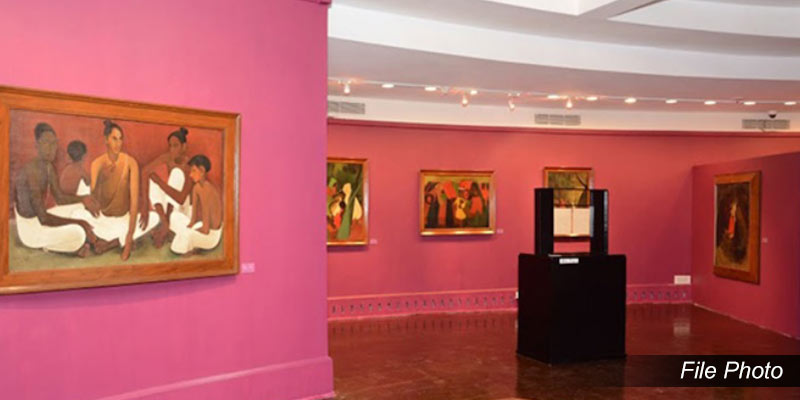
• A series of events including film festivals, interaction with students, art exhibitions, and workshops will mark the 110th birth anniversary of Indian-Hungarian painter Amrita Sher-Gil.
• The National Gallery of Modern Art (NGMA) and Liszt Institute of Hungarian Cultural Centre made the announcement while launching the ‘Amrita110 Project’.
• The year-long project will begin with an art exhibition of 20 works inspired by Sher-Gil at the India International Centre from February 8.
• As a part of the project, the Liszt Institute will visit a school in the national capital every month to talk about Sher-Gil through workshops, stories, photos and painting activities.
• From June till October, a number of documentary films about Sher-Gil will be screened as part of Amrita 110 Film Festival.
• An Indo-Hungarian team will celebrate Sher-Gil’s life and work through a graffiti in Lodhi Art District in September this year.
• The Liszt Institute and the Indian Post will also release a joint stamp about the artist in November.
Who was Amrita Sher-Gil?
• Amrita Sher-Gil (1913-1941) emerged as an outstanding artist in her short, experientially rich life. The remarkable variety of subjects and styles in her work indicate the diversity and range of her interests that touch with empathy on all aspects of human experience.
• Her images explore the aesthetics of modernism even as she passionately engages with the Indian reality of her times. She left behind a substantial body of work done during her short, but productive career as an artist.
• Born to Indian father and Hungarian mother on January 30, 1913 in Budapest, Hungary, Sher-Gil came to be known as “one of the greatest avant-garde women artists” for her oeuvre.
• Though her art education was from Paris, she has discovered the artistic traditions of India. Amrita traveled widely in India during 1939 which has brought a robust impact on style of expression, figuration and composition in her artwork.
• Her famous works including ‘Group of Three Girls’ (1935), ‘Brahmacharis’ (1937), ‘Bride’s Toilet’ (1937), ‘Gypsy Girl’ (1932), and ‘Young Girls’ (1932) are a part of the collection at the NGMA.
Manorama Yearbook app is now available on Google Play Store and iOS App Store