
- India
- Mar 04
Explainer - Samarth scheme
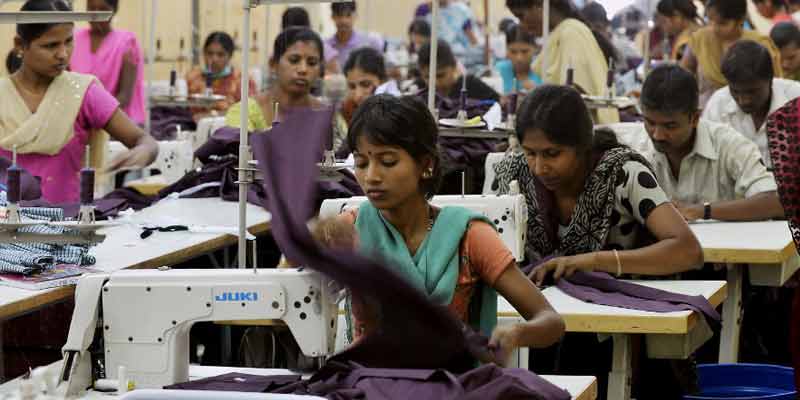
• The government plans to rope in more industry partners to increase the pace of training under its flagship Samarth scheme for skill development in the textile sector.
• The government aims to make the country’s textile sector worth $250 billion by 2030 from $150-155 billion at present.
• More than 85 per cent of the 1.5 lakh beneficiaries trained so far under the scheme are women.
• Over 70 per cent of the beneficiaries trained in organised sector courses have been provided placement.
• Out of the skilling target of 3.47 lakh beneficiaries allocated so far, 1.5 lakh beneficiaries have been provided training.
• The Samarth scheme is being implemented till FY24 ending March next year.
Samarth scheme
• The ministry of textiles is implementing demand driven and placement oriented skilling programme called Samarth scheme for capacity building in textile sector, for the entire value chain of the textiles sector, excluding spinning and weaving in organised sector which are being trained under Pradhan Mantri Kaushal Vikas Yojana.
• The training programme and course curriculum have been rationalised keeping in view the technological and market demand status of the domestic and international economies.
• Samarth aims to incentivise and supplement the efforts of the industry in creating jobs in the organised textile and related sectors, covering the entire value chain of textiles, excluding spinning and weaving.
• The training programme and course curriculum have been rationalised keeping in view the technological and market demand of the domestic and international economies.
• In addition to the entry level skilling, a special provision for upskilling/re-skilling programme has also been operationalised under the scheme towards improving the productivity of the existing workers in apparel and garmenting segments.
• Samarth also caters to the upskilling/re-skilling requirement of traditional textile sector such as handloom, handicraft, silk and jute.
• The scheme is implemented through implementing partners comprising of textile industry/industry associations, state government agencies and sectoral organisations of ministry of textiles.
• ‘Samarth’ was formulated under the broad skilling framework adopted by ministry of skill development & entrepreneurship with advanced features such as Aadhaar Enabled Biometric Attendance System (AEBAS), Training of Trainers (ToT), CCTV recording of training programme, dedicated call centre with helpline number, mobile app based Management Information System (MIS), online monitoring of the training process, etc.
Manorama Yearbook app is now available on Google Play Store and iOS App Store