
- India
- Jun 01
ADB launches new country partnership strategy for India
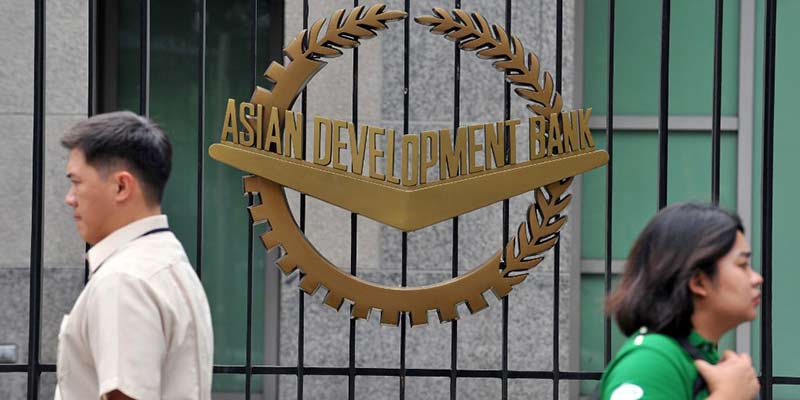
• The Asian Development Bank (ADB) has launched a new country partnership strategy (CPS) for India with a focus on deepening its engagement with the country and supporting India’s drive for robust, climate-resilient, and inclusive growth.
• During 2023–2027, ADB operations in India will focus on accelerating structural transformation and job creation, promoting climate-resilient growth, and deepening social and economic inclusiveness.
• India quickly rebounded from the impact of COVID-19 pandemic, with economic growth projected at 6.4 per cent in FY 2023–2024, and now ranks among the fastest growing major global economies.
• The country needs to accelerate and sustain inclusive growth by tackling critical challenges in infrastructure and human development, income and regional disparities, and vulnerability to climate change and natural hazards.
• To support structural transformation and the creation of well-paying jobs, ADB will contribute to India’s national flagship programmes on developing industrial corridors, multimodal logistics systems, urban infrastructure, skill ecosystem, and small businesses.
• This will enable urban areas to unlock their potential as engines of growth, promote industrial competitiveness, and create more jobs in formal manufacturing and services sectors.
Asian Development Bank
• The Asian Development Bank (ADB) envisions a prosperous, inclusive, resilient, and sustainable Asia and the Pacific, while sustaining its efforts to eradicate extreme poverty in the region.
• From 31 members at its establishment in 1966, ADB has grown to encompass 68 members — of which 49 are from within Asia and the Pacific and 19 outside.
• ADB assists its members, and partners, by providing loans, technical assistance, grants, and equity investments to promote social and economic development.
• ADB maximises the development impact of its assistance by facilitating policy dialogues, providing advisory services, and mobilising financial resources through cofinancing operations that tap official, commercial, and export credit sources.
History of ADB
• ADB was conceived in the early 1960s as a financial institution that would be Asian in character and foster economic growth and cooperation in one of the poorest regions in the world.
• A resolution passed at the first Ministerial Conference on Asian Economic Cooperation held by the United Nations Economic Commission for Asia and the Far East in 1963 set that vision on the way to becoming reality.
• The Philippines capital of Manila was chosen to host the new institution, which opened on December 19, 1966, with 31 members that came together to serve a predominantly agricultural region. Takeshi Watanabe from Japan was ADB’s first president.
ADB and India
• India was a founding member of ADB in 1966 and fourth largest shareholder.
• ADB started operations in India in 1986.
• As on December 31, 2022, it had committed $52.28 billion in sovereign lending in the country and $6.75 billion in non-sovereign lending and investment.
• ADB’s current India portfolio comprises 64 projects worth about $16 billion across the transport, urban, energy, human development, agriculture and natural resources, and finance sectors.
Manorama Yearbook app is now available on Google Play Store and iOS App Store