
- India
- Jun 22
Rajnath Singh visits hydrography ships at Southern Naval Command
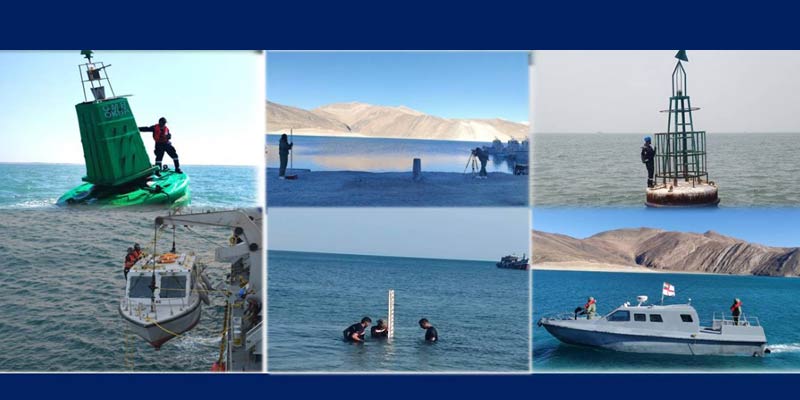
Union Defence Minister Rajnath Singh and Chief of Naval Staff Admiral R. Hari Kumar visited hydrography ships at the Southern Naval Command (SNC) in Kochi.
Every year, June 21 is celebrated as World Hydrography Day to highlight the role of hydrography in supporting various activities in the maritime domain and its overall contribution to national development.
What is hydrography?
• Hydrography deals with the measurement and description of the physical features of oceans, seas, coastal areas, lakes and rivers, as well as with the prediction of their change over time, for the primary purpose of safety of navigation and in support of all other marine activities, including economic development, security and defence, scientific research and environmental protection.
• In addition to supporting safe and efficient navigation of ships, hydrography underpins almost every other activity associated with the sea, including:
• Resource exploitation (fishing, minerals)
• Environmental protection and management
• Maritime boundary delimitation
• National marine spatial data infrastructure
• Recreational boating
• Maritime defence and security
• Tsunami flood and inundation modelling
• Coastal zone management
• Tourism
• Marine science.
What is the significance of hydrographic survey?
• In the past, many artisanal shelters and fishing ports were built at convenient locations, with no particular attention paid to such environmental factors as wave heights, sudden changes in water depths, uncharted reefs, currents, tidal streams, seaweed and mobile beaches (sand drift).
• Many of the structures were subsequently expanded and, in countless cases around the world, many of the problems that used to be considered minor have now developed into major ones, with some shelters, for example, fouling up with seaweed or silting up (shelter mouth facing the wrong direction) or just being inaccessible in rough weather (reefs too close to entrance channel).
• A hydrographic survey, also known as a bathymetric survey, is therefore essential if the correct design decisions are to be made right from the project inception stage to ensure that the landing is easy to use and free of major maintenance problems under all conditions.
• Hydrographic surveys are required for a wide variety of purposes, ranging from simple reconnaissance (at project formulation, for instance) to payment for work carried out underwater, such as dredging or reclamation.
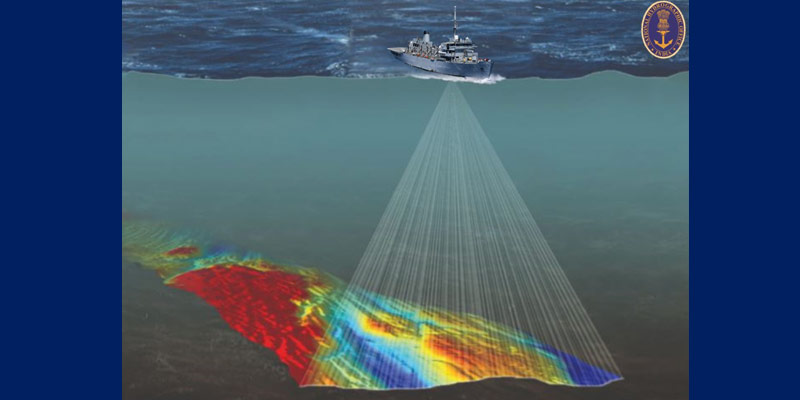
• The results from a hydrographic survey are normally plotted to produce a bathymetric contour map, which is a plan of the depth of the sea bed arranged in such a manner as to show lines of equal depth from the coastline.
Hydrographic surveys in India
• The Indian Naval Hydrographic Department (INHD) functions under the chief hydrographer to the government of India.
• The department, being the nodal agency for hydrographic surveys and nautical charting in India, has a very well-established organisational set-up.
• The INHD has seven indigenously built modern survey ships, including one Catamaran Hull Survey Vessel (CHSV), that demonstrate a range of capabilities that make them indispensable in the field of hydrography.
• With their multidimensional roles, these vessels serve as crucial platforms for conducting surveys, research, and resource exploration, contributing to safer navigation, sustainable development, and a deeper understanding of our marine environments.
• They are equipped with state-of-the-art surveying equipment such as multi-beam echo sounders, side-scan sonars, advanced autonomous underwater vehicles, which accurately map the seabed.
• The ships are also capable of operating integral flights which can carry out transfer of stores, men and aerial recce over remote areas inaccessible by sea.
• The National Hydrographic Office, situated in Dehradun, is mandated with the responsibility of publication of nautical charts and other publications for navigation at sea.
• The National Institute of Hydrography (NIH), Goa, an integral part of the INHD, has the national responsibility for conduct of hydrographic training and functions under the overall professional supervision of the chief hydrographer.
• Surveys are conducted in strict compliance with the International Hydrographic Organisation (IHO) standards. The department also pioneered in making official Electronic Navigational Charts (ENCs) for Indian waters.
• INHD is committed to capacity building in the Southeast Asian region and conducts training to personnel from countries in the region and some of the African nations.
• The department has also signed MoU with various countries for surveying their waters as part of international cooperation.
Manorama Yearbook app is now available on Google Play Store and iOS App Store