
- India
- Aug 22
Explainer - India, ASEAN relations
• India and the 10-nation bloc ASEAN have agreed to fast-track negotiations for the review of the existing free trade agreement (FTA) on goods between the two regions and conclude the talks in 2025.
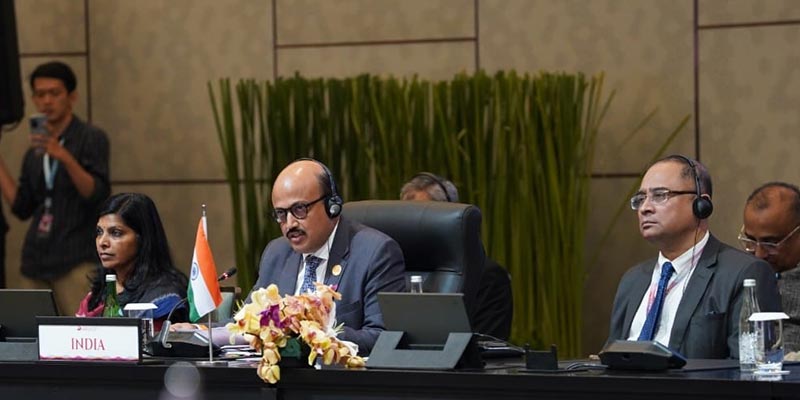
• The issue was discussed during the 20th ASEAN-India Economic Ministers’ meeting held at Semarang, Indonesia.
• The main agenda of this year’s meeting was the timely review of ASEAN-India Trade in Goods Agreement (AITIGA) which was signed in 2009 and implemented in January 2010.
• The economic ministers’ meeting was preceded by AITIGA Joint Committee meeting, which deliberated the roadmap for the review and finalised the term of reference and the work plan of the review negotiations.
• The review of the AITIGA was a long-standing demand of Indian businesses and the early commencement of the review would help in making the FTA trade facilitative and mutually beneficial.
• Meanwhile, both the regions agreed to make the agreement more user-friendly, simple and trade facilitative for businesses to increase trade and support sustainable and inclusive growth.
• The consultation was co-chaired by Indonesian Trade Minister Zulkifli Hasan and additional secretary in India’s department of commerce Rajesh Agrawal.
• India has asked for a review of the agreement with an aim to eliminate barriers and misuse of the trade pact.
What is ASEAN?
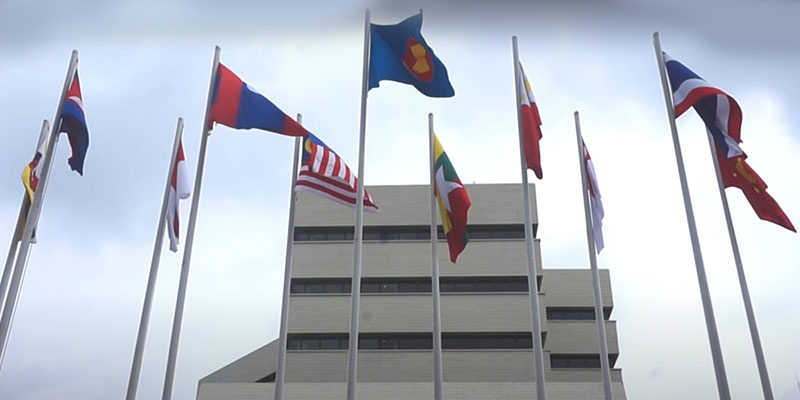
• The Association of Southeast Asian Nations (ASEAN) was established on August 8, 1967 in Bangkok by five countries — Indonesia, Malaysia, Philippines, Singapore, and Thailand.
• There are currently 10 member states: Indonesia, Malaysia, Philippines, Singapore, Thailand, Brunei, Laos, Myanmar, Cambodia and Vietnam.
• In November 2022, ASEAN announced that it has agreed in principle to admit East Timor, also known as Timor-Leste, as the group’s 11th member. The half-island nation will also be granted observer status at high-level ASEAN meetings.
• The ASEAN Summit is the highest policy-making body in ASEAN comprising the heads of State or government of ASEAN member states. As per regular practice, the ASEAN Summit Meetings shall be held twice annually. The first ASEAN Summit was held in Bali, Indonesia on February 23-24, 1976.
• ASEAN is considered one of the most influential groupings in the region. India and several other countries, including the US, China, Japan and Australia, are its dialogue partners.
The aims and purposes of ASEAN are:
i) Accelerate the economic growth, social progress and cultural development in the region through joint endeavors in the spirit of equality and partnership in order to strengthen the foundation for a prosperous and peaceful community of Southeast Asian Nations.
ii) Promote regional peace and stability through abiding respect for justice and the rule of law in the relationship among countries of the region and adherence to the principles of the United Nations Charter.
iii) Promote active collaboration and mutual assistance on matters of common interest in the economic, social, cultural, technical, scientific and administrative fields.
iv) Provide assistance to each other in the form of training and research facilities in the educational, professional, technical and administrative spheres.
v) Collaborate more effectively for the greater utilisation of their agriculture and industries, the expansion of their trade, including the study of the problems of international commodity trade, the improvement of their transportation and communications facilities and the raising of the living standards of their peoples.
vi) Promote Southeast Asian studies.
vii) Maintain close and beneficial cooperation with existing international and regional organisations with similar aims and purposes, and explore all avenues for even closer cooperation among themselves.
India-ASEAN relations
• ASEAN centrality has been, and will remain, an important aspect of India’s ‘Act East’ policy which is a central element in the country’s foreign policy.
• ASEAN-India dialogue relations have grown rapidly from a sectoral dialogue partnership in 1992 to a full dialogue partnership in December 1995. The relationship was further elevated with the convening of the ASEAN-India Summit in 2002 in Phnom Penh, Cambodia. Since then the ASEAN-India Summit has been held annually.
• At the ASEAN-India Commemorative Summit held in December 2012 in New Delhi, the leaders adopted the ASEAN-India Vision Statement and declared that the ASEAN-India Partnership stands elevated to a ‘Strategic Partnership’.
• India and ASEAN registered a bilateral trade of $131.5 billion in 2022-23. The trade with ASEAN accounted for 11.3 per cent of India’s global trade in 2022-23.
• In 2022, ASEAN-India relations were elevated to ‘Comprehensive Strategic Partnership’, that is meaningful, substantive and mutually beneficial.
• The collaboration has transcended the realm of functional cooperation to cover political and security dimensions. India participates in a series of consultative meetings with ASEAN under the ASEAN-India Dialogue Relations, which include Summit, ministerial meetings, senior officials meetings, and meetings at experts level, as well as through dialogue and cooperation frameworks initiated by ASEAN, such as the ASEAN Regional Forum (ARF), the Post Ministerial Conference (PMC) 10+1, the East Asia Summit (EAS), Mekong-Ganga Cooperation and Bengal Initiative for Multisectoral Technical and Economic Cooperation (BIMSTEC), which help contribute to enhancing regional dialogue and accelerating regional integration.
• India’s bilateral trade with ASEAN economies is expected to reach $300 billion by 2025, and it is the fifth largest trading partner for India following North America, EU, North-East Asia and GCC-West Asia.
• The ASEAN-India Free Trade Area has been completed with the entering into force of the ASEAN-India Agreements on Trade in Service and Investments on July 1, 2015.
Manorama Yearbook app is now available on Google Play Store and iOS App Store