
- India
- Apr 04
Explainer - The Katchatheevu issue
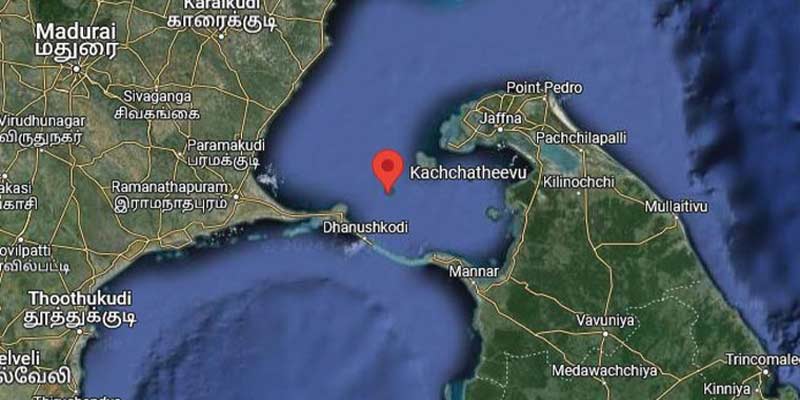
• Ahead of polling in Tamil Nadu on April 19 for the Lok Sabha elections, the Katchatheevu issue has been put on centre-stage in the state, after Prime Minister Narendra Modi recently attacked the Congress and the DMK over the ceding of the tiny island 50 years ago.
• Both the Congress and its ally DMK have hit back at the BJP for raking up the five-decade-old bilateral agreement between India and Sri Lanka ahead of polls.
Katchatheevu
• Katchatheevu is a small uninhabited 285-acre island in the Palk Strait between India and Sri Lanka — 12 miles from Tamil Nadu’s Ramanathapuram and 10.5 miles south of the Delft Island in Sri Lanka.
• Katchatheevu once belonged to the Zamindari Raja of Ramanathapuram.
• St. Anthony’s Church in Katchatheevu Island is believed to have been built in 1905 and, being in a dilapidated state, is repaired every year for the annual Katchatheevu Festival in February-March.
• The fisherfolk from both the countries visit the island during this time.
India-Sri Lanka International Maritime Boundary Line
• Katchatheevu was controlled by the British Ceylon till 1921.
• Both India and Sri Lanka had not made any claim on the island and it remained undisputed till 1974 when both the countries decided to redraw their maritime boundaries.
• The fishermen used to fish on both sides till the maritime boundaries were demarcated in 1974.
• The then Prime Minister Indira Gandhi and the then Sri Lankan President Sirimavo Bandaranaike were good friends.
• According to the exchange letter of an agreement between the two countries, Wadge Bank, off the Cape Comorin (Kanyakumari), was bought by India from Sri Lanka in exchange of Katchatheevu.
• The government of India considers its maritime boundary with Sri Lanka settled under the agreements concluded with Sri Lanka in 1974 and 1976.
• Under the Agreements, the Island of Katchatheevu lies on the Sri Lankan side of the India-Sri Lanka International Maritime Boundary Line.
• Both these agreements were subsequently laid before Parliament.
• Under the agreement, Indian fishermen are allowed access to Katchatheevu Island for rest, for drying of nets and for the annual St. Anthony’s festival.
• The right of access is not understood to cover fishing rights around the island to Indian fishermen.
• The agreements stipulate that fishing vessels and fishermen of India shall not engage in fishing in the historic waters, territorial seas and the Exclusive Economic Zones of Sri Lanka. Indian fishermen, therefore, do not have the legal right to fish in the waters in Katchatheevu Island.
India-Sri Lanka fishermen issue
• The fishermen continued to fish on both sides. It was a seabed filled with chalk shells, prawns, pearl oysters and corals, which had depleted over the years.
• At one point of time, the scientists also felt that the region could be explored for oil. It was also a spot for major smuggling during the 1990s.
• But after the ethnic strife began in Sri Lanka, Katchatheevu became a point of conflict and the Sri Lankan navy became watchdogs in this region. The Tamil fishermen were not allowed to go to fish near Katchatheevu as the Sri Lankan navy could not differentiate between LTTE sympathisers and the Tamil fishermen.
• However, the use of trawlers by the Indian fishermen started wiping the seabed and the Tamil fishermen in Sri Lanka raised alarm about their marine resources being depleted. This resulted in the Sri Lankan navy arresting the Indian fishermen who got into the international waters.
• Keeping in mind the humanitarian and livelihood dimensions for fishermen, the Indian government reached an understanding with the Sri Lankan government on October 26, 2008 to put in place practical arrangements to deal with bonafide Indian and Sri Lankan fishermen crossing the International Maritime Boundary Line.
• The issue still continues for which both the countries have still not found a solution.
Manorama Yearbook app is now available on Google Play Store and iOS App Store