
- India
- Aug 15
Explainer - Court of Arbitration for Sport (CAS)
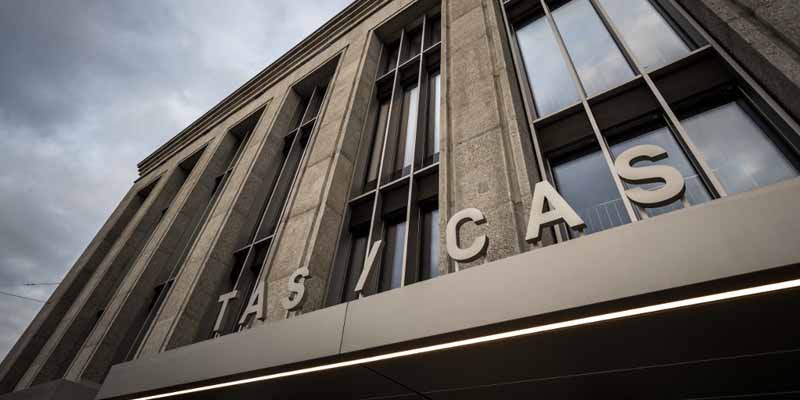
• Indian wrestler Vinesh Phogat’s hopes of securing a belated Olympic silver medal were dashed when the ad-hoc division of the Court of Arbitration for Sport (CAS) rejected her appeal against disqualification from the final for being 100gm overweight.
• The 29-year-old Vinesh was disqualified on the morning of the women’s 50kg freestyle final last week.
• In her appeal, Vinesh had demanded that she be given a joint silver with Cuban wrestler Yusneylis Guzman Lopez, who lost to her in the semifinals but was promoted to the summit clash following Phogat’s disqualification. The gold was claimed by American Sarah Ann Hildebrandt.
Court of Arbitration for Sport (CAS)
• At the beginning of the 1980s, the regular increase in the number of international sports-related disputes and the absence of any independent authority specialising in sports-related problems and authorised to pronounce binding decisions led the top sports organisations to reflect on the question of sports dispute resolution.
• In 1983, the International Olympic Committee (IOC) officially ratified the statutes of the Court of Arbitration for Sport (cas), which came into force on June 30, 1984.
• The CAS is an institution independent of any sports organisation which provides for services in order to facilitate the settlement of sports-related disputes through arbitration or mediation by means of procedural rules adapted to specific needs of the sports world.
• In 1993 the CAS became entirely independent, by creating a new administration and financing body, the International Council of Arbitration for Sport (ICAS), and adopting a new judgement structure.
• The CAS head office is in Lausanne, Switzerland. Two decentralised offices are situated in Sydney and New York.
• The CAS has nearly 300 arbitrators from 87 countries, chosen for their specialist knowledge of arbitration and sports law.
• Around 300 cases are registered by the CAS every year.
• Any disputes directly or indirectly linked to sport may be submitted to the CAS. These may be disputes of a commercial nature (eg: a sponsorship contract), or of a disciplinary nature following a decision by a sports organisation (eg: a doping case).
• The CAS is recognised by the Paris Convention signed by the presidents of the International Olympic Committee (IOC), the Association of Summer Olympic International Federations (ASOIF), the Association of the International Olympic Winter Sports Federations (AIOWF) and the Association of National Olympic Committees (ANOC).
• Any individual or legal entity with capacity to act may have recourse to the services of the CAS. These include athletes, clubs, sports federations, organisers of sports events, sponsors or television companies.
• The CAS has the task of resolving legal disputes in the field of sport through arbitration. It does this by pronouncing arbitral awards that have the same enforceability as judgments of ordinary courts.
• It can also help parties solve their disputes on an amicable basis through mediation, when this procedure is allowed.
• The CAS sets up non-permanent tribunals, which it does for the Olympic Games, the Commonwealth Games or other similar major events. To take into account the circumstances of such events, special procedural rules are established on each occasion.
Manorama Yearbook app is now available on Google Play Store and iOS App Store