
- India
- Sep 09
Suspected mpox case under probe in India

• A man who recently travelled from a country experiencing mpox transmission has been identified as a suspected case of the disease,
• The Union Health Ministry said the patient has been isolated at a designated hospital and is currently stable, adding that there is no cause for concern.
• The development of this case is consistent with the earlier risk assessment conducted by the National Centre for Disease Control (NCDC).
• The World Health Organisation (WHO) declared mpox a public health emergency of international concern (PHEIC) for the second time last month in view of its prevalence and spread across many parts of Africa.
• According to WHO’s earlier statement, 99,176 mpox cases and 208 deaths have been reported from 116 countries since 2022. Last year, the reported cases increased significantly.
• The number of mpox cases reported so far this year has exceeded last year’s total, with more than 15,600 cases and 537 deaths.
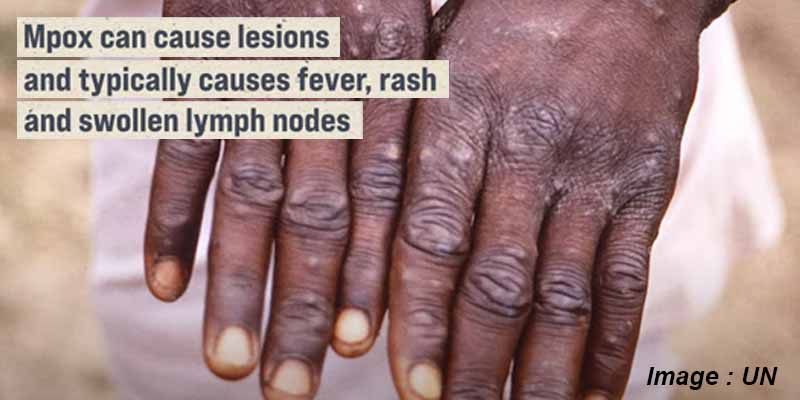
What is mpox?
• Mpox (monkeypox) is an infectious disease caused by the monkeypox virus (MPXV).
• Mpox virus belongs to the Orthopoxvirus genus in the family Poxviridae. The Orthopoxvirus genus also includes variola virus (which causes smallpox), vaccinia virus (used in the smallpox vaccine), and cowpox virus.
• Mpox has symptoms similar, but less severe, to smallpox. While smallpox was eradicated in 1980, mpox continues to occur in countries of central and west Africa.
• Mpox is zoonosis: a disease that is transmitted from animals to humans.
• Mpox was formerly called monkeypox. Following a series of consultations with global experts, WHO began using “mpox” as a synonym for monkeypox.
• Monkeypox was first discovered in 1958 when outbreaks of a pox-like disease occurred in monkeys kept for research, hence the name ‘monkeypox’.
• The first human case was recorded in 1970 in the Democratic Republic of the Congo (then known as Zaire), and since then the infection has been reported in a number of central and western African countries. Most cases are reported from Congo and Nigeria.
• In 2003, monkeypox was recorded in the United States when an outbreak occurred following importation of rodents from Africa. Cases were reported in both humans and pet prairie dogs. All the human infections followed contact with an infected pet and all patients recovered.
• Mpox is endemic in densely forested regions of West, Central and East Africa, particularly in the northern and central regions of Congo.
• Mpox outbreaks are caused by different viruses called clades. Clade 1 has been circulating in Congo for years, while clade 2 was responsible for the global outbreak which began in 2022.
Transmission
• Mpox does not spread easily between people.
• Spread of mpox may occur when a person comes into close contact with an animal (rodents are believed to be the primary animal reservoir for transmission to humans), human, or materials contaminated with the virus.
• The virus enters the body through broken skin (even if not visible), the respiratory tract, or the mucous membranes (eyes, nose, or mouth).
Person-to-person spread is very uncommon, but may occur through:
• Contact with clothing or linens (such as bedding or towels) used by an infected person.
• Direct contact with mpox skin lesions or scabs.
• Coughing or sneezing of an individual with a mpox rash.
Symptoms
Initial symptoms include fever, headache, muscle aches, backache, swollen lymph nodes, chills and exhaustion. A rash can develop, often beginning on the face, then spreading to other parts of the body. The rash changes and goes through different stages before finally forming a scab, which later falls off.
Treatment
• Detection of viral DNA by polymerase chain reaction (PCR) is the preferred laboratory test for mpox.
• Mpox, in most cases, is a mild condition which will resolve on its own and have no long-term effects on a person’s health. Most people recover within a few weeks. However, severe illness can occur in some individuals.
• Treatment of mpox patients is supportive dependent on the symptoms. Various compounds that may be effective against mpox virus infection are being developed and tested.
• Prevention and control of human mpox rely on raising awareness in communities and educating health workers to prevent infection and stop transmission.
• Currently, two mpox vaccines have been approved by WHO-listed national regulatory authorities, and which its expert group on immunisations have also recommended.
Manorama Yearbook app is now available on Google Play Store and iOS App Store