
- India
- Oct 15
- Kevin Savio Antony
Explainer - India-Canada diplomatic row
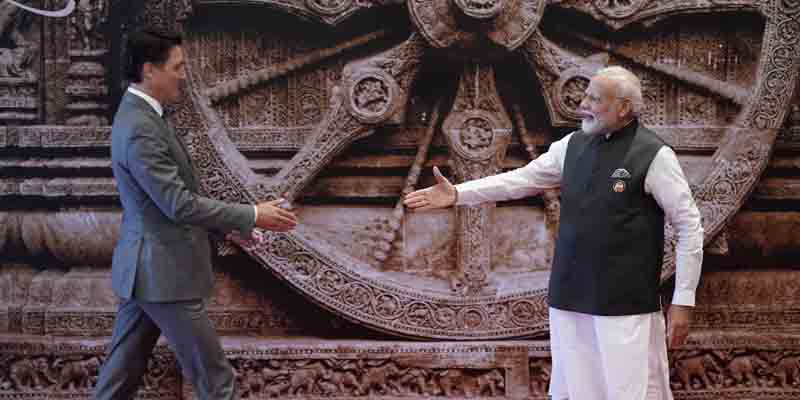
The tensions between Canada and India have reached a critical point following Canada’s accusations against India of supporting violent criminal activity on Canadian soil, particularly in relation to the murder of Hardeep Singh Nijjar, a Sikh separatist leader.
This issue has escalated into a diplomatic standoff, involving the expulsion of top diplomats from both countries, including Indian High Commissioner Sanjay Verma.
What sparked tensions?
• The diplomatic standoff between India and Canada has deepened following Canada’s accusations of India’s involvement in the killing of Hardeep Singh Nijjar, a prominent Khalistan supporter. This issue, which first surfaced in September 2023, centers on Nijjar’s assassination on June 18, 2023, in Surrey, British Columbia.
• Nijjar was an active supporter of the Khalistan movement. He was also closely linked to Gurpatwant Singh Pannun, the leader of the banned separatist organisation Sikhs for Justice (SFJ).
• Both Nijjar and Pannun have been designated as terrorists by the Indian government due to their involvement in promoting secessionist activities against India.
• In September 2023, Canada publicly accused India of having a direct role in Nijjar’s killing. This claim was strongly rejected by India as “absurd” and “politically motivated”. The accusations have led to a major diplomatic fallout between the two countries, exacerbating tensions that had been simmering over issues related to pro-Khalistan activism in Canada.
• Following these allegations, diplomatic relations between India and Canada have soured. Both countries have expelled top diplomats, which marks a significant deterioration in their bilateral ties.
• The standoff comes against the backdrop of long-standing disagreements between the two nations over Canada’s perceived leniency toward Khalistani elements, which India views as a threat to its sovereignty.
What is the Khalistan Movement?
• The Khalistan Movement is a political and separatist movement aimed at creating an independent, sovereign state for Sikhs called ‘Khalistan’ in the Punjab region.
• The movement traces its origins back to the early 20th century, but gained significant momentum in the 1970s and 1980s, as Sikh political grievances over autonomy, religious rights, and political representation grew.
• The term “Khalistan” means “Land of the Pure”.
Major Events:
• Operation Blue Star (1984): The turning point in the movement came when the Indian government, led by then Prime Minister Indira Gandhi, launched Operation Blue Star in June 1984 to remove Sikh militants who had taken refuge inside the Golden Temple in Amritsar, Punjab, the holiest shrine for Sikhs. The operation caused significant civilian casualties and damage to the temple, deeply offending Sikhs worldwide.
• Assassination of Indira Gandhi: In retaliation, Indira Gandhi was assassinated by her Sikh bodyguards later that year, leading to anti-Sikh riots across India, particularly in Delhi, where thousands of Sikhs were killed.
• Operation Black Thunder (1986 and 1988): These were subsequent operations to eliminate remaining militant elements in the Golden Temple and parts of Punjab, further weakening the movement within India.
How does the row affect Canada-India relations?
The ongoing diplomatic row between Canada and India is having significant repercussions on various aspects of their bilateral relations.
• India’s Global Reputation: The allegations of India’s involvement in Nijjar’s killing have the potential to damage India's public image as a democratic nation that adheres to international law and a rules-based global order. It could affect India’s perception as a trustworthy global ally and partner, especially in the West.
• Khalistan Movement: India’s core grievance is the perception that Canada is providing a safe haven for Khalistani separatist groups, which India considers a threat to its territorial integrity. The presence of groups like Sikhs for Justice and pro-Khalistan activism in Canada continues to be a major point of contention.
• Student Visas and Migration: The tensions between Canada and India, which directly affects thousands of Indian students. Canada is the second most popular destination for Indian students, especially those from Punjab and Haryana. This tension can disrupt the future plans of many students and strain educational ties between the two countries.
• Bilateral Engagement: The diplomatic fallout has resulted in an erosion of trust, making it difficult for both countries to engage on key issues, such as security, trade, and cooperation in international forums. This standoff has hampered open dialogue and hindered meaningful progress on bilateral matters.
• Trade Balance: India enjoys a trade surplus with Canada, but the diplomatic standoff threatens to disrupt this balance. Canada and India had been negotiating a Comprehensive Economic Partnership Agreement (CEPA), but these talks have now been paused. Trade relations, which were steadily growing, face uncertainty.
• Agriculture Imports: Canada is a significant supplier of Muriate of Potash (MOP), a crucial fertilizer for India, and is also the largest source of red lentils, with annual imports pegged at around 4-5 lakh tonnes. Disruptions in these sectors could negatively impact India’s agricultural supply chain.
• Tourism Sector: Canada is one of the top 10 sources of foreign tourists for states like Kerala in India, and strained ties could hurt tourism revenue.
• Western Relations and QUAD: India’s standoff with Canada has the potential to strain its relations with other Western nations. Canada’s Indo-Pacific strategy, which depends heavily on cooperation with India, could be weakened. India’s importance in the region, particularly as a member of QUAD, makes its relationship with Western allies critical.
• Indo-Pacific Dynamics: Canada’s growing focus on the Indo-Pacific region may face challenges without Indian participation. India plays a central role in this region’s geopolitical landscape, and a prolonged standoff could hinder cooperation on broader regional security and economic initiatives.
(The author is a trainer for Civil Services aspirants.)