
- India
- Dec 12
Ecologist Madhav Gadgil gets UN’s highest environmental honour
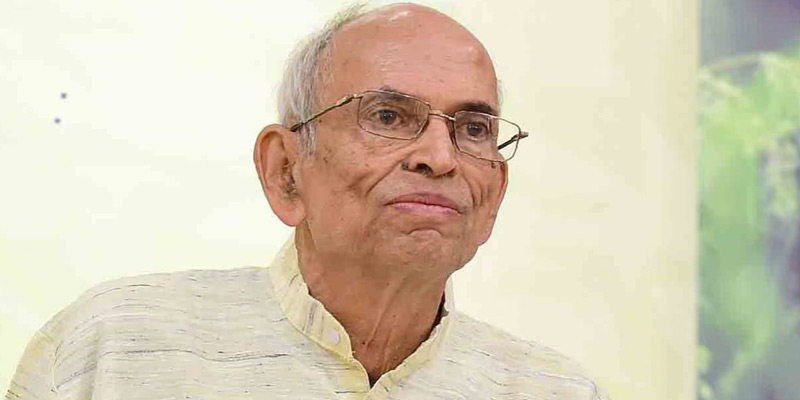
• The UN Environment Programme (UNEP) recognised ecologist Madhav Gadgil with the annual Champions of the Earth award, the UN’s highest environmental honour, for his seminal work in the Western Ghats.
• The annual Champions of the Earth award, the UN’s highest environmental honour, recognises trailblazers at the forefront of efforts to protect people and the planet. Since 2005, the award has recognised 122 laureates for outstanding and inspirational environmental leadership.
• This year’s other laureates include a minister of Indigenous Peoples, an environmental defender, a sustainable agriculture initiative, an Indigenous rights advocate, and a scientist focused on afforestation.
• They were honoured for their outstanding leadership, brave actions and sustainable solutions to tackle land degradation, drought and desertification.
• An estimated 3.2 billion people worldwide are impacted by desertification. By 2050, more than three-quarters of the world’s population is expected to be affected by droughts.
• Globally, countries have pledged to restore one billion hectares of land by 2030, while current trends suggest 1.5 billion hectares would need to be restored to meet the 2030 land degradation neutrality goals.
Gadgil honoured for his seminal work in the Western Ghats
• Madhav Gadgil, an Indian ecologist honoured in the Lifetime Achievement category, has spent decades protecting people and the planet through research and community engagement.
• From landmark environmental impact assessments of state and national policies to grassroots environmental engagement, Gadgil’s work has greatly influenced public opinion and official policies on the protection of natural resources.
• He is renowned for his seminal work in the ecologically fragile Western Ghats region of India, which is a unique global biodiversity hotspot.
• Gadgil’s wide-ranging contributions throughout the years have earned him some of India’s highest civilian honours — including the Padma Shri and Padma Bhushan awards — as well as the Tyler Prize for Environmental Achievement and the Volvo Environment Prize.
• Gadgil chaired the government-constituted Western Ghats Ecology Expert Panel to study the impact of population pressure, climate change, and development activities on the ecologically fragile region in India.
• The panel recommended in 2011 that the entire hill range be declared an Ecologically Sensitive Area (ESA) and divided into three Ecologically Sensitive Zones (ESZ 1, 2, and 3) based on their environmental sensitivity.
• It also recommended a ban on mining, quarrying, new thermal power plants, hydropower projects, and large-scale wind energy projects in ESZ-1. However, these recommendations faced opposition from state governments, industries, and local communities.
• UNESCO declared the Western Ghats a World Heritage Site in July 2012 and in 2013, the Centre formed a High-Level Working Group led by rocket scientist K. Kasturirangan to propose measures for the ecological protection and sustainable development of the region.
• This group identified 37 per cent of the Western Ghats, covering 59,940 square km, as ecologically sensitive. Since March 2014, the Union environment ministry has issued five draft notifications, including one in July 2024, to declare the Western Ghats as ecologically sensitive, but the final notification is still pending due to objections from the states.
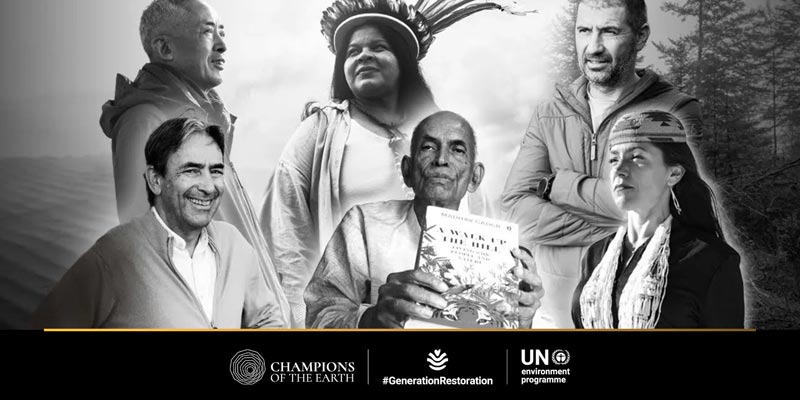
Other awardees:
1) Sonia Guajajara, Brazil’s Minister of Indigenous Peoples honoured in the Policy Leadership category, has been advocating for Indigenous rights for more than two decades. Guajajara became Brazil’s first Minister of Indigenous Peoples and the country’s first female Indigenous minister in 2023. Under her leadership, 13 territories have been recognized as Indigenous land to ward off deforestation, illegal logging, and drug traffickers.
2) Amy Bowers Cordalis, an Indigenous rights advocate honoured in the Inspiration and Action category, is using her legal expertise and passion for restoration to secure a better future for the Yurok tribe and the Klamath River in the United States. Cordalis’ work to restore the river ecosystem and encourage the adoption of sustainable fishing practices demonstrate how bold environmental action can bring significant positive change, while upholding Indigenous Peoples’ rights and livelihoods.
3) Gabriel Paun, a Romanian environmental defender honoured in the Inspiration and Action category, is the founder of NGO Agent Green, which has been helping save thousands of hectares of precious biodiversity in the Carpathians since 2009 by exposing the destruction and illegal logging of Europe’s last old growth forest. Paun has received death threats and been physically attacked for his work in documenting deforestation in an area that is vital for the ecosystem and supports unique biodiversity such as lynx and wolves.
4) Lu Qi, a Chinese scientist honoured in the Science and Innovation category, has worked in science and policy sectors for three decades helping China reverse degradation and shrink its deserts. As Chief Scientist of the Chinese Academy of Forestry and founding president of the Institute of Great Green Wall, Lu has played a key role in implementing the world’s largest afforestation project, establishing expert research networks and partnerships, and boosting multilateral cooperation to stem desertification, land degradation and drought.
5) SEKEM, a sustainable agriculture initiative honoured in the Entrepreneurial Vision category, is helping farmers in Egypt transition to more sustainable agriculture. Its promotion of biodynamic agriculture plus afforestation and reforestation work has been transforming large swathes of desert into thriving agricultural business, advancing sustainable development across the country.
United Nations Environment Programme (UNEP)
• The United Nations Environment Programme (UNEP) is the leading global authority on the environment. It unites 193 Member States in an effort to find solutions to climate change, nature and biodiversity loss, and pollution and waste, collectively known as the triple planetary crisis.
• UNEP was founded in 1972. It was conceived to monitor the state of the environment and coordinate responses to the world’s greatest environmental challenges.
• UNEP is part of the UN Secretariat and responds to the UN General Assembly.
• Its headquarters is situated in Nairobi, Kenya.
• UNEP’s primary goal is to catalyse action on the environment and promote solutions to the triple planetary crisis of climate change, nature and biodiversity loss, and pollution and waste.
• Through scientific studies, policy support, inter-governmental coordination and public advocacy, UNEP helps humanity to foster climate stability, live in harmony with nature and forge a pollution-free future, in line with the 2030 Agenda for Sustainable Development.
• In the five decades since its founding, UNEP’s convening power, rigorous scientific research and public advocacy have helped to boldly advance the global environmental agenda. In particular, UNEP has led efforts to counter climate change, protect endangered species, end deforestation, repair the hole in the ozone layer and phase out toxic leaded fuels.
Manorama Yearbook app is now available on Google Play Store and iOS App Store