
- India
- Feb 18
SC hears plea against Union Carbide waste disposal at Pithampur facility
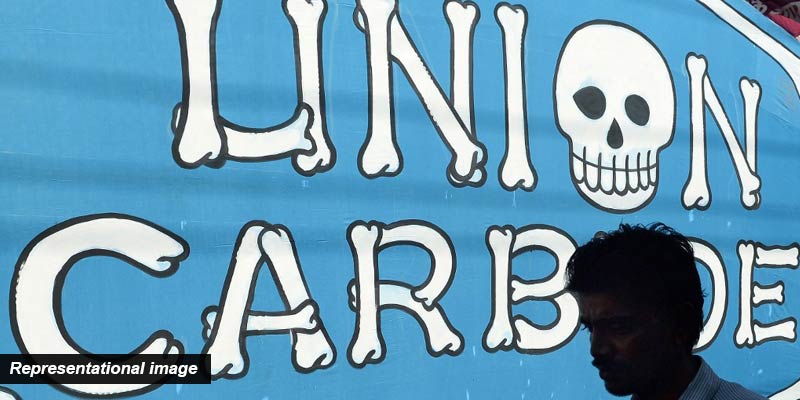
• The disposal of hazardous waste of 1984 Bhopal gas tragedy near Indore came under the Supreme Court’s scanner, which sought responses from the Centre, Madhya Pradesh and its pollution control board.
• The Supreme Court agreed to hear a plea challenging the December 3, 2024 and January 6 this year orders of the Madhya Pradesh High Court.
• The top court took note of a plea raising the issue of right to health and the risk to the inhabitants of nearby areas, including the city of Indore.
• Locals in Pithampur are fiercely opposed to the planned disposal in their region.
1984 Bhopal gas tragedy
• The highly toxic methyl isocyanate (MIC) gas leaked from the Union Carbide pesticide factory on the intervening night of December 2-3, 1984, killing at least 5,479 persons and leaving thousands with serious and long-lasting health issues. The activists say there is no clarity on the number of dead and those affected.
• It is considered the world's worst industrial disaster.
• Even after 40 years, a sense of closure eludes some survivors who are afflicted by congenital disorders.
Transport of toxic waste
• On December 3, 2024, the Madhya Pradesh High Court rebuked authorities for not clearing the Union Carbide site in Bhopal despite directions from even the Supreme Court.
• The High Court set a four-week deadline to shift the waste, observing that even 40 years after the gas tragedy, authorities were in a “state of inertia”.
• The HC bench had warned the government of contempt proceedings if its directive was not followed.
• The hazardous waste of around 377 tonnes was transported in 12 sealed container trucks from Madhya Pradesh capital Bhopal to Pithampur industrial area in Dhar district, located 250 km away.
• A green corridor was created for the nearly seven-hour journey of the vehicles to the Pithampur industrial area in Dhar district.
• Amid tight security, the vehicles reached a factory in Pithampur where the waste will be disposed of.
Disposal of the waste
• The waste included remnants of Sevin, a pesticide produced at the Union Carbide factory, methyl isocyanate (MIC), the gas that caused thousands of deaths during the disaster, reactor residues, contaminated soil and other chemicals used at the plant.
• The incineration of the waste will happen at the Pithampur unit over a period of 180 days.
• If everything is found to be fine, the waste will be incinerated within three months. Otherwise, it might take up to nine months, officials said.
• Initially, some of the waste will be burnt at the disposal unit in Pithampur and the residue (ash) will be examined to find whether any harmful elements are left.
• The smoke from the incinerator will pass through special four-layer filters so that the surrounding air is not polluted.
• Once it is confirmed that no traces of toxic elements are left, the ash will be covered by a two-layer membrane and buried to ensure it does not come in contact with soil and water in any way.
• A team of experts under the supervision of officials of the Central Pollution Control Board and State Pollution Control Board will carry out the process.
Manorama Yearbook app is now available on Google Play Store and iOS App Store