
- India
- Mar 22
- Sreesha V.M
Govt schemes that link forests to food security, nutrition & livelihood
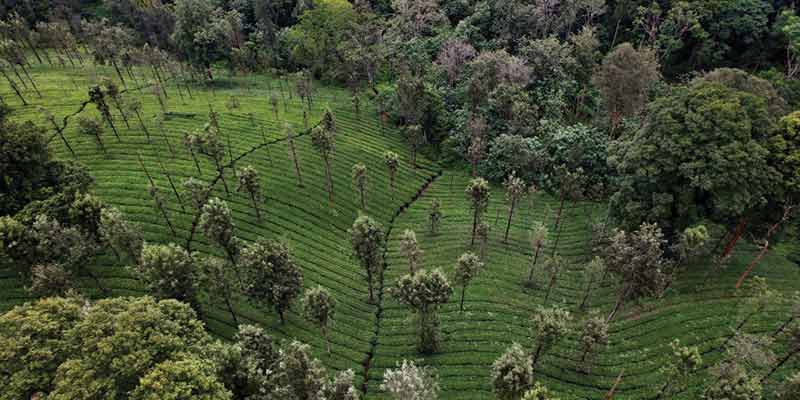
• The UN observes International Day of Forests on March 21.
• Forests, pillars of global food security and nutrition, are the livelihoods of millions of families. They provide essential foods such as fruits, seeds, roots and wild meat, fundamental resources for indigenous and rural communities.
• But its function goes far beyond. Forests are a vital source of energy, providing wood for cooking, playing a key role in agriculture by hosting pollinators and acting in soil enrichment, climate regulation and biodiversity conservation.
• More than five billion people around the world use forest and non-timber forest products for food, medicine and livelihoods.
• In addition, forested watersheds supply freshwater to more than 85 per cent of the world’s major cities.
• In crisis situations, forests become an economic and food lifeline, providing up to 20 per cent of family income in rural areas, guaranteeing healthy diets.
• But these ecosystems are in danger. We lose 10 million hectares annually due to deforestation and approximately 70 million hectares affected by fires. Protecting and restoring our forests is urgent and necessary.
• In India forests are deeply intertwined with culture, economy, and biodiversity, and their protection is not just an environmental necessity but a fundamental responsibility.
• In this direction, the Ministry of Environment, Forest and Climate Change and related ministries have launched various schemes that link forests to food security, nutrition, and livelihoods.
National Agroforestry Policy
• Agroforestry is a sustainable land-use system that integrates trees and crops to enhance agricultural productivity, improve soil fertility, and provide an additional income source for farmers.
• Recognising its potential, the government introduced the National Agroforestry Policy in 2014 to promote tree plantation in farmland.
• The scheme aims to encourage farmers to adopt agroforestry for climate resilience, environmental conservation, and economic benefits.
• The scheme emphasizes the production and distribution of Quality Planting Material (QPM) through nurseries and tissue culture units.
• The ICAR-Central Agroforestry Research Institute (CAFRI) is the nodal agency responsible for providing technical support, certification, and training. Various institutions such as Indian Council of Forestry Research and Education (ICFRE), Council of Scientific and Industrial Research (CSIR), ICRAF, and state agricultural universities collaborate to implement the program effectively.
• To make agroforestry profitable, the scheme supports farmers through price guarantees and buy-back options for farm-grown trees. It also encourages private sector participation in the marketing and processing of agroforestry products. Additionally, agroforestry integrates well with India's strategy to promote millets, as millets thrive in tree-based farming systems.
Green India Mission
• The Green India Mission (GIM), also known as National Mission for a Green India, is a key part of India's National Action Plan on Climate Change (NAPCC).
• It is one of the eight missions under NAPCC.
• The mission aims to protect, restore, and enhance India’s forest cover while tackling climate change.
• GIM focuses on improving biodiversity, water resources, and ecosystems like mangroves and wetlands, all while helping absorb carbon.
• The activities under GIM were started in the FY 2015-16.
Mission Goals:
a) Expand forest/tree cover by 5 million hectares (mha) and improve the quality of another 5 mha of forest and non-forest land.
b) Boost ecosystem services like carbon storage, water management, and biodiversity.
c) Improve livelihoods for 3 million households by increasing income from forest-based activities.
Sub-Missions:
GIM has five sub-missions, each focused on a different aspect of greening:
i) Enhancing Forest Cover – Improving Forest quality and ecosystem services.
ii) Ecosystem Restoration – Reforesting and increasing forest cover.
iii) Urban Greening – Adding more trees in cities and nearby areas.
iv) Agro-Forestry & Social Forestry – Boosting biomass and creating carbon sinks.
v) Wetland Restoration – Reviving critical wetlands.
• The Green India Mission is working on the Ecosystem Services Improvement Project (ESIP), a World Bank-backed initiative in Chhattisgarh and Madhya Pradesh.
• As of July 2024, Rs 909.82 crore have been allocated to 17 states and one Union Territory for plantation and eco-restoration over 155,130 hectares. In Maharashtra's Palghar district, 464.20 hectares in Dahanu Division have been covered under GIM for plantation and eco-restoration.
Forest Fire Prevention & Management Scheme
• The Forest Fire Prevention & Management is a Centrally Sponsored Scheme that supports states and Union Territories in preventing and controlling forest fires.
• The ministry provides financial assistance to help implement various fire prevention and management measures.
• India has a forest fire detection system managed by the Forest Survey of India, Dehradun.
• It uses remote sensing technology to detect and share information about forest fires in near real-time. This system plays a crucial role in the early detection and effective management of forest fires across the country.
• The ministry has also constituted a Crisis Management Group under the chairmanship of Secretary (EF&CC) to deal with crises arising as a result of forest fires.
• The scheme emphasizes the involvement of local communities in forest protection and contributes to maintaining environmental stability.
• Developing a fire danger rating system and forecasting methods is also a key objective.
• The scheme encourages the use of modern technology, such as remote sensing, GPS, and GIS, to enhance fire prevention efforts. Additionally, it seeks to improve knowledge about the impact and behaviour of forest fires.
• Following the recommendations of the Parliamentary Committee and NGT’s directions, the ministry has developed the National Action Plan on Forest Fire.
• It is based on a study with the World Bank and consultations with key stakeholders like State Forest Departments and the National Disaster Management Authority.
• In addition to forest fire detection, the Forest Survey of India (FSI) has developed a satellite-based Forest Fire Monitoring and Alert System. This system helps in the timely detection and monitoring of forest fires. Fire alerts are sent via SMS and email to registered users, ensuring quick response and better fire management.
Van Dhan Yojana
• Launched in 2018 by the Ministry of Tribal Affairs and TRIFED, the Pradhan Mantri Van Dhan Yojana (PMVDY) aims to improve the livelihood of tribal communities by enhancing the value of forest produce. The scheme helps tribal gatherers become entrepreneurs through skill training, infrastructure support, and market linkages.
• Under this initiative, tribal communities form Van Dhan Vikas Kendras (VDVKs), each consisting of 300 members from 15 Self-Help Groups (SHGs). These Kendras serve as hubs for processing, value addition, and marketing of Minor Forest Produce (MFPs)
• The scheme is centrally funded, with Rs 15 lakh allocated per Kendra.
• Tribal members contribute Rs 1,000 each to ensure ownership. The government also supports branding, packaging, and global market access for tribal products.
Two-Stage Implementation
• Stage I: Establishment of 6,000 Kendras across tribal districts with basic facilities.
• Stage II: Scaling up successful Kendras with better infrastructure, such as storage and processing units.
• PMVDY generates sustainable livelihoods, promotes forest conservation, discourages tribal migration, and strengthens the tribal economy, making it a key initiative for India’s tribal development.
(The author is a trainer for Civil Services aspirants.)