
- India
- Jul 12
‘Maratha Military Landscapes’ gets UNESCO tag
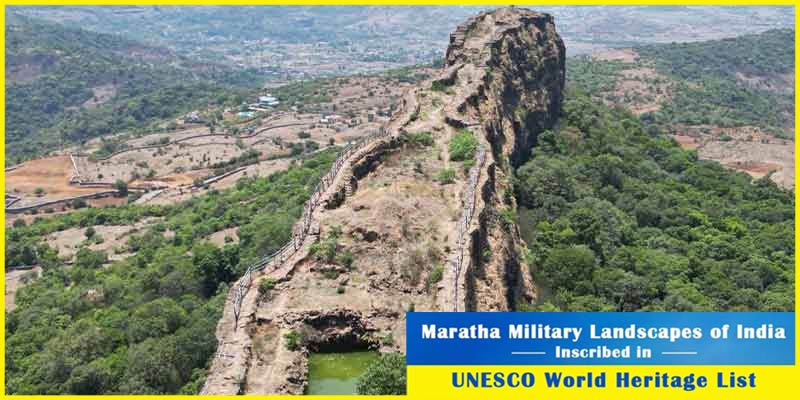
• ‘Maratha Military Landscapes’ was inscribed on the coveted UNESCO World Heritage List on July 11.
• The decision was taken during the ongoing 47th session of the World Heritage Committee (WHC) being held in Paris.
• This is India’s 44th property to receive the recognition.
• The nomination for UNESCO tag was for the 2024-25 cycle.
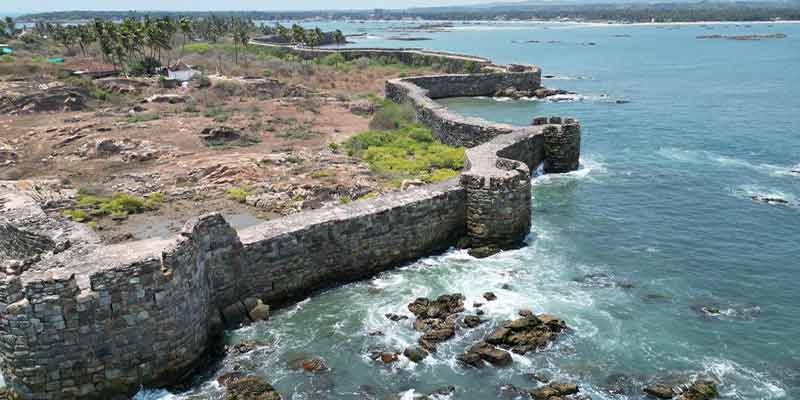
• Its 12 components are — Salher Fort, Shivneri Fort, Lohagad, Khanderi Fort, Raigad, Rajgad, Pratapgad, Suvarnadurg, Panhala Fort, Vijaydurg, Sindhudurg in Maharashtra and Gingee Fort in Tamil Nadu.
• These components, distributed across diverse geographical and physiographic regions, showcase the strategic military powers of the Maratha rule.
• Shivneri fort, Lohagad, Raigad, Suvarnadurg, Panhala fort, Vijaydurg, Sindhudurg and Gingee fort are protected under the Archaeological Survey of India.
• Salher fort, Rajgad, Khanderi fort and Pratapgarh are protected by the Directorate of Archaeology and Museums, Government of Maharashtra.
• The ‘Maratha Military Landscapes’ was developed between the 17th and 19th centuries.
• There are more than 390 forts in Maharashtra out of which only 12 forts were selected under the Maratha Military Landscapes of India, of these eight forts are protected by the Archaeological Survey of India (ASI).
• The inception of the Maratha military ideology dates back to the 17th century during the reign of Maratha King Chhatrapati Shivaji Maharaj by 1670 and continued through subsequent rules until Peshwa rule till 1818.
• The proposal was sent to the World Heritage Committee in January 2024 and the inscription comes after a rigorous 18-month long process.
• In 2024, the mound-burial system of the Ahom dynasty in Assam — Moidams — were inscribed in the UNESCO World Heritage List at the 46th Session of the World Heritage Committee held in New Delhi.
• India ranks sixth globally and second in the Asia Pacific Region for the most number of World Heritage Sites.
• There are 62 sites from India which are on the UNESCO’s Tentative List of World Heritage, which is a mandatory threshold for any site to be considered as a World Heritage property in future.
• Every year, each State Party may propose just one site for consideration of the World Heritage Committee for inscription to the coveted list.
What is a World Heritage Site?
• The United Nations Educational, Scientific and Cultural Organisation (UNESCO) seeks to encourage the identification, protection and preservation of cultural and natural heritage around the world considered to be of outstanding value to humanity.
• This is embodied in an international treaty called the ‘Convention Concerning the Protection of the World Cultural and Natural Heritage’, adopted by UNESCO in 1972.
• A World Heritage Site is a place having a special cultural or physical significance and outstanding universal value to humanity. It may be a building, a city, a complex, a desert, a forest, an island, a lake, a monument or a mountain.
• Sites recognised as being of Outstanding Universal Value are inscribed each year on the World Heritage List.
• To be included on the World Heritage List, sites must be of outstanding universal value and meet at least one out of ten selection criteria. These criteria are regularly revised by the Committee to reflect the evolution of the World Heritage concept itself.
Who lists World Heritage Sites?
• The International World Heritage Programme administered by the UNESCO World Heritage Committee establishes the sites to be listed as World Heritage Sites.
• ICOMOS assisted UNESCO in writing the Convention text, in which it was appointed advisory body to the World Heritage Committee. Its role is to support the implementation of the cultural side of the Convention.
• The France-based International Council on Monuments and Sites (ICOMOS) is an international non-governmental organisation that comprises professionals, experts, representatives from local authorities, companies and heritage organisations, and is dedicated to the conservation and enhancement of architectural and landscape heritage around the world.
• The World Heritage Committee defines the use of the World Heritage Fund and allocates financial assistance upon requests from States Parties.
• It has the final say on whether a property is inscribed on the World Heritage List.
• The Committee consists of representatives from 21 of the States Parties to the Convention elected by their General Assembly.
• It examines reports on the state of conservation of inscribed properties and asks States Parties to take action when properties are not being properly managed.
• It also decides on the inscription or deletion of properties on the List of World Heritage in Danger.
Manorama Yearbook app is now available on Google Play Store and iOS App Store