
- India
- Aug 02
Explainer - Harit Sagar initiative
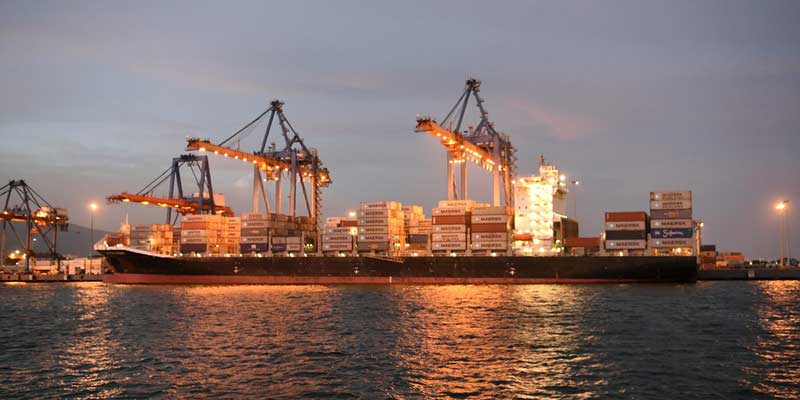
Union Minister of Ports, Shipping and Waterways Sarbananda Sonowal highlighted the government’s effort to reduce carbon emissions at ports with the ‘Harit Sagar’ initiative in a written reply to the Lok Sabha on August 1.
Harit Sagar: Green Port Guidelines
• In May 2023, the government issued ‘Harit Sagar: Green Port Guidelines’.
• It lays down a framework for major ports to take various green initiatives to reduce carbon intensity and to develop an environment friendly ecosystem in alignment with global standards.
• It envisages ecosystem dynamics in port development, operation and maintenance while aligning with ‘working with nature’ concept and minimising impact on biotic components of harbour ecosystem.
What is the significance of this initiative?
• The country’s maritime sector plays a crucial role in the overall trade and growth with 95 per cent share in trade volume and 65 per cent share in trade value.
• India has pledged to reduce the emission intensity per unit GDP by 45 per cent by year 2030, from 2005-level and achieve about 50 per cent cumulative electric power installed capacity from non-fossil fuel-based energy resources by the year 2030.
• Indian ports will play an important role in contributing towards decarbonisation efforts of the country.
• Ports are required to undertake green initiatives in line with the broad vision of the country and contribute to the efforts being made by the country in moving towards achieving India’s long term goal of reaching Net Zero emission by 2070.
• This will also help in contributing towards moving closer to the UN Sustainable Developmental Goals (SDG) which includes obligations on developing resilient infrastructure for safe, efficient and sustainable ports.
• Key interventions, including promoting use of renewable energy, reducing air emissions, optimising water usage, improving solid waste management and reducing carbon emission per tonne of cargo handled by 30 per cent by the year 2030 and 70 per cent by the year 2047, have been envisaged by the ministry in its plan for decarbonising the sector.
The following incentives are proposed under the guidelines:
• Ships using cleaner fuels or equipped with shore power reception facilities will be prioritised in berthing or receive rebates in berth dues to promote sustainability at ports.
• Private craft operators (tugs, pilot boats, mooring boats, survey boats, etc) at ports using alternative fuels (green fuels) such as methanol, ethanol, hydrogen fuel cell technology, etc, will be suitably incentivised.
• Private port operators, stevedores, agents, exporters, and importers who use green fuel or electric vehicles for their entire fleet may receive green certification and be incentivised.
• All truck operators who use green fuels — CNG/LNG/hydrogen and its derivative or electric fleet — may be identified and incentivised.
• Existing Public-Private Partnership (PPP) concessionaires at ports will be incentivised to adopt eco-friendly and carbon-neutral designs and practices.
Manorama Yearbook app is now available on Google Play Store and iOS App Store