
- India
- Sep 08
What is lunar eclipse?
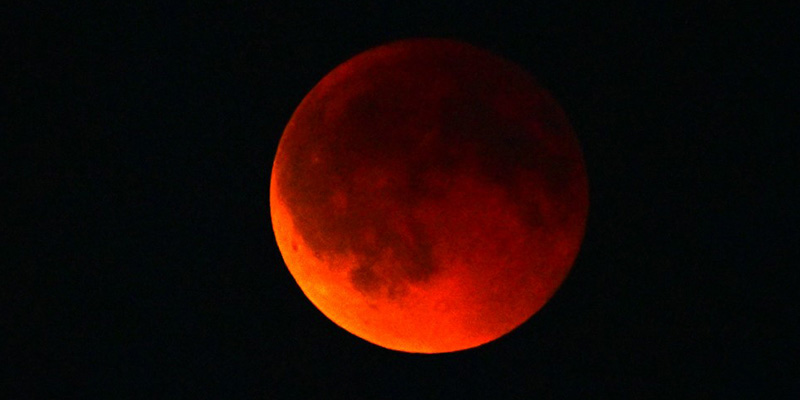
• Skywatchers across India turned their gaze towards the Moon on September 7 night to witness a rare “blood Moon” or the total lunar eclipse.
• The eclipse began around 8:58 pm when the Moon entered the semi-dark region of the shadow of the Earth, called penumbra.
• The Moon appears red during lunar eclipses because the only sunlight reaching it is reflected and scattered through the Earth's atmosphere.
• The total lunar eclipse was visible from across Asia and parts of Europe, Africa and west Australia.
• This eclipse was the longest total lunar eclipse visible from India since 2022 and the first since July 27, 2018 to be observed from all parts of the country.
• The next total lunar eclipse will be visible from the country on December 31, 2028.
What is a lunar eclipse?
• A lunar eclipse occurs when Earth comes between the Sun and the Moon and (part of) the Moon is shaded by Earth.
• When the Sun, Earth and Moon are well aligned, the Moon is completely covered by Earth’s full central shadow — at these times we see a total lunar eclipse. Some sunlight is refracted onto the Moon through Earth’s atmosphere, giving the Moon a reddish colour.
• Lunar eclipses can be seen by anybody on Earth for whom the Moon is above the horizon, and are therefore much more common than solar eclipses.
• Unlike solar eclipses, observing a total lunar eclipse does not require special equipment and is safe with the naked eye, binoculars, or a telescope.
• In India, lunar eclipses are linked to several superstitions, with people often avoiding food, water, and physical activity, fearing “poisoning or negative energy”.