
- India
- Nov 21
SC flays the concept of ‘deemed assent’
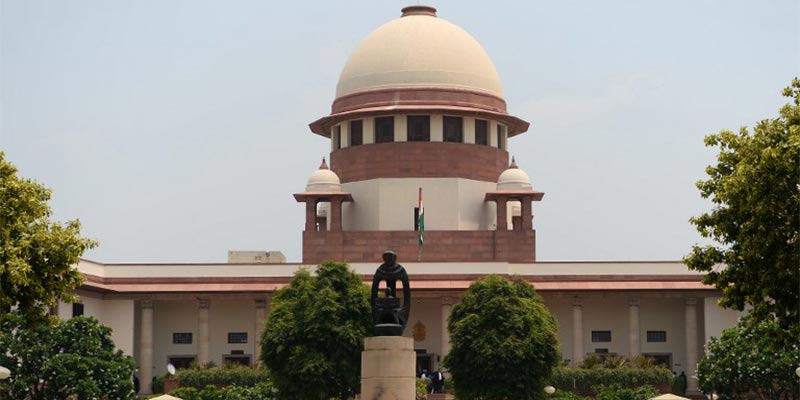
• In its judgment that the court cannot impose any timelines on Governors and the President to grant assent to Bills passed by state Assemblies, the Supreme Court noted “deemed assent would amount to virtual takeover of the role of a separate constitutional authority”.
• On April 8, a two-judge SC bench had declared the Tamil Nadu Governor’s action of withholding of 10 Bills as illegal and said they were deemed assented to. The court used its powers under Article 142 to treat the Bills as approved.
• The concept of ‘deemed assent’ in the context of Articles 200 and 201 pre-supposes that one constitutional authority (herein, the Court), could play a ‘substitutional role’ for another constitutional functionary (herein, the Governor, or President).
• The SC bench noted that such a usurpation of the gubernatorial function of the Governor, and similarly of the President’s functions, is antithetical not only to the spirit of the Constitution, but also specifically, the doctrine of separation of powers – which is a part of the basic structure of the Indian Constitution.
• The concept of deemed assent of pending Bills by the Court in exercise of jurisdiction under Article 142, is virtually a takeover of the role, and function, of a separate constitutional authority, it added.
• The exercise of constitutional powers and the orders of the President or Governor cannot be substituted in any manner under Article 142, and the SC bench clarified that the Constitution, specifically Article 142 even, does not allow for the concept of ‘deemed assent’ of Bills.
What is Article 142?
• Article 142 is about the enforcement of decrees and orders of the Supreme Court.
• It deals with the Supreme Court’s power to exercise its jurisdiction and pass order for doing complete justice in any cause or matter pending before it.
• It states that, “The Supreme Court in the exercise of its jurisdiction may pass such decree or make such order as is necessary for doing complete justice in any cause or matter pending before it, and any decree so passed or orders so made shall be enforceable throughout the territory of India in such manner as may be prescribed by or under any law made by Parliament and, until provision in that behalf is so made, in such manner as the President may by order prescribe.”
• Section 2 states that “Subject to the provisions of any law made in this behalf by Parliament, the Supreme Court shall, as respects the whole of the territory of India, have all and every power to make any order for the purpose of securing the attendance of any person, the discovery or production of any documents, or the investigation or punishment of any contempt of itself.”
Recent cases invoking Article 142
• In May 2022, the Supreme Court ordered the release of A.G. Perarivalan, who served over 30 years in jail in the Rajiv Gandhi assassination case.
• On November 9, 2019, the Supreme Court in the judgment on the Ayodhya title dispute used special powers granted in the Article 142 of the Constitution. Though the disputed 2.77 acres of land was awarded for a temple, based on the evidence, the apex court invoked the powers of Article 142 to grant five acres for a mosque in Ayodhya.
• The SC bench also invoked this Article to grant relief to Nirmohi Akhara and sought its inclusion on the trust formed by the Centre under Section 6 of the Ayodhya Act to construct temple.
• In October 2019, the Supreme Court exercised its inherent powers under Article 142 of the Constitution to annul a marriage of an estranged couple, residing separately for over two decades, saying it was a case of irretrievable breakdown of wedlock.
• In December 2015, the Supreme Court appointed a former High Court judge Justice Virendra Singh as Uttar Pradesh’s Lokayukta after the state government failed to comply with its directives. The UP government failed to meet the Supreme Court deadline to appoint Lokayukta even after two rounds of marathon talks, which failed to come up with a consensus name.