
- India
- Nov 21
Courts can’t impose timelines on President, Governors to act on Bills, rules SC
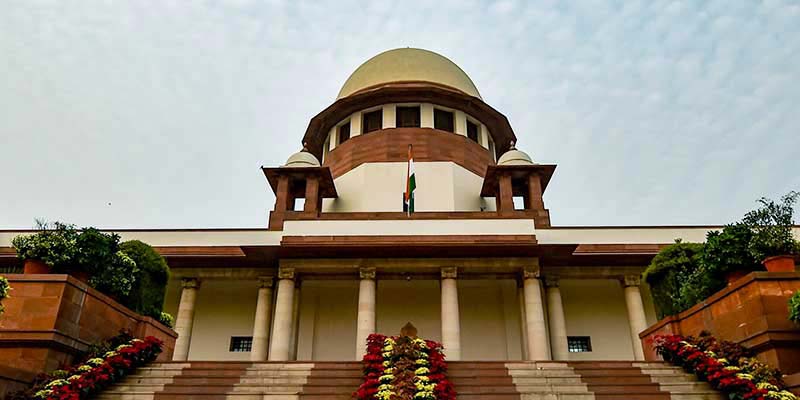
• A five-judge Constitution bench of the Supreme Court held that the court cannot impose any timelines on Governors and the President to grant assent to Bills passed by state Assemblies.
• However, it added that Governors do not have unfettered powers to sit on the Bills for “perpetuity”.
• In its unanimous opinion on the Presidential Reference, the bench headed by Chief Justice B.R. Gavai highlighted that deemed assent of Bills cannot be granted by the Supreme Court by using its plenary power under Article 142.
• The SC bench made it clear that “inaction” by Governors that is “prolonged, unexplained and indefinite” will certainly invite “limited judicial scrutiny” though the merits of their action under Article 200 cannot be looked into by courts.
What was the case about?
• Indefinite delay in granting assent to multiple Bills has led to frequent run-ins between the Opposition-ruled states, especially Tamil Nadu, Kerala and Punjab and their Governors following which some state governments sought the intervention of the Supreme Court.
• On April 8, the Supreme Court cleared 10 Bills which were stalled and reserved by Tamil Nadu Governor R.N. Ravi for President’s consideration.
• The Supreme Court held that Governors cannot sit over Bills passed by the state legislature.
• It set a timeline for all Governors to act on the Bills passed by the state Assemblies and ruled that a Governor does not possess any discretion in exercise of functions under Article 200 of the Constitution in respect to any Bill presented to them and must mandatorily abide by the advice tendered by the council of ministers.
• A bench of Justices J.B. Pardiwala and R. Mahadevan urged the President to decide within three months of receiving a Bill from a Governor as it laid down such a timeline for the first time. It asked that the President’s office convey reasons to the concerned state if there is any delay beyond this period.
• On May 13, in exercise of powers conferred under Article 143(1) of the Constitution of India, President Droupadi Murmu referred 14 questions relating to interpretation of powers of the Governor under Articles 200 and 201 along with certain ancillary questions for opinion of the Supreme Court.
• Article 143 is rarely invoked, as it is reserved for matters of profound constitutional or national importance.
• Article 143(1) of the Constitution deals with the power of the President to consult the Supreme Court.
The provision says, “If at any time it appears to the President that a question of law or fact has arisen, or is likely to arise, which is of such a nature and of such public importance that it is expedient to obtain the opinion of the Supreme Court upon it, he may refer the question to that Court for consideration and the Court may, after such hearing as it thinks fit, report to the President its opinion thereon”.
• Article 200 deals with situations with regard to passage of Bills by the state Assembly and subsequent options available to the Governor on grant of assent, or withholding of assent or sending the Bill to President for reconsideration.
• Article 201 deals with the Bills reserved for the President’s consideration by the Governor.
• As per the orders of the Chief Justice of India, the reference was placed before the Constitution Bench.
Opinion of the SC bench on the Presidential Reference
• The Governor has three constitutional options before him, under Article 200, namely — to assent, reserve the Bill for the consideration of the President, or withhold assent and return the Bill to the Legislature with comments. The third option is only available to the Governor when it is not a Money Bill.
• The Governor enjoys discretion in choosing from these three constitutional options and is not bound by the aid and advice of the Council of Ministers, while exercising his function under Article 200.
• The discharge of the Governor’s function under Article 200, is not justiciable. The Court cannot enter into a merits review of the decision so taken. However, in glaring circumstances of inaction that is prolonged, unexplained, and indefinite — the Court can issue a limited mandamus for the Governor to discharge his function under Article 200 within a reasonable time period, without making any observations on the merits of the exercise of his discretion.
• In the absence of constitutionally prescribed time limits, and the manner of exercise of power by the Governor, it would not be appropriate for this Court to judicially prescribe timelines for the exercise of powers under Article 200.
• For similar reasoning as held with respect to the Governor, the President’s assent under Article 201 too, is not justiciable.
• It is clarified that the President too cannot be bound by judicially prescribed timelines in the discharge of functions under Article 201.
• The exercise of constitutional powers and the orders of the President/Governor cannot be substituted in any manner under Article 142, and the bench clarified that the Constitution, specifically Article 142 even, does not allow for the concept of ‘deemed assent’ of Bills.