
- India
- Nov 26
Explainer - National Milk Day
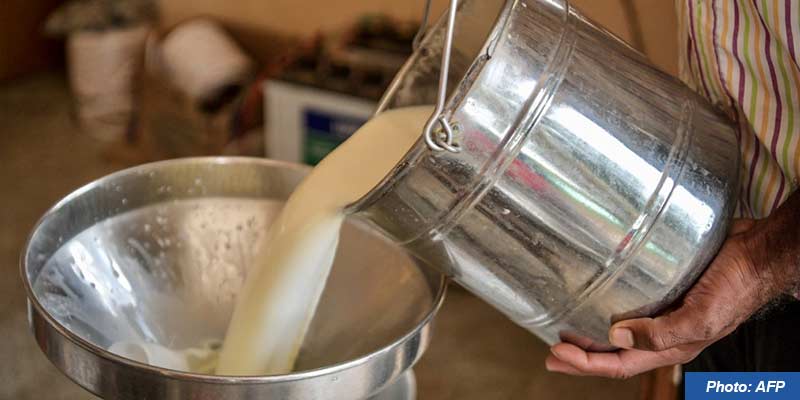
• National Milk Day is celebrated every year on November 26 to honour Verghese Kurien, the “father of white revolution”, who was born on this day.
• Born on November 26, 1921, in Kozhikode, Kerala, Kurien was instrumental in transforming India from a milk-deficient nation to the world’s largest producer of milk.
• This day underscores the transformative impact of India’s dairy sector, a key contributor to nutritional security, rural empowerment, and economic growth.
• India is the world’s largest milk producer with 230.58 million tonnes per annum and it is 25 per cent of world production of milk followed by the United States.
• Several measures have been initiated by the government to increase the productivity of livestock, which has resulted in increasing milk production significantly.
• Milk production during 2021-22 and 2022-23 is 222.07 million tonnes and 230.58 million tonnes respectively showing an annual growth of 3.83 per cent.
A journey from milk deficient nation to milk surplus nation
• During the 1950s and 1960s, India was a milk-deficit nation dependent on imports.
• The country produced less than 21 million tonnes of milk per annum despite having the largest cattle population in the world.
• In 1950-51, per capita consumption of milk in the country was only 124 grams per day. By 1970 this figure had dropped to 107 grams per day, one of the lowest in the world and well below the minimum recommended nutritional standards.
• Following the visit of Prime Minister Lal Bahadur Shastri to the Anand district of Gujarat in 1964, the National Dairy Development Board (NDDB) was created with a mandate to support the creation of the ‘Anand Pattern’ of dairy cooperatives across the country.
• The ‘Anand Pattern’ was essentially a cooperative structure comprising village-level Dairy Cooperative Societies (DCSs), which promote district-level unions, which in turn promote state-level marketing federation.
• The National Dairy Development Board (NDDB) was founded in 1965 to replace exploitation with empowerment, tradition with modernity, stagnation with growth, transforming dairying into an instrument for the development of India's rural people.
• Dr. Verghese Kurien was the founder chairman of NDDB from 1965 to 1998. He is the architect of India’s ‘White Revolution’, which helped India emerge as the largest milk producer in the world.
• In 1970, India set in motion the ‘White Revolution’, the world’s biggest dairy development programme. It is also known as ‘Operation Flood’.
• It transformed the dairy-deficient nation into the global leader in milk production. For the millions living in rural India, milk farming became the largest source of employment and income.
• The Operation Flood programme was implemented by the National Dairy Development Board in three phases between 1970-1996 which connected the rural milk producers to the urban consumers through the network of dairy cooperatives.
• It assisted in establishing 73,000 village milk producers’ cooperatives in 170 milk sheds. Notably 9 million milk producing households came under the fold of Operation Flood.
• Operation Flood is considered as the world’s largest food and development programme.
• Operation Flood helped to sell quality milk to consumers across 700 towns and cities through a National Milk Grid.
• Further, it has also contributed to an increase of 40 million tonnes in milk production and there was an annual estimated gain of about Rs 30,000 crore due to the programme.
• In three decades (1980s, 1990s and 2000s), the daily milk consumption in the country rose from a low of 107 grams per person in 1970 to over 226 grams per person in 2002.
• The programme also helped remove the need for middlemen, thereby reducing seasonal price variations.
• The cooperative structure made the whole exercise of production and distribution of milk and milk products economically viable for farmers to undertake on their own.
• It also ended India’s dependence on imported milk solids. Not only was the nation equipped to meet its local dairy needs, but it also started exporting milk powder to many foreign countries.
• Genetic improvement of milking animals also increased due to cross-breeding.
• As the dairy industry modernised and expanded, around 10 million farmers started earning their income from dairy farming.
• After Operation Flood, the Indian dairy and animal husbandry sector emerged as a primary source of income for a huge number of rural households – most of them either landless, small or marginal farmers.
• Today, India holds the place of pride of having been the largest milk-producing country in the world.
• Since 2001, June 1 has been observed as World Milk Day by the Food and Agriculture Organisation (FAO) of the United Nations to acknowledge the importance of milk as a global food and to celebrate the dairy sector. In India, the birthday of Dr. Verghese Kurien, on November 26, is observed as National Milk Day.
Govt initiatives supporting dairy development
The government of India has introduced several initiatives in this sector including:
i) National Dairy Plan (NDP)
ii) Dairy Processing and Infrastructure Development Fund (DIDF)
iii) Rashtriya Gokul Mission (RGM)
iv) National Programme for Dairy Development (NPDD)
v) A-HELP (Accredited Agent for Health and Extension of Livestock Production)
vi) Kisan Credit Cards (KCC) for Dairy Farmers.
• These initiatives are aimed at enhancing milk production, improving productivity, and uplifting rural livelihoods.