
- India
- Dec 01
India launches ‘Operation Sagar Bandhu’ to assist Sri Lanka
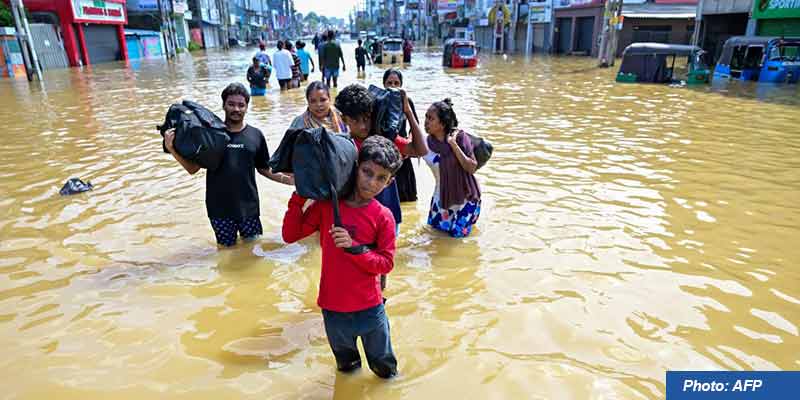
• India intensified humanitarian assistance and disaster response under ‘Operation Sagar Bandhu’ for Sri Lanka in the wake of Cyclone Ditwah, which has left a trail of destruction in the island nation.
• Sri Lanka is facing one of its worst flood disasters in two decades, with nearly one million people affected and more than 400 reported dead or missing after Cyclone Ditwah unleashed catastrophic flooding and landslides across the island.
• More than 180,000 people from over 51,000 families are sheltering in 1,094 government-run safety centres as search and rescue efforts continue.
• Cyclone Ditwah made landfall on November 28 before moving back over the Bay of Bengal, triggering some of the most severe flooding Sri Lanka has seen since the early 2000s.
• The hardest-hit districts include Gampaha, Colombo, Puttalam and Mannar, as well as Trincomalee and Batticaloa, while deadly landslides in the central hill country have devastated Kandy, Badulla and Matale.
• With essential infrastructure disrupted and thousands affected, additional relief and rescue assets have been deployed to strengthen ongoing efforts across the country.
• The Indian Air Force, in close coordination with Sri Lankan authorities, executed major rescue and evacuation missions in the landslide-hit Kotmale region, which remains completely isolated due to road disruptions.
• Two IAF aircraft, a C-130J and an IL-76 reached Colombo with approximately 21 tonnes of relief supplies, along with 80 personnel from the National Disaster Response Force (NDRF). These highly trained rescue teams have already been deployed to Puttalam and Badulla, two of the worst-affected regions.
• Chetak helicopters from INS Vikrant airlifted several people to safer locations, while IAF helicopters carried out search operations in Kotmale, a worst-hit central hill area with no road access due to landslides and flooding.
• India as a first responder will continue assistance as part of ‘Operation Sagar Bandhu’ in Sri Lanka.
Homes destroyed, infrastructure shattered
• Initial assessments indicate that more than 15,000 homes have been destroyed. Over 200 roads remain impassable, at least 10 bridges have been damaged, and sections of the rail network and national power grid affected.
• Flooding along the Kelani River, which runs through Colombo and surrounding low-lying areas, continues to hamper access and disrupt information flow from affected communities, complicating rescue and relief operations.
• Severe disruption to electricity, mobile and communications, and transport networks are reported in northern districts such as Jaffna, with entire villages isolated.
• Access to clean water also remains a major concern, with several areas reporting little or no supply.
• Authorities have also warned of rising food insecurity, as submerged farmland, damaged storage facilities and severed supply routes threaten shortages and price increases in the weeks ahead.
• The World Health Organisation (WHO) warned that floods significantly raise the risk of vector-borne, food-borne and water-borne diseases.