
- India
- Dec 19
- Sreesha V.M
National Makhana Board holds first meeting
• The first board meeting of the National Makhana Board was held at Krishi Bhawan, New Delhi on December 12.
What is makhana?
• Makhana is the popped seed of gorgon nut (Euryale ferox), an aquatic plant that grows in still water bodies like ponds, lakes, and wetlands.
• While commonly known as makhana in India, it is often referred to as foxnuts, prickly water lily seeds or lotus seeds and is known by other names in different languages.
• It is mainly grown in the Mithila region of Bihar, and also in parts of West Bengal, Assam, Uttar Pradesh, and Chhattisgarh.
• In addition to India, makhana grows well in the tropical and sub-tropical parts of the world and is an important crop of South-East Asian countries like China, Japan, Malaysia, Thailand, Philippines, Nepal and Bangladesh.
• Makhana is emerging as a global superfood owing to its remarkable nutritional and medicinal value.
National Makhana Board
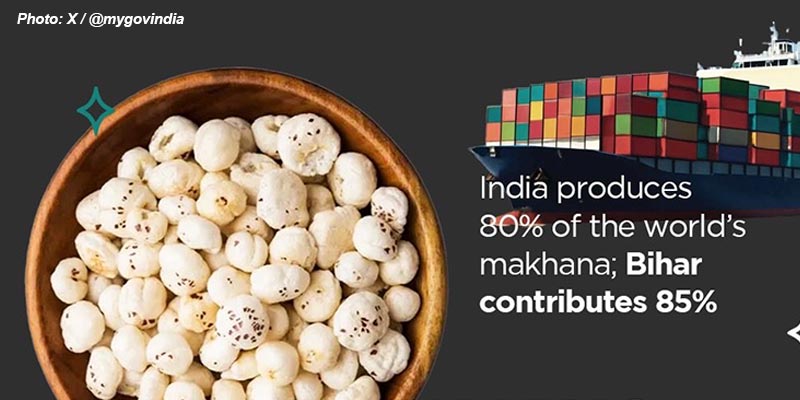
• India is the largest producer of makhana with 80 per cent of global production. Bihar contributes 85 per cent of the national production of makhana.
• The Union government established the National Makhana Board, fulfilling the announcement made in the Union Budget 2025-26.
• The Board was officially launched by Prime Minister Narendra Modi in Bihar on September 15, marking a major step toward strengthening and modernising India’s makhana sector.
• The primary objective of the National Makhana Board is to improve production, processing, value addition, marketing and export promotion.
• The key focus of the Board includes enhancing production and productivity of makhana through scientific research, improved farm techniques, better harvesting and processing technology.
• To support this initiative, the central government approved a Central Sector Scheme for Development of makhana with an outlay of Rs 476.03 crore for a period of six years (from 2025-26 to 2030-31).
• The scheme focuses on research and innovation, quality seed production, farmer capacity building, improved harvesting and post-harvest practices, value addition, branding and marketing, export promotion, and quality control.
• An ICAR-National Research Centre on makhana is situated in Bihar’s Darbhanga district. Darbhanga has been recognised under the One District One Product (ODOP) initiative specifically for makhana.
(The author is a trainer for Civil Services aspirants.)