
- India
- Dec 27
Indian Pharmacopoeia Commission
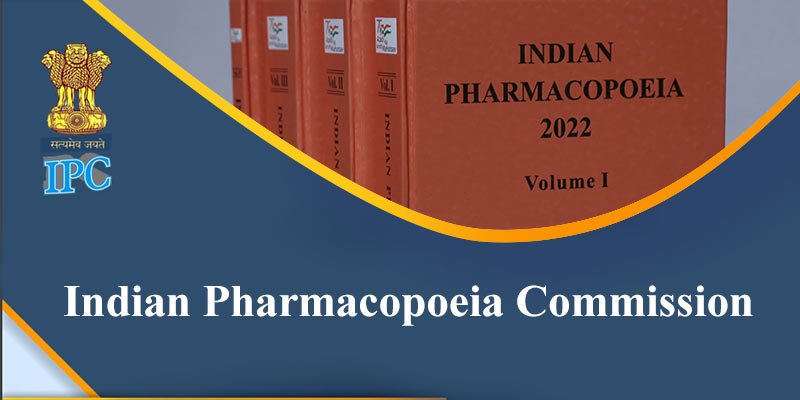
• Union Minister of Health and Family Welfare J.P. Nadda reviewed the progress and initiatives of the Indian Pharmacopoeia Commission (IPC) on December 26.
• He noted that the Indian Pharmacopoeia remains a critical scientific and regulatory reference, ensuring uniform standards of medicines across the country.
• Nadda highlighted that the Indian Pharmacopoeia is now recognised in 19 countries.
• The 10th edition of the Indian Pharmacopoeia is scheduled to be launched by Nadda in the first week of January 2026.
What is Indian Pharmacopoeia?
• Indian Pharmacopoeia is the official book of standards for drugs in fulfilment of the requirements of the Drugs and Cosmetics Act, 1940 and Rules 1945 thereunder so as to specify the standards of identity, purity and strength for the drugs imported, manufactured for sale, stocked or exhibited for sale or distributed in India.
• The standards prescribed in Indian Pharmacopoeia adhere to the concept of harmonisation, keeping in view the feasibility, technological advancements in manufacturing and analysis of the drugs and pharmaceuticals in the country without compromising with the quality of the products.
• The Indian Pharmacopoeia standards are authoritative in nature and are enforced by the regulatory authorities for quality control of medicines in India.
• During quality assurance and at the time of dispute in the court of law, Indian Pharmacopoeia standards are legally acceptable.
History of Indian Pharmacopoeia
• The history of the Indian Pharmacopoeia began in 1833 when a committee of the East Indian Company’s Dispensary recommended the publication of a pharmacopoeia.
• Bengal Pharmacopoeia and General Conspectus of Medicinal Plants was published in 1844, which mainly listed most of the commonly used indigenous remedies.
• This was followed by IP 1868, which covered both the drugs of British Pharmacopoeia 1867 and indigenous drugs used in India, with a supplement published in 1869 incorporating the vernacular names of indigenous drugs and plants.
• However, from 1885 the British Pharmacopoeia was made official in India.
• A drug Enquiry Committee appointed in 1927 by the government recommended the publication of a National Pharmacopoeia.
• After Independence, the Indian Pharmacopoeia Committee was constituted in 1948, for publication of Indian Pharmacopoeia as its main function.
• The first edition of Indian Pharmacopoeia was published in 1955.
• The ninth edition was released in July 2022.
Indian Pharmacopoeia Commission (IPC)
• The Indian Pharmacopoeia Commission was established in 2005.
• It is an autonomous institution of the Ministry of Health and Family Welfare.
• It became fully operational from January 1, 2009.
• The IPC was created to set standards of drugs in the country. Its basic function is to regularly update the standards of drugs commonly required for treatment of diseases prevailing in this region.
• It publishes official documents for improving quality of medicines by way of adding new and updating existing monographs in the form of Indian Pharmacopoeia.
• IPC promotes the rational use of generic medicines by publishing the National Formulary of India.
• The IPC’s mission is to promote public and animal health in India by bringing out authoritative and officially accepted standards for quality of drugs, including active pharmaceutical ingredients, excipients and dosage forms, used by health professionals, patients and consumers.
• This is achieved by developing the standards for medicines and supporting their implementation. In addition, the IPC also develops Indian Pharmacopoeia Reference Substances (IPRS), which act as a fingerprint for identification of an article under test and its purity as prescribed in the IP monographs.
• The Commission has a three-tier structure, comprising the General Body, the Governing Body and the Scientific Body, which are supported by the IPC Secretariat and the Indian Pharmacopoeia Laboratory (IPL).
• The IPC Secretariat and IPL scientists with the support of different advisory expert committees and expert members of the Scientific Body examine the suitability of the standards to be included in Indian Pharmacopoeia.