
- India
- Jan 06
Parliament passes 39 Bills in 2025
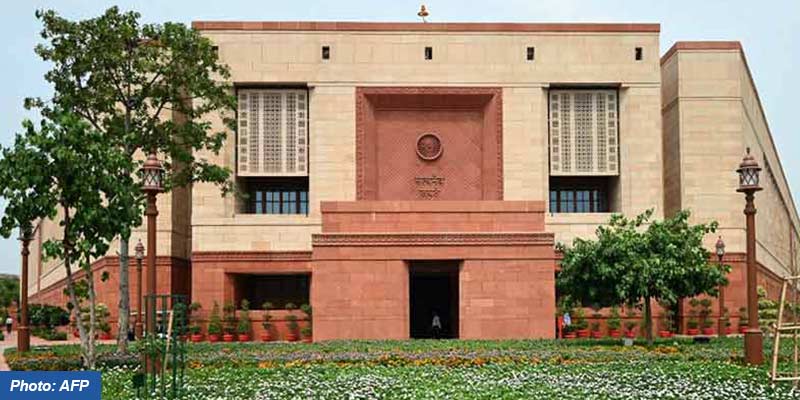
• The Ministry of Parliamentary Affairs noted that 39 Bills were passed by both the Houses of Parliament in the year 2025.
• During ‘Zero Hour’ members in both Houses with the permission of the Chair, may raise matters of urgent public importance.
• The ministry highlighted that 1,255 matters in Lok Sabha and 462 matters in Rajya Sabha were raised during the Zero Hour in 2025.
• All the matters were forwarded to the concerned ministries/departments for appropriate action.
What is Zero Hour?
• The time immediately following the Question Hour and before any listed business is taken up in the House has come to be popularly known as the Zero Hour. As it starts around 12 noon, this period is termed as Zero Hour.
• For raising matters during the Zero Hour in Lok Sabha, members give notice between 8.30am and 9am everyday to the Speaker stating clearly the subject which they consider to be important and wish to raise in the House.
• It is for the Speaker to allow or not to allow for raising such matters in the House.
• Normally, 20 matters per day as per their priority in the ballot are allowed to be raised during the Zero Hour. The order in which the matters will be raised is decided by the Speaker at his/her discretion.
Some of the important Bills passed in 2025 were:
1) The Waqf (Amendment) Bill, 2025: It focuses on improving the management of waqf properties, empowerment of stakeholders relevant to management of waqf properties, improving the efficiency in survey, registration and case disposal process, and development of waqf properties.
2) The Disaster Management (Amendment) Bill, 2025: It brings more clarity and convergence in the roles of different organisations working in the field of disaster management to strengthen the efficient working of the National Disaster Management Authority (NDMA) and the State Disaster Management Authorities.
3) The Tribhuvan Sahkari University Bill, 2025: It provides for establishment of Tribhuvan Sahkari University to provide education, training, and capacity building in the cooperative sector and undertake research and development activities in related areas.
4) The Income-tax Bill, 2025: It comprehensively reviewed the Income-tax Act, 1961 to make the Act concise, lucid, easy to read and understand.
5) The National Sports Governance Bill, 2025: It provides for the development and promotion of sports, welfare measures for sportspersons, ethical practices based on basic universal principles of good governance, ethics and fair play of the Olympic and sports movement, the Olympic Charter, the Paralympic Charter, international best practices and established legal standards and to provide for the resolution of sports grievances and sports disputes in a unified, equitable and effective manner and for matters connected therewith or incidental thereto.
6) The Promotion and Regulation of Online Gaming Bill, 2025: It provides for promotion and regulation of the online gaming sector including e-sports, educational games and social gaming and to provide for the appointment of an Authority for coordinated policy support, strategic development and regulatory oversight of the sector.
7) The Health Security se National Security Cess Bill, 2025: It provides for augmentation of the resources for meeting expenditure on national security and for public health, and to levy a cess for the said purposes on the machines installed or other processes undertaken by which specified goods are manufactured or produced and for matters connected therewith.
8) The Sabka Bima Sabki Raksha (Amendment of Insurance Laws) Bill, 2025: It seeks to deepen penetration, accelerate growth and development of the insurance sector and enhance ease of doing business.
9) The Sustainable Harnessing and Advancement of Nuclear Energy for Transforming India (SHANTI) Bill, 2025: It provides for the promotion and development of nuclear energy and ionising radiation for nuclear power generation, application in healthcare, food, water, agriculture, industry, research, environment, innovation in nuclear science and technology, for the welfare of the people of India, and for robust regulatory framework for its safe and secure utilisation and for matters connected therewith.
10) The Viksit Bharat – Guarantee for Rozgar and Ajeevika Mission (Gramin) Bill, 2025: It provides for establishment of a rural development framework aligned with the national vision of Viksit Bharat@2047, by providing a statutory guarantee of 125 days of wage employment in every financial year to every rural household whose adult members volunteer to undertake unskilled manual work.